Growth by design: what Mark Thompson gets right about building for the long term
14th September, 2026
There is a moment early in our Fastest 50 podcast conversation when Mark Thompson explains how he and Peter Buchan took on Ryder Architecture in the 1990s. The business had a significant overdraft and a stalling turnover. Its workforce had nearly halved. The industry was changing and the business had to change with it.
Their response was to write a document called Blueprint.
It set out what they wanted Ryder to become and was shared with everyone in the business. From 1997 onwards, they revisited it every year. Mark credits that discipline with helping Ryder stay focused as it grew from its North East base into an international architectural practice.
I liked that story because it says a lot about Mark’s approach to business. It also felt remarkably familiar to me as a property lawyer specialising in commercial development.
I spend much of my working life acting for developers and landowners on residential, commercial and mixed-use schemes. Development starts with ambition, but ambition alone does not assemble land, secure investment, deliver infrastructure or create and deliver a viable scheme. You need to know what you are trying to achieve, then put enough structure and detail around it to make meaningful progress.
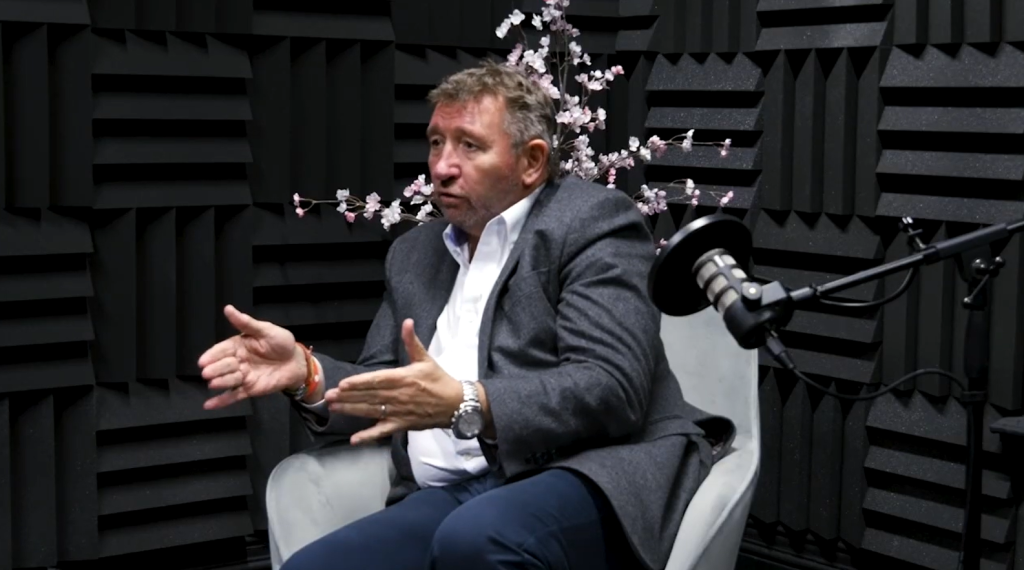
Mark Thompson – Principal & Managing Director of Ryder – on the Fastest 50 podcast
Complexity is not the same as sophistication
Mark came to architecture from the shipyards, where multiple disciplines worked within the same organisation. Arriving in construction, he was struck by how fragmented the industry was. His observation during our conversation was particularly astute: every interface between different companies introduces potential risk.
Anyone involved in property development knows how quickly those interfaces can multiply.
A significant scheme can involve a landowner, developer, funder, construction company, local authority, contractor, infrastructure providers and occupiers / end users. On mixed-use schemes, residential, retail, leisure and employment uses bring their own requirements and timescales. More parties do not necessarily make a project better. They make alignment more challenging but very important. And this is where an experienced built environment lawyer earns their place at the table. Our job is not simply to identify everything that could go wrong. That is relatively easy. The harder and more useful work is understanding which risks genuinely matter or are “dealbreakers”, and where protecting one entity’s position too aggressively could make the wider scheme harder to deliver or less viable.
I have acted on both sides of development transactions, for landowners and developers. That perspective is essential. Understanding what the other party needs does not weaken your negotiating position. Quite often, it helps you find a better more sensible route to consensus and the end result your client wants.
Keep the destination clear and the route flexible
There was another aspect of Blueprint that interested me. It gave Ryder a consistent direction without assuming the route would remain unchanged. Mark was candid about getting decisions wrong and the importance of changing course rather than “ploughing on regardless”.
That balance matters for growing businesses, and developments. As organisations become larger, more people make decisions, commitments increase and changing direction becomes harder. A clear strategy keeps people aligned, but it should not prevent a business responding intelligently when circumstances change.
Those working in the Built Environment sector know this particularly well. The cost of borrowing increases, construction prices fluctuate, planning requirements are never straightforward and projects conceived in one phase of market may be delivered in another later phase. The same principle applies to the legal structures supporting development. They need enough certainty for parties to commit land and capital, without unnecessarily restricting how a scheme can evolve.
There is a wider business lesson in Ryder’s approach: protect what is fundamental to where you are going, while retaining the freedom to make better decisions about how you get there.
Places have a commercial ecosystem
Mark was equally interesting when we moved from individual projects to regeneration. Talking about the role of sport, he rejected the idea that regeneration is primarily about “big shiny new stadia”. His interest was in what happens around them: the wider city, the community and the opportunities that follow.
My own practice has a strong housing focus, and that perspective resonates.
Housing can bring hundreds or thousands of people into an area or create a new neighbourhood and community in its own right. However successful placemaking needs more than just homes. It needs a balance – employment, retail, infrastructure, leisure and spaces people actually want to use. Those elements are socially connected, but they are commercially connected too. New residents become customers. Good amenities strengthen the residential offer and improve a neighbourhood. Employment brings activity and boosts the local economy. Transport improves connectivity thereby enlarging the labour market. Commercial uses can give a development life beyond the hours when people leave and return home.
For developers and landowners, understanding those relationships can affect value as much as design. On mixed-use schemes in particular, the individual components cannot always be optimised independently. Sometimes value comes from what one use enables another to become.
Cutting through fragmentation
Mark was forthright about regional decision-making and his frustration with parochialism. His suggestion of a single planning authority across the region may prompt debate, but the commercial issue underneath it deserves attention: complexity costs money.
Businesses operating in the built environment know how delay impacts a development appraisal. Programmes stretch. Holding costs increase. Funding assumptions change. Opportunities can disappear while different organisations work through competing requirements.
No lawyer can remove the structural complexity of the planning system or make competing stakeholders agree. We can, however, help clients understand where the genuine obstacles sit prioritise those and structure arrangements that do not add unnecessary complexity in their own right. That requires more than knowing the law. It requires understanding the scheme and end goal well enough to distinguish between a point that deserves a hard negotiation – a dealbreaker – and one that is consuming time without materially improving the client’s position.
Invest through the difficult periods
Perhaps the part of Mark’s business philosophy I found most compelling came when he talked about Ryder’s resilience during downturns.
His approach was that the business might need to become smaller, but it would not stop investing in the things that had made it successful. Training, people and doing things properly were not expendable simply because conditions had become harder. That takes conviction.
The built environment is cyclical. People who have spent their careers in development have seen promising sites stall, markets turn, funding tighten customer confidence impacted and projects return years later under completely different conditions.
Short-term discipline is essential when conditions change. So is knowing what not to sacrifice.
For Ryder, that has meant continued investment in people. Mark spoke with real enthusiasm about leadership development, giving people freedom within appropriate structures and creating opportunities for the next generation. He also talked about PlanBEE, the apprenticeship programme Ryder helped establish, and the firm’s work with the Newcastle United Foundation. These did not come across as peripheral corporate initiatives. They were part of how Mark thinks a successful business should operate and have at its heart.
Growth without losing control
Ryder’s recent transition to employee ownership brings many of these ideas together. What interested me was Mark’s explanation that the move had not transformed the way Ryder operated overnight. Much of the underlying culture was already there: open communication, consultation, employee representation, shared direction and a preference for consensus. Employee ownership formalised some of those arrangements and introduced additional governance, but Ryder retained the freedom to pursue opportunities where they made commercial sense.
There is a useful lesson here for growing businesses. Structure should enable good decisions, not become a substitute for them. Development works on much the same principle. Agreements, governance and approval mechanisms are necessary because significant capital and competing interests are involved. But every additional layer needs a purpose. The skill is creating enough structure to protect the project without building a machine that becomes incapable of moving.
Mark’s career offers a persuasive case for that balance. Ryder has grown internationally, won major awards and delivered landmark projects, yet his account of its success is strikingly free of grand gestures or egotism. Set a direction. Invest in good people. Do good work. Stay close to clients. Adapt when necessary. Keep contributing to the place that helped build the business.
Simple principles are not the same as easy ones. That is what makes our conversation worth hearing. Mark has spent more than 30 years applying them through recessions, international expansion, changing ownership and an industry that remains stubbornly complex. For anyone running a business in property development or the wider built environment, there is plenty in his experience to borrow.
Listen to the Fastest 50 podcast
Listen to Mark Thompson on the Fastest 50 podcast for our full conversation about Ryder, leadership, development, regional ambition and building a business for the long term. And if you are working on a residential, commercial or mixed-use development scheme, I am always happy to talk about how our team here at Ward Hadaway can help turn the commercial ambition into a successful profitable scheme.
Please note that this briefing is designed to be informative, not advisory and represents our understanding of English law and practice as at the date indicated. We would always recommend that you should seek specific guidance on any particular legal issue.
This page may contain links that direct you to third party websites. We have no control over and are not responsible for the content, use by you or availability of those third party websites, for any products or services you buy through those sites or for the treatment of any personal information you provide to the third party.

Follow us on LinkedIn
Keep up to date with all the latest updates and insights from our expert team