What I learned about business development from the Fastest 50 podcast
25th August, 2026
I got dumped as a client by one of the guests on my own podcast!
Admittedly, my so called mate Raman Sehgal had sacked me as a client years before we recorded the Fastest 50 podcast. His agency, ramarketing, was doing well, but it was trying to serve clients across too many sectors and too many services. Raman worked out where the business had real traction, chose to specialise in life sciences and started telling perfectly good clients, including me, that they no longer fitted.
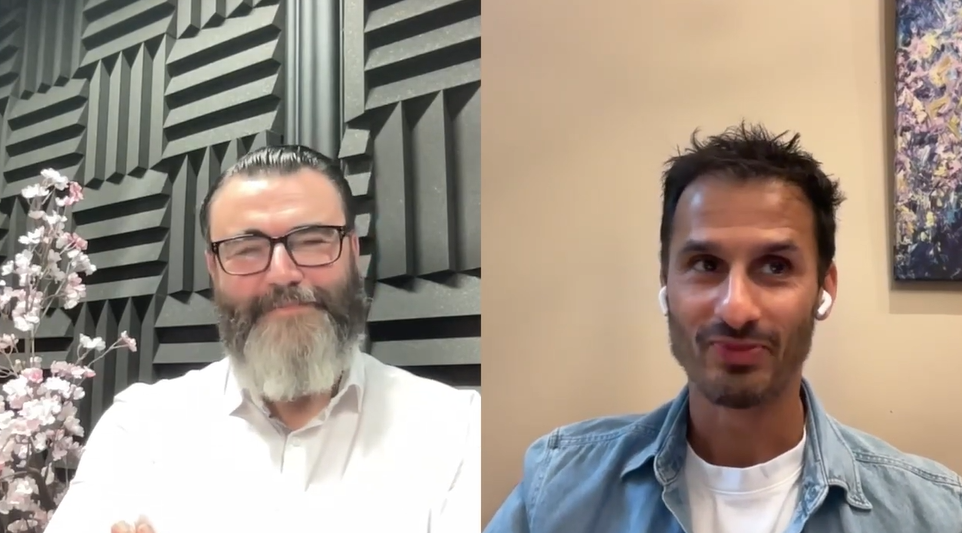
Al McDonald and Raman Sehgal recording the Fastest 50 podcast
At the time I thought I understood why he was doing it. Hearing him explain the decision years later, having subsequently built ramarketing into an international business, made me look at it differently. He had learnt something that plenty of businesses take much longer to accept: more opportunities do not automatically mean better business development.
I spend my working life thinking about how businesses win work. Hosting the Fastest 50 podcast gave me the chance to ask people who have actually done it in sectors outside the one I work, repeatedly and at serious scale.
And a few of their answers have made me reflect on parts of my own job.
A full pipeline can still be the wrong pipeline
Business developers love to jump on a new opportunity. A new enquiry lands and our instinct is to lean towards it. I still get a buzz when this happens!
But there is a point where saying yes to everything makes a business less distinctive, not more successful. You end up stretching teams across work they are not ideally suited to, explaining a proposition that is too broad and spending valuable time pursuing clients that were never likely to become your best clients.
Raman’s decision was a weird one at first. It really was a “It’s not you, it’s me” scenario. It was also clear. Once ramarketing concentrated on the market where it already had strong clients, expertise and international potential, the business accelerated.
That is useful for anyone responsible for growth. Sometimes the most commercially important conversation is not “How do we get more leads?” it is “Which work do we actually want?”.
Do not turn the sales tap on before the business is ready
Steven Forrest at Forfusion gave me another version of the same lesson.
Forfusion deliberately held back from pushing sales and marketing harder until the business could cope with what might arrive. They wanted the right structure, board, standards and operational capability in place first. Steven described much of their growth as coming from doing a good job for an existing client, expanding from there and earning introductions to others.
I liked that because it cuts through a lot of noise around business development.
You can generate demand. You can sharpen a proposition, improve the website, get people into rooms, run campaigns and create opportunities. But if the experience after the sale does not live up to the promise before it, you have simply found a quicker way to disappoint more customers.
There are times when the smartest growth decision is to push harder. There are also times when the commercial team needs to recognise that the rest of the business needs to catch up.
Good BD should know the difference.
Your clients are saying things about you when you are not there
Steven also talked about the value of warm referrals. A client tells another business that Forfusion solved a problem well, and suddenly the next conversation starts in a completely different place. There is already some confidence in the room.
This is hardly a revolutionary discovery. Every business knows referrals are valuable. What I think we sometimes underestimate is what has to happen before one occurs. Somebody has to be sufficiently impressed by the work to put their own reputation behind recommending you.
It means business development is not confined to the people with “sales”, “marketing” or “BD” in their job title. The person answering an email quickly, the expert who spots something the client has missed, the team that handles a difficult moment well and the person prepared to say “I do not think that is the right answer for you” are all doing business development. This is certainly something I find working in a law firm, we potentially have 600 business developers at Ward Hadaway and one of the reason’s we’re growing is that we’re starting to realise this.
Sometimes the senior person needs to be in the room
Raman made another point that anyone building a sales function should think about.
When he moved to the US, he found that being the founder opened doors. Prospective clients wanted to hear from the person who had created the business. He felt that made him a more compelling proposition in that market than simply sending in somebody with a BD title.
A good business development team can find opportunities, make introductions, understand markets, keep momentum moving and help brilliant specialists become better at winning work. What we cannot do is manufacture somebody else’s credibility for them.
Clients sometimes want the person who knows the answer. Sometimes they want the person who will ultimately be accountable. Sometimes they simply want to look somebody senior in the eye and decide whether they trust them with something important.
Knowing who should have the conversation is part of BD too.
What happens inside your business can help you win outside it
My conversation with Tom Lawson at Opencast gave me another useful perspective.
I asked whether the way Opencast runs its own business ever becomes part of the pitch. His answer was yes. In major procurements, clients want to understand the organisation behind the technical service. Opencast’s approach to its people, social impact and the way it operates can form part of how work is won.
That is interesting because businesses often separate their corporate story from their sales story. Customers, or clients, do not necessarily do that.
Customers can care about what you sell and how you behave. They can look at the quality of the product or service and the quality of the organisation offering it. In some markets, those things are formally assessed. In others, they simply influence whether somebody wants to work with you.
It means the strongest proposition may already exist inside the business. The job is to recognise it and make it visible.
Leaders cannot completely outsource commercial growth
One of my favourite conversations of the series was with Joanna Feeley because we ended up talking quite openly about our own jobs.
Joanna is an expert in trends and forecasting. But as TrendBible developed, she made herself learn the bits of running a company that were less natural to her, including sales and marketing. Her point was simple: having talented marketers was not enough. As MD, she needed enough understanding herself to give them proper direction and make sensible investment decisions.
I see the reverse side of that in my role. I can bring expertise in business development. My team can bring ideas, data, market knowledge and experience. But “go and win us some work” is not a strategy.
The best results come when the people running a business are genuinely engaged in why customers choose it, where it should compete, how it is different and what it wants to be known for. Commercial growth cannot sit in a department on the edge of the organisation. The leadership has to care about it too.
I am professionally nosy, and I think that helps
As part of the Fastest 50 Awards and the podcast, I spend a lot of time meeting businesses without trying to sell them anything. I still ask questions. I cannot really help myself if I sniff an opportunity though!
Who are you working with? Why did you choose them? What is frustrating you? Where are you trying to get to? What changed when the business got bigger? What are customers asking for now that they were not asking for two years ago?
That curiosity is probably the bit of business development I enjoy most.
Because once you stop thinking about BD as persuading somebody to buy something, the job becomes much more interesting. You are trying to understand how businesses make decisions. You are looking for places where you can genuinely be useful. You are connecting people who should know each other. And sometimes you are deciding that there is no sensible reason to pursue an opportunity at all.
After a season of talking to some exceptional business leaders, I have probably become even less interested in “selling”.
I am much more interested in why people buy; understanding what someone is trying to achieve, then finding the right way to help them move it forward.
Listen to the Fastest 50 podcast
The first season of the Fastest 50 podcast gets into the decisions, experiences and occasionally uncomfortable lessons behind successful businesses. I learnt plenty from hosting it, including a few things about my own profession.
Listen to the full series on YouTube, Spotify, Apple Podcasts or wherever you listen to your podcasts.
For a chat and coffee about how Ward Hadaway can help your business move forward, drop me an email or give me a call.
Please note that this briefing is designed to be informative, not advisory and represents our understanding of English law and practice as at the date indicated. We would always recommend that you should seek specific guidance on any particular legal issue.
This page may contain links that direct you to third party websites. We have no control over and are not responsible for the content, use by you or availability of those third party websites, for any products or services you buy through those sites or for the treatment of any personal information you provide to the third party.

Follow us on LinkedIn
Keep up to date with all the latest updates and insights from our expert team