Turning imposter syndrome into opportunity with Amy Morgan
5th November, 2026
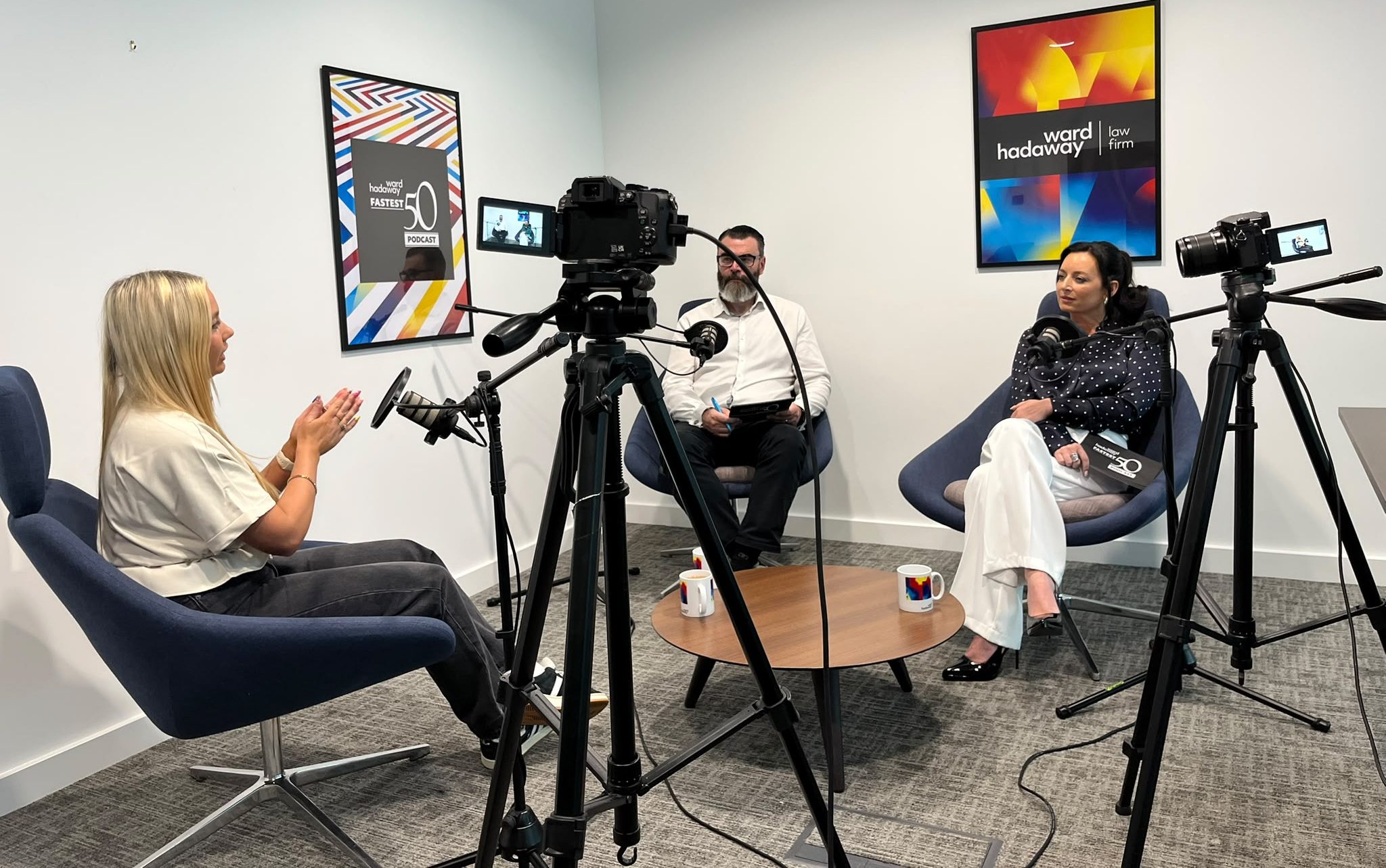
Welcome to the Ward Hadaway Fastest 50 Podcast, where we sit down with entrepreneurs and business leaders who are rewriting the rules of growth in the UK and beyond.

Amy Morgan, Head of Spinouts & Life Sciences, Barclays Innovation Banking
In this episode, Alistair McDonald and co-host Emma Digby are joined by Amy Morgan, Head of Spinouts & Life Sciences at Barclays Innovation Banking. Amy works with some of the UK’s most innovative founders, investors and university spinouts, helping high growth businesses access the networks, expertise and finance they need to scale. She shares her career journey from choosing an apprenticeship at Barclays over university to becoming a branch manager at 21 and then a vice president earlier this year. She explains how Barclays supports spinouts from before incorporation all the way to IPO and why resilience, authenticity and networks set successful founders apart.
You’ll hear practical insights on:
- Why saying yes to opportunities outside your comfort zone is the best way to tackle imposter syndrome
- How being authentically yourself can help you stand out in a room
- How the fractional model gives founders access to senior expertise without the overheads
- Why founders should feel safe to fail fast on the way to the right solution
- Why founders need to understand their market before they build their product
- Why every growing business needs the right network of peers, partners and advisors around it
Listen on Apple Podcasts, Spotify or YouTube


Fastest 50 is our annual celebration of the fastest growing businesses across the North of England. We are passionate about recognising and inspiring growth, which is why we launched the Fastest 50 Podcast – to hear candid insights from those leading the way in the UK business landscape.
Amy 0:00
The technology that’s coming out of some of the universities is just inspiring.
Amy 0:05
Like I genuinely feel like I have the best job in the world.
Amy 0:08
I went up and down three times over before my first interview because I was so scared.
Amy 0:14
When I’m 40, I’m going to be a branch manager.
Amy 0:16
Fast forward a little while and I was a branch manager at 21.
Amy 0:20
Feel like I’ve had amazing opportunities by being authentic with myself.
Amy 0:27
See where you could possibly go and just saying yeah.
Alastair 0:40
Hello and welcome to the Fastest 50 podcast.
Alastair 0:42
I’m Alastair McDonald, business development director at Ward Hardaway.
Emma 0:46
And I’m Emma Digby, executive partner of the lead office of Ward Hardaway, your Co host for this series.
Alastair 0:53
And today we are very happy to say that we’re joined by Amy Morgan, Relationship Director for University Spin Outs and Investor Coverage and Head of Life Sciences and Health Tech at Barclays Innovation Banking.
Alastair 1:05
She works with some of UKs most innovative founders, investors and university spin outs, helping high growth businesses access the networks, expertise and finance that they need to scale.
Alastair 1:17
Amy, welcome to the fastest 50 podcast.
Emma 1:19
Oh, thank you both.
Emma 1:20
Delight to be here.
Emma 1:22
Amazing. I mean, you’re a bit of a firestarter, absolute trailblazer of your generation.
Emma 1:29
How did you start at Barclays and how have you got to this position so quickly and so young?
Amy 1:35
Well, to be honest, when I first was looking at career options, I was in sixth form looking at, you know, how, how can I best make the most out of the situation I’m in?
Amy 1:46
Had a great A level results and naturally you think universities, you know the one for me.
Amy 1:52
All my friends are looking at what halls they want to move into.
Amy 1:55
And I chatted with my career coach within the sixth form and she had mentioned, well, why don’t you have a look at apprenticeships?
Amy 2:03
If you’ve not got your heart set on a particular course, you don’t need to go to university for the sake of going.
Amy 2:09
You know, a lot of my friends were staying in Leeds.
Amy 2:12
It meant I could have the student life whilst also being able to go down a career route.
Amy 2:17
So I went on the apprenticeship website and naturally looked for the one that paid the most.
Amy 2:23
So there were still ones where, you know, you could go into maybe the public sector or private sector.
Amy 2:29
And when I saw an opportunity to join Barclays, it was actually the first interview I had ever done.
Amy 2:36
I’d been working locally, like at my local pub for a little while and naturally just thought, right, let’s go for this Barclays apprenticeship.
Amy 2:45
Walking up Albion Street, the High Street in Leeds, I went up and down three times over before my first interview because I was so scared of our imposter syndrome like crazy.
Amy 2:57
Don’t know anything around banking but let’s go for it anyway.
Amy 3:00
I was interviewed by an amazing colleague called Lee Desborough, who is my first boss and I’ve had 11 roles now, 12 roles since then.
Amy 3:10
And I ring him after every promotion to say me, I’ve got a new role.
Amy 3:15
This is what I’m doing now.
Amy 3:17
And he was a vice president at the time when he interviewed me and I managed to achieve my vice president earlier this year.
Amy 3:24
So it was amazing to be able to do that full circle and let him know.
Amy 3:29
So when I was in our retail banking, it’s very traditional, you know, you’re a cashier.
Amy 3:34
I was an apprentice cashier, so equivalent of sixth form, didn’t get a degree.
Amy 3:38
It was very much equivalent to what I’d already been doing, but focused on the financial sector.
Amy 3:44
I then moved across the kind of like leadership, looking up what are the career opportunities and branch manager naturally was my ambition.
Amy 3:52
Like when I’m 40, I’m going to be a branch manager when I was 18.
Amy 3:56
Anyway, Fast forward a little while and I was a branch manager at 21.
Amy 4:01
So I had a team of colleagues that had been in the bank, some of them 40 years individually.
Amy 4:06
So you can imagine a small branch, very local to the community.
Amy 4:11
And once I had achieved that leadership, I was like, what now I wanted to get this at 40.
Amy 4:16
I can’t just stop at 21.
Amy 4:18
And that’s where I was kind of like exposed to Barclays Eagle Labs.
Amy 4:22
So Barclays Eagle Labs is within our business banking.
Amy 4:25
And I’ve said this quite openly previously.
Amy 4:28
I always said I would never go into business banking.
Amy 4:31
It’s not for me.
Amy 4:32
I don’t know anything around business.
Amy 4:34
But that’s more of an impostor syndrome rather than getting into the thick of it and understanding the experience of that.
Amy 4:41
Joined the business banking team, learned around ecosystems, did that in Leeds, did that in Hull.
Amy 4:47
Then I was like, I want to grow my network wider than a city.
Amy 4:51
Joined our national partnerships team and then set up our Eagle Labs across the UK.
Amy 4:56
So we grew that from around 30 sites to 43 sites in every nation of region, so that real national and regional perspectives of the innovation ecosystem.
Amy 5:07
And then we got to a really good position where we had a presence in every nation and region.
Amy 5:12
And my managing director at the time said, how do we make Barclays a go to bank for university spin outs because it was a growing theme within the innovation economy, didn’t need any more physical locations.
Amy 5:25
So then very quickly I had to grow into university spin out expert.
Amy 5:30
So actually working with partners I knew from my previous role did a work experience day in a university tech transfer office because obviously not been to university.
Amy 5:40
What’s a tech transfer office?
Amy 5:42
People calling it TTO, which is just where all of the amazing research goes through to start a business.
Amy 5:48
And since then, 11 years, as was into my career, I’m now leading our university spin out proposition based on having no knowledge whatsoever of that ecosystem, that industry.
Amy 6:01
12 months later, having the kind of autonomy to be able to lead that proposition.
Amy 6:07
And most recently, stepping into the role of head of health tech and life sciences while still leading the university spin out proposition and got a brilliant colleague who was on our grad scheme has now been made permanent in my team.
Amy 6:21
So you can tag team it together.
Amy 6:22
So I get to do the two roles, but whilst having a fabulous talent that we’ve been able to offer a position to as well.
Amy 6:31
So that was a long intro, apologies, but it kind of just showcases the growth of a career once you kind of say yes to opportunities, build an internal network?
Alistair 6:42
I think it’s really important, like for young people that understand that they don’t have to go to university, that’s not the route, you know, because you’re bright and you’ve done well and all that stuff.
Alistair 6:52
That’s not the only route.
Alistair 6:53
And it is an expensive route.
Alistair 6:55
And increasingly that’s a route that sees you’re laden with debt when you come out.
Alistair 6:59
So you’ve got to be pretty sure that whatever you do is going to be enough to pay you through that and eventually hope to pay that back.
Alistair 7:06
But I think it’s also really important that people coming into sectors, whether it’s bank and whether it’s the legal sector, you can see a route from, you know, not having maybe a background where your mum and dad were lawyers or your mum and dad were bankers or whatever.
Alistair 7:23
Because we need that.
Alistair 7:24
We need that diversity.
Alistair 7:25
And that diversity coming into those sectors helps businesses flourish.
Amy 7:29
I think as well with the like the diversity point of view, I think it’s so important, especially where we sit in our innovation ecosystem, but in banking in general, like to be sat around a table where you have got those diverse thoughts.
Alistair 7:43
Do you feel like you have a certain additional responsibility on that front?
Alistair 7:47
Because one of the other guests that we’ve had, Xandra was talking about, you know, the lack of investment in the female founded businesses and she’s got to always talk about that as well as talking about her business stuff.
Alistair 7:59
Do you feel like there’s an additional role that you’ve got to explain about your age and and stuff like that when when you’re having conversations with with businesses?
Amy 8:08
I think actually in the innovation ecosystem, not really around age so much, but sometimes I introduce myself as a bit of a tongue in cheek of I’m Amy, as you can probably tell from the broad Yorkshire accent, I’m from Leeds
Amy 8:22
Because just to kind of immediately set the tone of but I have a UK wide, you know, role and this is what I look after.
Amy 8:30
And then it immediately, like you’ve explained yourself clearly, because I’ve been in rooms where I’m the leader of this proposition, but a colleague sat next to me and whoever I’m talking to is consistently looking at the colleague next to, to me.
Amy 8:43
And I’m like very happy because we’re peers.
Amy 8:45
Like I’m not hierarchical, but if I’m the decision maker, it don’t look good on you if you’re chatting to the person because you’re assuming you’re under the assumption that they’re the one that would be taking the lead on, on that business decision.
Amy 9:01
So yeah, there’s, there’s lots of scenarios where I’d say female founders, especially.
Amy 9:06
I did a piece of work earlier this year with the Entrepreneurs Network.
Amy 9:10
They’re a think tank for entrepreneurship and we did a report on academic females that are wanting to start businesses and what the barriers are for them as a whether you’re a professor, a PhD student, a generalist student, if you were wanting to commercialise research, what is the difference?
Amy 9:29
And if you was a male in this field and actually it would be until the time I’m 70.
Amy 9:36
If nothing was to change, that is by the time when it would become equal for a male academic and a female academic to be on the same playing field.
Amy 9:46
So that just kind of shows the barriers that are there and need to be spoken around.
Amy 9:51
Like there’s a lot bigger risk if you as a female to set up an academic founded venture because you may have children at home, you know, and maternity pay, you won’t get, you know, the maternity pay.
Amy 10:04
If you’re an entrepreneur that are like investing money from maybe it’s your savings, your bootstrapping.
Amy 10:10
It’s a different risk than if you’ve got another support network at home.
Amy 10:15
So there’s so many elements to that.
Amy 10:17
So something I’m super passionate around is that diversity around the table, whether it’s gender, whether it’s geography.
Amy 10:24
I actually love the geography play because where I sit, the golden triangles of London, Oxford, Cambridge, they’re doing brilliantly for producing these university spin outs and the life sciences businesses that I look after.
Amy 10:39
But what I love is when you’ve got the whole UK wide nation and regions sat around the table.
Amy 10:44
because the ambition for government is to double the amount of investments into university spinouts and startups by 2035.
Amy 10:54
So £100 billion will be invested in the university spinouts and I was really keen to be a part of the how.
Amy 10:52
So how can we achieve that?
Amy 11:04
Its great, that’s what we want to achieve as a nation.
Amy 11:07
So I was able to bring together like the heads of entrepreneurship at these universities, the VC (venture capitalists), founding partners, and then also government and policy think tanks.
Amy 11:21
And from that, a lot of people have commented after saying what a brilliant room that you was able to bring together.
Amy 11:28
But also it was every nation and region.
Amy 11:31
So it’s important to have that full rounded diversity.
Emma 11:35
There’s a couple of things that come from that that really intrigued me.
Emma 11:39
So investment and you know, we had the the Chancellor’s first speech and, and you know, there’s obviously going to be huge investments into the North.
Emma 11:50
I think what concerns me dealing with business owners is that the cost of business has never been so high.
Emma 11:57
So I’m kind of like, this is great news, but it’s a bit like pouring water into a leaky bucket.
Emma 12:03
We need to sort of make business operations more cost effective so that people can build that capital within their business, get it ready for PE investment or whatever investment they might be going for.
Emma 12:15
Is that on the agenda as well?
Amy 12:18
Massively. So from the access to finance perspective, I suppose we’re in a really different time for like equity investment from VC up to like the larger PE rounds because it’s a lot harder to raise investment.
Amy 12:35
The cash is there, but the market conditions, it’s currently not as high of a return as it would have been five years ago for example.
Amy 12:43
So it’s more risk averse to put money into early stage businesses from pre-seed, which tends to be the first investment round all the way through to Series B, which is where Barclays tend to come in, for example, another kind of larger investors.
Amy 12:59
And I think it’s, it’s really important that when you’re raising capital, it’s for growth and it’s not to survive.
Amy 13:07
So like if you’re thinking from an investor mindset, when I have a lot of conversations with these funders, it’s all around, how do we, how have you validated the market, first of all?
Amy 13:18
So thinking of the science spin on it, you’ve got a professor that’s worked super hard on this science for years and I’m talking it could be a decade.
Amy 13:28
And then they’re very mind-driven on this is what the customer wants gone to the customers.
Amy 13:35
Actually we’d like you to pivot it.
Amy 13:36
We need it to be this kind of technology and now it’s added obviously on multiple years, more cash is needed to go into the business.
Amy 13:46
Whereas actually if as a founder you’re able to really understand the customer and the market fit and being able to translate the research into this is the problem I’m solving.
Amy 13:58
Not all the technologies I work with like quantum businesses and semiconductors and they’re creating these fabulous chips, but I think it’s being able to have that one sentence that you can share with someone and everybody would get it and the bring it up in front of the friends or peers or colleagues because they’re so impressed with that innovation.
Alistair 14:19
You know, you’ve touched on the fact that your role covers nationally, how you’re enabling businesses to to spin out.
Alistair 14:27
What are the things that are happening in universities or what are the things that people are researching into that’s encouraging, you know, investment from Barclays and from PE and all that sort of stuff.
Alistair 14:38
What what’s happening and what’s coming out that you’re excited about.
Amy 14:42
All sorts. Like it’s such a long list. It’s so exciting.
Amy 14:46
So I would say the, the, the kind of easiest way I classify it from non-science background is you’ve kind of got your life sciences.
Amy 14:56
So this is where it’s your health tech, it’s your biotech, it’s creating wearables, it’s being able to support femtech, you know, like female’s health.
Amy 15:07
There’s so much that needs more to be done from maybe an NHS point of view that don’t have the innovation.
Amy 15:13
How can the universe is and the academics that are doing research, number one selling to the NHS if it’s a solution?
Amy 15:20
Or do they want to sell into biopharma if it’s a vaccine?
Amy 15:24
And then the second trend I’m seeing is what we class as physical sciences.
Amy 15:29
So it’s your hard tech, it’s your deep tech manufacturing.
Amy 15:34
So this is because it’s so heavy research and development and it includes needing to do prototyping a lot of investment as in a higher amount of investment is needed to create a physical prototype.
Amy 15:47
It’s not kind of like you develop technology and that’s the evolution and then it’s SaaS.
Amy 15:53
Whereas life sciences has got a completely different funding model because they need to get a regulatory approval.
Amy 16:01
They’ve then got to do the the testing and then the that is a much longer funding cycle.
Amy 16:08
But the technology that’s coming out of some of the universities is just inspiring.
Amy 16:14
Like I genuinely feel like I have the best job in the world being able to not be an expert in the industries, but the scientists and the academic founders, most brilliant minds possible, but they don’t know where to start because a lot of them are first time entrepreneurs.
Amy 16:31
So once they’ve come out of what’s called the tech transfer office and then we call it spin outs in the wild.
Amy 16:38
So they’re like in this like in normal entrepreneurial ecosystem that can expand internationally.
Amy 16:44
How are we helping them connect to industry, connect to the right investors, but most importantly, connect to their peers.
Amy 16:51
So there will be similar founders in their industry that they need to learn from to make sure that they don’t make the same mistakes, whether it’s that regulatory approval, have you already done this?
Amy 17:03
Or when you’re looking to raise investment, what’s really important is your team.
Amy 17:07
So you could be the CEO if you want to be, but actually, a lot of the time the founders from the university will become the CTO.
Amy 17:16
So like the chief technology officer because that’s their bag.
Amy 17:20
And it’s knowing that you can surround yourself with the right team and not spread yourself too thin is an issue that a lot of founders may have.
Amy 17:29
Because if you see yourself as the CEO, sometimes I think I need to know finance, I need to know raising investment.
Amy 17:36
I need to be developing the technology and then need to be thinking about creating a team next to that.
Amy 17:41
And it’s being able to step back and evaluate in what is my expertise and then who do I then need to work on?
Amy 17:49
Do I need to build an Advisory Board or do I need to get another academic from the university or do I need to get like a fractional CFO in?
Amy 17:59
So like that feels like a new way of like creating your leadership team.
Amy 18:03
Is this fractional way of like getting the leadership team in?
Alistair 18:07
One of the things I was going to ask, because we do a lot of life sciences work.
Alistair 18:11
We do a lot of university spin out work and like my role as BD director, one of the things that we try and do is like have buyer personas.
Alistair 18:18
And I know you’re keen on that as well.
Alistair 18:20
And I tried to put myself in the shoes of somebody who’s an academic, they’ve spent 20 years coming up with something that can cure cancer or whatever it is.
Alistair 18:28
You spin out.
Alistair 18:29
And then, you know, for example, you might need to employ staff.
Alistair 18:34
You’ve never done that before.
Alistair 18:35
Like we’ve got a product that’s a fixed price subscription model for that.
Alistair 18:40
So we can not just give you the contract, but we can explain how you go about employment.
Alistair 18:44
And I thought that was something that would be interesting, but also not just for spin outs, but for various different businesses.
Alistair 18:51
We’ve developed a fractional GC product.
Alistair 18:54
So it’s a fixed cost access to our commercial lawyers.
Amy 18:58
Very cool.
Alistair 18:59
So you know, if you’re looking at IP, if you’re looking at protecting the value of your investment, all of those sorts of things, you get all that expertise that we’ve got, but you fix the price.
Alistair 19:08
We’re trying to innovate and flex what we do specifically for the people that you’re looking after.
Amy 19:13
Yeah, it’s because it’s so high cash burn as well.
Amy 19:16
Like the it’s so heavy R&D.
Amy 19:19
It’s really important that like they get the right, you know, legal advice to protect the patent, for example, and like be able to take and help them through the whole journey.
Amy 19:29
All of that is so important.
Amy 19:30
Having like partners around you in the ecosystem that can come in as the experts and help you on that scale up journey.
Emma 19:38
And it’s also, you know, having the flex.
Emma 19:41
So I agree, I think the fractional model is really, really interesting now because it gives you the flexibility to get the very best take your business to the next stage.
Emma 19:53
But you haven’t got the overhead burden of employee costs and you know you can divert that capital elsewhere in the business to help that growing scale rather than worrying about.
Emma 20:07
I’ve got full time FD, they need X amount for me to be competitive on the market.
Emma 20:11
So I’m going to attract the best in the business.
Emma 20:13
I’ve got in house counsel that team.
Emma 20:15
You know, it is a huge, huge stress for founders, isn’t it is making that leap into employing people.
Emma 20:24
And I think it’s a really good interim way of doing it.
Amy 20:26
Yeah, definitely.
Amy 20:27
And I think as well to help with obviously whatever expertise they’re bringing in.
Amy 20:31
So if it’s fractional FD, CFO, but it’s also looking at like, what else do they bring?
Amy 20:36
A bit like an investor or a funder, you don’t just want them to bring the cash and you don’t just want your CFO to bring their expertise.
Amy 20:44
You need to be looking at the network surrounding them as well.
Amy 20:47
So like did they previously work in the industry?
Amy 20:50
If so, was it as a funder or was it as like a senior decision maker?
Amy 20:55
So they can influence other people in that industry ecosystem that you’re trying to get into.
Amy 21:01
So as well as like looking at your cash flow model and everything else surrounding that.
Amy 21:06
It’s also like being able to identify the opportunities for growth and how their network can unlock for you as a founder.
Alistair 21:14
You know, you’re seeing loads and loads of spinouts and as you say, a lot of them have spent a lot of time.
Alistair 21:21
They all think their thing is going to cure cancer or fix the economy or whatever it is that they’re doing.
Alistair 21:27
Like what separates the really good ideas from the businesses that really scale?
Alistair 21:35
What’s the difference?
Alistair 21:36
Do you?
Amy 21:36
Well, there’s a few things really.
Amy 21:38
So you’ve got to, when you’re looking at academics, well, spin out specifically, I suppose.
Amy 21:44
The first step that they do when they’re going through this model is number one, has this already been published before?
Amy 21:51
Like because if it has your IPS gone because like it’s out there, like somebody could have replicated it and the way in process before that.
Amy 21:59
And then once it comes to actually, OK, there’s a market here, there’s the opportunity, it’s something new, it’s new innovation.
Amy 22:07
It’s really dependent on that founder’s resilience in my opinion.
Amy 22:12
So to be honest, I think the way that a founder would stand out in terms of in that spin out space or start up or whatever industry it might be
Amy 22:22
Is you’ll have so many setbacks and you might have a lot of criticism coming from the best place, but you’ll have a mentor that will look at your picture, check and say “no, no, no, you’re not articulating that right”.
Amy 22:34
“You haven’t hit this.”
Amy 22:36
“What do you mean that like the market opportunity is Y when it’s actually Z.”
Amy 22:42
You know, so it’s being able to take all of that information on and having that mindset of, okay, I didn’t know that before.
Amy 22:50
It’s a lesson for me. It’s not a setback.
Amy 22:52
Because I think you probably, if you’ve been doing research for so long and you’re now wanting to spin out,
Amy 22:57
You’re wanting to go and you don’t want it to take any longer than it needs to.
Amy 23:02
So being able to be resilient, it’s being able to showcase that, look, this is what I’ve already set up.
Amy 23:09
It’s not just me as an academic founder and now understand what it takes to be
Amy 23:14
One of our partners uses the term adventure scientists.
Amy 23:18
So it’s like being able to go from that traditional scientist into then actually I understand how this can stand out and have a global impact.
Amy 23:28
For the not just the UK suppose, but understanding the the global application for the technology as well.
Emma 23:36
How kind of hands on is Barclays and how hands on is your division at taking those customers through the journey to get them to a position where Barclays would invest?
Amy 23:51
Good question.
Amy 23:51
So you’ll probably think that we would invest like from very early on.
Amy 23:56
So you see a bank, you’ve got load of money you’re going to invest, you know from from your kind of bottom line.
Amy 24:02
And what we do is we’ve built what’s called an innovation escalator.
Amy 24:06
So the division that I sit in is Barclays Innovation Banking.
Amy 24:10
So you’ve got our Eagle Lab sites, we’ve got 43 across the UK and that’s all completely free, don’t need to bank with Barclays to access that support.
Amy 24:20
And that’s before a business is even incorporated on Companies House, like looking at developing those entrepreneurial skills, what type of company should I incorporate?
Amy 24:29
For example, does it be sole trader, limited company, etcetera.
Amy 24:34
And then the way that we support them is from our start to grow to scale element.
Amy 24:43
So we’re super hands on when it comes from corporate level relationship management from day one.
Amy 24:49
So as soon as the business is incorporated, we’ve got relationship managers that are matched to that business
Amy 24:56
Whether whatever the location is, you know, whatever it might be in industry, it’s how are we then able to help them and understand them and catch up with them every quarter.
Amy 25:06
And then once they’ve raised around half a million, they kind of get promoted into our grow team.
Amy 25:12
So they get a wider product suite because we know that they’re going to have more challenges when it comes to maximising cash flow.
Amy 25:19
Can we look to, do, you know, treasury deposit accounts looking to start expanding internationally?
Amy 25:26
What does sustainability look like?
Amy 25:27
Because your new suppliers are going to be asking you around that for your like carbon footprint.
Amy 25:34
And then the latest stage is when they’re really scaling up.
Amy 25:36
So this is where they get a dedicated relationship director.
Amy 25:40
So they will then take them from that 5 million investment all the way to 50 million.
Amy 25:46
And then we’ve got the wrap around support of our UK corporate bank and innovation banking where they’ve got industry specialisms in life sciences similar to myself.
Amy 25:56
You’ve got quantum and deep tech, you’ve got climate tech and like AI and software.
Amy 26:03
And then bringing in the wider group because Barclays has got the UKs largest investment bank.
Amy 26:08
So these founders will be thinking about IPOing.
Amy 26:12
So how are we then connecting them to our experts in the investment bank?
Amy 26:16
And then you’ve got our wealth and private bank.
Amy 26:18
They’ll start working with these founders when they’ve raised like less than 100 million because we want to try and help them from the tax personally as well as it’s not just thinking around the business.
Amy 26:30
We also want to think about the individual entrepreneurs and founders because it’s the first time doing it.
Amy 26:36
We want to make sure that for that economic growth, when they exit, they get the returns from their own business transaction.
Amy 26:43
They need to then start angel investing ideally to then get the next generation of founders and entrepreneurs back through.
Amy 26:51
So we can, you know, create more jobs and grow like the UK economy.
Amy 26:55
And it’s kind of a, a continuous cycle.
Amy 26:58
So we’re kind of a one-to-many, but our definite areas of expertise is: you’ve come out of academia
Amy 27:05
So we trust that like the universities invested like sweat equity into you, whether it’s for an accelerator or got you spun out,
Amy 27:13
or even if you’ve not come from academia but a VC or an angel has put money into the business, we believe that we should be helping you all the way through.
Emma 27:25
I think it’s astonishing how hands on you are.
Emma 27:27
Barclays are really going back to that relationship, face to face connection with their customers, aren’t they?
Emma 27:34
You’ve talked previously about being in meetings and people speaking to the person next to you.
Emma 27:42
Do you combat that confusion or do you just absorb it and let it go because there’s a real movement for challenging those behaviours?
Emma 27:53
How do you deal with it?
Amy 27:55
So I challenge it is probably the wrong like statement for me to use.
Amy 28:00
But what I would say is I’ve now got the confidence to speak up is how I would probably say is how I tend to deal with it.
Amy 28:07
But if you look back 10 years ago as a bit of an introvert, which is a bit crazy now, I like love to sit on podcasts, host the podcast for Barclays, you know,
Amy 28:17
but actually being able to early on in my career, having people that would speak up for me.
Amy 28:23
But whilst I was there, like my previous boss was amazing at that and always saying, you know, we need to present a business case to an MD.
Amy 28:32
It’s your work though, you do it.
Amy 28:34
And I’m really big on, you know, whoever in the team is owning that piece of work.
Amy 28:39
Internal networking is so important.
Amy 28:42
So I’m really a big advocate of having the opportunity for team members and also myself.
Amy 28:47
You know, whatever I’ve worked on, I love to present it because that’s where you’ll bring the passion.
Amy 28:53
But now that I’ve kind of got to that stage where I was empowered and elevated by my leaders at the time, now I’m in a very comfortable position where you’re in a meeting, you know, and somebody’s not directing questions at you.
Amy 29:08
I just position and I kind of introduce my role as in like, yeah, we’d love to work with you.
Amy 29:14
And this is what I’ve done in the past with previous partners and this is how it’s worked.
Amy 29:19
So being able to share your wisdom in a way and your own experience and being able to position it as you’re just upskilling them and like, this is what I do.
Amy 29:29
This is what I’ve done previously.
Amy 29:31
And then you see the penny drop and they’re like, wow, you know, so and so, so also your external network is really powerful
Amy 29:39
Because I work with quite senior colleagues in the ecosystem, like the CEO of Innovate UK, for example
Amy 29:37
When you’re able to chat around their prospective of, you know, starting scaling and staying in the UK.
Amy 29:53
So it’s just kind of being able to articulate your worth through your network.
Emma 29:58
I guess we could look at that and say it’s also still frustrating that you’re in a meeting having to justify your credibility and give your CV when you’re there completely by merit.
Amy 30:11
Yeah.
Emma 30:12
So we’ve still got still work to do.
Amy 30:14
Definitely, definitely still work to do.
Amy 30:16
But the only way that that will be achieved is that model of the diversification of people around the room, you know, whether that be age, gender, ethnicity, geographical location.
Amy 30:30
I’m a really a big fan of like more the merrier, you know, like if you want to upskill, come and join all my meetings.
Amy 30:37
I’m more than happy for you to whether it’s on teams, whether you want to come out with me in person.
Amy 30:42
And the more that’s the norm, I suppose, like the more hopefully society will move on to understand that we are equal regardless of.
Emma 30:54
We, I I think the other thing I wanted to touch on, you’ve mentioned twice about imposter syndrome.
Amy 31:00
Yeah,
Emma 31:01
Which is something a lot of us have experienced.
Emma 31:04
And I think one of the things I learnt from you quite early on was you just said, yes, like a lot of people are nervous in case they mess it up or somebody says no if you ask them something.
Emma 31:16
Whereas I remember, I mean, you sort of came bounding in, in this like big frilly, like mini dress and like giving it all this.
Emma 31:24
And you went, well, someone’s dropped off of dropped out of going to the House of Lords.
Emma 31:29
So I said, I’ll go instead.
Emma 31:31
I mean, what’s little old me doing in the House of Lords?
Emma 31:34
What are they going to think of me?
Emma 31:36
And you were like, I’ve got the opportunity, so I’m going to take it.
Emma 31:40
How did you get over that feeling that you weren’t here in the room or that somebody might say no or laugh at you for putting yourself forward for those kind of things?
Amy 31:51
Yeah, I kind of just forced myself to be uncomfortable, to be honest.
Amy 31:56
And I’m a really big, like, believer.
Amy 31:57
I know it won’t feel great at the time, but if you’ve got the right support around you.
Amy 32:02
So I think being able to trust that not everything happens for a reason, you make your own look and that’s actually a sentence I needed to like pivot.
Amy 32:14
I used to just say, oh, just lucky, you know, like I was just in the right place at the right time for every new job I’ve got
Amy 32:20
Like, oh yeah, it would just, you know, because I’m just assuming that everybody’s the same as me.
Amy 32:25
So when I got my branch manager role, when I got my first national role, I was doing it whilst doing my existing job.
Amy 32:33
And that’s been the same for every single promotion now I’ve ever got.
Amy 32:37
I’ve always said I want to do more, can I get involved and like being able to say yes and also like being able to understand and identify when you could be challenged more.
Amy 32:50
And I think that’s where this new role for health tech and life sciences, I’ve got imposter syndrome right now.
Amy 32:57
So it comes back depending on where you are.
Amy 32:59
I’m not a professor in like health tech and life sciences.
Amy 33:03
I wouldn’t know where to start.
Amy 33:04
But what I have done is get to know all the partners and the experts in the ecosystem.
Amy 33:10
And I’ve openly said to them all, I’ve got this new role.
Amy 33:13
I really need your help to understand who do I need to know?
Amy 33:16
What do I need to know?
Amy 33:17
And who can I signpost to?
Amy 33:19
And that then makes you an expert in your field because you, you don’t need to have had that background, but you need to have had the, you know, authenticity to ask for help.
Emma 33:29
Love that.
Amy 33:30
So I think that’s where I’ve been able to develop.
Alistair 33:33
It’s so important being honest.
Amy 33:36
It’s all about development and everyone like continues to develop every like I say to Emma, like she’s iconic.
Amy 33:41
Like I would love, you know, like in my career to be able to get to where you have and it’s like having role models
Amy 33:48
genuinely like being able to look up to Emma and be like, well, I’d also love to be like a senior leader, you know, within Barclays and like could be at that point.
Emma 33:57
Where do you think this journey is going to go?
Emma 33:59
Because it is absolutely compelling watching.
Amy 34:03
I honestly don’t know if I thought back to say five years ago when I first started in business banking.
Amy 34:09
I probably thought that doing the social media and like the events for our Leeds Eagle Lab
Amy 34:16
And getting to know the businesses on a personal level and not adding the business support because that wasn’t my job at the time.
Amy 34:22
It was a really good way to start to upskill myself.
Amy 34:26
People always say you need to look two jobs in front and I think if you’re in an organisation like Barclays, brilliant because there’s so much opportunity and that doesn’t always mean a new grade.
Amy 34:38
I feel I personally need to do a few sidesteps now.
Amy 34:42
I’m in this, you know, vice president position because I need to broaden my toolkit.
Amy 34:47
So I’ll now need to look at different business areas that I know again, getting uncomfortable won’t be my strongest point.
Amy 34:54
I’m in a job that I absolutely love now and I’ll continue to go for roles where I’ve got the passion.
Amy 35:00
But I think it’s also being able to identify with your leader or I’ve got a mentor that’s a couple of grades ahead of me.
Amy 35:08
She’s brilliant, but she’s also got a national job.
Amy 35:12
She does external engagement.
Amy 35:13
We did the House of Lords event together for female founders earlier this year.
Amy 35:18
So it’s been able to see where you could possibly go and just saying yeah to the areas where you’re not comfortable.
Amy 35:27
Because if I think around me, I would love to do a little bit more around like the propositional side and understanding how the business operates.
Amy 35:35
Because if I get to a director position, I’ll need to understand how the business operates from a different viewpoint to what I’ve been in.
Emma 35:43
I mean, 25 years ago plus when I started out, it was very, you know, it was in the 90s, it was very much, you just wore black.
Emma 35:53
You know, you don’t wear big jewellery.
Emma 35:56
You walk into a room.
Emma 35:57
But I know even you said to me last time we met, you know, I’m dressed in trousers and a blouse and then are in chinos and jackets or suits and all that sort of stuff.
Emma 36:06
And you rocked up in your jeans and your sambas with your different coloured laces and you went, I really must try harder with this corporate thing.
Emma 36:15
Like, do you ever feel pressure to change?
Amy 36:17
I genuinely don’t.
Amy 36:18
And I think that’s because I I felt to be authentic in my business.
Amy 36:24
So I feel like I’ve had amazing opportunities by being authentically myself.
Amy 36:30
And you end up standing out.
Amy 36:31
So if I’m in a room where nobody sounds like me or nobody looks like me, they remember me.
Amy 36:38
And then you’re more confident if you feel comfortable once you’re authentically yourself.
Amy 36:43
And I think because we’re when you’re from like the North, you kind of come across as warmer anyway.
Amy 36:48
So people want to speak to you because they think you’re probably maybe like more, I don’t know, like warm or friendly.
Amy 36:54
And you, I feel like at events after I’ve spoken in my broad Yorkshire accent, whether I’m in London, Glasgow, you know, wherever, Oxford, Cambridge
Amy 37:03
people like you have a queue of people wanting to speak to you because they can see the passion and the authenticity
Alistair 37:09
When you’re travelling around and when you’re talking to founders, is there a particular trait that you can spot in them that makes them successful entrepreneurs?
Amy 37:20
Being like authentic, but also making sure that you’re open to what’s happening in like in the economy.
Amy 37:28
So like, I think sometimes you can be so laser focused on one route to market, it’s being really an expert in your ecosystem field, not just like the technology that you’re building, I would say.
Amy 37:43
And I think founders are brilliant when they start working with other founders.
Amy 37:49
Don’t need, doesn’t need to be officially, you know, but I think being able to surround yourself with like-minded entrepreneurs that are going through the same challenges.
Amy 37:57
So it can be a really lonely place, you know, as a founder.
Amy 38:00
So the ones that stand out are the ones that go to networking events and might have to face the imposter syndrome because they’re not used to being in those like social settings.
Amy 38:10
They might be used to being in, you know, the lab and being like working on the technology, but but they will meet their peers and somebody that would be able to help them.
Amy 38:20
And it’s just being able to go above and beyond what you think your plan is because it’s an opportunity.
Amy 38:27
You never quite know who you’re going to meet when you’re in those situations and ecosystems.
Alistair 38:34
Are there common mistakes that you see that slow growth down?
Amy 38:38
From a mistake point of view, I would say that a lot of founders probably think the can’t fail fast.
Amy 38:47
So they think that everything has got to be 100% right.
Amy 38:51
But actually they should be able to feel safe and then fail fast to get to the right solution.
Amy 38:57
Everyone kind of wants to go, you know, for the unicorn stage, like let’s get a, you know, a billion pound company and brilliant, you know, if you’re able to do that.
Amy 39:05
But also appreciate that it might not be this exact idea or business that gets you there.
Amy 39:11
But if you do a nice little exit or a nice little licence deal, that could then help you on that next journey up.
Amy 39:18
Or you could become a co-founder of someone who’s got a different innovation and like you can help them because of the expertise you’ve got
Amy 39:26
And like jump onto their idea, you know, make sure that you can help them in a way that you wish you could have had that help back then.
Emma 39:34
If Amy Morgan was PM, what’s the one thing you would change?
Amy 39:40
The one thing I would do is I can make the UK the best place in the world to like start, scale and allow businesses to stay in the UK.
Amy 39:51
So at the minute, you know, we’ve got amazing universities, fabulous research that’s coming through I think at the moment and we are all working towards it.
Amy 40:00
I know it’s it’s a priority, but we’re seeing a lot of businesses go for investment in the US.
Amy 40:07
And it’d be great for because when they do that, you know, there’s certain requirements for them to set up a US head office sometimes.
Amy 40:13
But actually, what would be amazing if the UK had the right talent, the right infrastructure and the right funding and investment
Amy 40:22
To be able to make sure that these businesses it’s important to expand internationally. Absolutely.
Amy 40:28
You know, the UK is a small market compared to the whole world.
Amy 40:32
But if you’re able to spin out or start open a certain geography, what does that look like when you start scaling and you’re able to create jobs
Amy 40:40
You know, for families in your community, you’re then able to put that investment back in to the other university spin outs that are coming through.
Amy 40:50
So I don’t know how you achieve that, but that is what I would do.
Amy 40:53
Would love to make the UK like the best place in the world and the best innovation ecosystem enabling entrepreneurs to do that.
Alistair 41:01
My last question is, from your point of view, what’s the one rule every growing business should follow?
Amy 41:08
The one rule I think they should follow is you need to be looking at the network that you’ve got surrounding you.
Amy 41:17
So that could be from the immediate ecosystem.
Amy 41:22
So it could be literally who’s supporting you right now and then looking for your future talent and leadership team that needs to come in.
Amy 41:29
So with every investment round, you’ll probably have a nearly completely new Advisory Board
Amy 41:35
Cause the fund will want to put someone in to manage, you know, like know what’s going on in the board.
Amy 41:39
But equally you need someone with that next expertise up of like I can get you to this next level.
Amy 41:46
How can I help the business get to that that growth model?
Amy 41:50
And it’s been really understanding that you’re the founder and you’re going to have to transition into whatever senior C-Suite role is most relevant for you,
Amy 42:00
CEO, CTO, you know, whatever that might be.
Amy 42:04
But then building that right team around you and then the experts, like we mentioned a little bit earlier.
Amy 42:10
So having the right like finance partner to understand how do we get you to that next level?
Amy 42:15
The milestone set by the VCs or whatever funding you might have
Amy 42:19
The right kind of like accountancy and legal advice is really important because you might get to a point where you’ve scaled up
Amy 42:26
So you can’t go into another country because you didn’t patent it there, you’ve just done it in the UK, you know.
Amy 42:31
So all of these things are blocker possible blockers.
Amy 42:35
You know, to get into that scale up level, you need to be really clear when setting up a business, especially if it’s first time,
Amy 42:42
who are the key partners that are going to help you be successful in the long run.
Amy 42:46
It’s not just on you to know everything around entrepreneurship.
Alistair 42:51
So in terms of me trying to summarise what we’ve talked about, I think there’s a number of things that you’ve talked about like in terms of your own personal experience.
Alistair 43:00
And then there’s quite a lot that you’ve picked up through your, your interactions with the other people at the bank and the, and the businesses.
Alistair 43:07
So I think in terms of what you’ve learnt and, and picked up that I think’s probably got value for other people that are listening.
Alistair 43:14
It’s, it’s the bit about the imposter piece.
Alistair 43:16
Like everybody’s got very, very few people who don’t get that butterfly feeling that oh, God, you know, but just get over it, get on with it.
Amy 43:24
And it’s OK if it comes back.
Amy 43:26
You know, like if you’re like going on in your career, you know, it’s absolutely normal for to feel like you’ve got over it.
Amy 43:32
But then another challenge comes up and you think, oh, it’s out of my comfort zone.
Amy 43:36
Go for it.
Amy 43:37
Like you said.
Amy 43:38
See ya.
Alistair 43:39
Yeah.
Alistair 43:39
And I think whether that’s you in your progression in your career
Alistair 43:42
or whether that’s these really talented academics that are spinning out and learning to become entrepreneurs and business owners and operators,
Alistair 43:50
Like it’s the feeling uncomfortable bit.
Alistair 43:54
Like, you know, you’re not going to achieve anything, cure cancer, space rockets, whatever it is, you’re not going to do that by sitting, being comfortable and doing the thing you’ve always done.
Alistair 44:04
You’ve got to push yourself, you’ve got to get out there and you’ve got to get after it.
Alistair 44:07
So I think that’s really interesting.
Alistair 44:08
I think as individuals, we’ve got to have our networks to enable us to progress
Alistair 44:13
But I think businesses have got to have those networks of peers that you can go and test something out with, but you need that network in order to work out where you go next.
Alistair 44:23
I think something that I think is really, really important for any business that you’re picked up on is don’t ignore what’s going on in the world.
Alistair 44:31
And that sounds like an obvious thing, but if you’re absolutely obsessed with getting your product to market or looking at this particular molecule and what that’s going to do, all that kind of stuff,
Alistair 44:41
You can forget that somebody’s already done it or there isn’t the money around or you’re going to need a different kind of money because, you know, things have shifted.
Alistair 44:48
So I think that’s absolutely critical for any business.
Alistair 44:51
And it’s something that we’ve picked up on in terms of everybody has a plan and everybody has a strategy, but you’ve got to be nimble and you’ve got to adapt.
Alistair 44:59
So you, you need that awareness of, of what’s going on.
Alistair 45:04
And I think the other thing that I would pick up on is the, the, the approach to failure
Alistair 45:10
Or quote unquote, failure.
Alistair 45:11
Like do it in a safe environment and do it quickly because not everything works the first time, but you, you learn a lot from that.
Alistair 45:19
And that that doesn’t mean that things aren’t progressing and that you’re not going to be successful.
Alistair 45:26
And I think the, the last thing that I would come back to is the, the couple of things you said about being passionate.
Alistair 45:32
Because again, whether that’s you being passionate about what you do and that helping you in your career
Alistair 45:37
Or you’ve identified in those entrepreneurs that you’re working with, the ones that are going to be successful are the passionate ones
Alistair 45:43
and are the ones with a bit of drive and a bit of like excitement about what they’re doing.
Alistair 45:48
That’s what sets them apart.
Alistair 45:49
And ultimately that’s probably going to tie in the resilience point
Alistair 45:53
Because if you’re excited and passionate about what you’re doing, you’re not going to fail at the first hurdle
Alistair 45:58
And you’re not going to let something, you know, stop you getting the way you need to be.
Alistair 46:02
So there’s absolutely mountains to learn there and it’s, I don’t realise as I was talking there, how much we’ve gone through, but it’s, it’s been excellent.
Alistair 46:10
I’ve really enjoyed it.
Alistair 46:12
And I just think congratulations to to you for all the the great work that you’ve done in your career
Alistair 46:16
But also what that’s going to mean for UK PLC in terms of these, these phenomenal businesses and this excellent research that we’ve got in this country
Alistair 43:26
Hopefully translating into growth and, and all the things that we need.
Alistair 46:29
So well done and thanks very much.
Amy 46:31
Oh, brilliant.
Amy 46:31
Thank you both so much.
Amy 46:33
Really enjoyed it.
Emma 46:34
Thank you. Pleasure.
Please note that this briefing is designed to be informative, not advisory and represents our understanding of English law and practice as at the date indicated. We would always recommend that you should seek specific guidance on any particular legal issue.
This page may contain links that direct you to third party websites. We have no control over and are not responsible for the content, use by you or availability of those third party websites, for any products or services you buy through those sites or for the treatment of any personal information you provide to the third party.
Your hosts

Follow us on LinkedIn
Keep up to date with all the latest updates and insights from our expert team