Driving innovation in the energy sector with Mike Maudsley
21st October, 2026
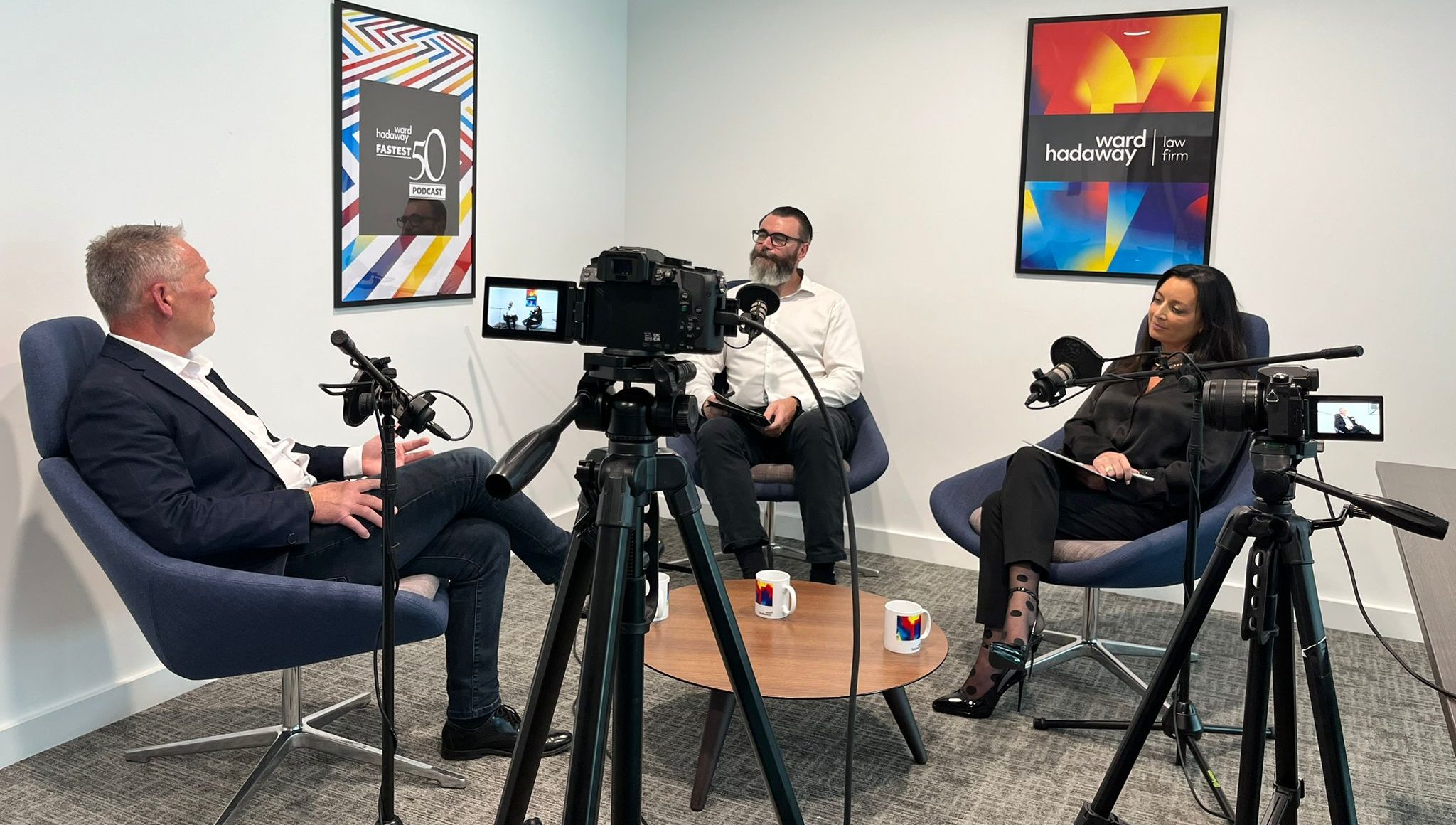
Welcome to the Ward Hadaway Fastest 50 Podcast, where we sit down with entrepreneurs and business leaders who are rewriting the rules of growth in the UK and beyond.
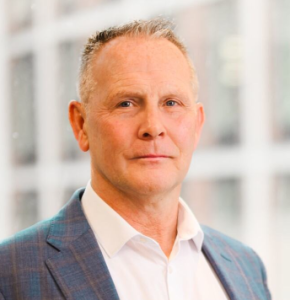
Mike Maudsley, CEO, enfinium
In this episode, Alistair McDonald and co-host Emma Digby are joined by Mike Maudsley, CEO of enfinium. With 30 years of experience in the energy sector, Mike brought his expertise to the energy from waste operator in 2022. He shares his career journey, from starting out as an apprentice in Halifax to becoming a CEO and explains why introducing apprenticeships at enfinium was one of his top priorities. He describes how he balances shareholder expectations and his vision for the future with the daily operations of running the plants. This includes pioneering carbon capture at Ferrybridge and helping bring data centres onshore in Yorkshire.
You’ll hear practical insights on:
- Why the first job of a CEO is to understand what your shareholders want and not what you want
- How a pilot plant in Yorkshire showed that carbon capture can work for energy from waste
- Why you should be open with your board about risk before problems arrive and not after
- The value of apprenticeships and growing your own talent
- How founders in regulated sectors can work with regulators and influence policy to open up new opportunities
- Why the CEO of a multibillion-pound business still needs a coach and a mentor
Listen on Apple Podcasts, Spotify or YouTube


Fastest 50 is our annual celebration of the fastest growing businesses across the North of England. We are passionate about recognising and inspiring growth, which is why we launched the Fastest 50 Podcast – to hear candid insights from those leading the way in the UK business landscape.
Mike 0:00
I shouldn’t have a job as a CEO of an energy and waste company, but until you stop throwing away your waste.
Mike 0:06
It’s not about being the largest, it’s about being the best.
Mike 0:09
The number one thing you’ve got to understand is what does a shareholder want, not what do you want.
Mike 0:15
If you want to drive a company forward, you’ve got to have a bit of risk, identifying risk, owning risk and running with it.
Alistair 0:30
Hello and welcome to the Fastest 50 Podcast.
Alistair 0:33
I’m Alastair MacDonald, Business Development Director at Ward Hadaway
Emma 0:37
And your cohost today is Emma Digby and I’m the Executive Partner for our Leeds office of Ward Hadaway.
Alistair 0:43
And today I’m very happy to say that we’re joined by Mike Maudsley.
Alistair 0:48
Mike is the CEO of enfinium.
Alistair 0:50
He joined one of the largest waste-to-energy operators as Chief Executive in 2022.
Alistair 0:57
He’s spent over 30 years in the energy, experience with senior management and executive roles spanning most technologies including coal, gas, combined heat and power, biomass, pumped storage, hydro, solar, wind, energy from waste and desalination plants.
Alistair 1:16
He’s worked at and had responsibility for businesses across the UK, the Middle East, the US, and Canada.
Alistair 1:23
In his role as Chief Exec of enfinium, he’s an advocate for using energy from waste plants to provide heat and power to assist local businesses to decarbonize.
Alistair 1:34
He’s also passionate about the role energy from waste plants can play in supporting the country’s net zero targets with the addition of carbon capture storage and specifically the uniqueness to deliver carbon removals and negative emissions.
Alistair 1:50
Mike, welcome to the podcast.
Mike 1:53
Great to be here.
Mike 1:54
And that’s a mouthful, isn’t it?
Emma 1:57
For those listeners who don’t know much about enfinium, great to have you based in Yorkshire from all of your overseas travels and adventures.
Emma 2:05
Tell us a little bit more about the company.
Mike 2:07
Yeah, enfinium is an infrastructure company.
Mike 2:10
It, it is literally an energy from waste company. Mike 2:12
So we have large assets and specifically in Yorkshire, over 65% of our assets are in Yorkshire.
Mike 2:19
We don’t collect waste.
Mike 2:21
We actually process the waste that’s being collected by others and that’s being processed by others.
Mike 2:25
So such companies as Veolia, SUEZ, Biffas, they, they collect the waste locally, they will sort it.
Mike 2:32
So they will remove all the plastics, glass, metals and then the residual waste is what comes to enfinium.
Mike 2:38
That waste would be going to landfill or would be put on a boat to, and give somebody else a problem, or you bring it to an energy from waste facility and basically, you process it you process it means that you actually do burn it.
Mike 2:51
You combust it; you incinerate it, you make sure it’s managed in a clean and environmentally, you know, compliant way.
Mike 2:58
And the best part of it is the byproduct of of, of this process as you create energy.
Mike 3:03
So it’s type of almost a free resource when it was going to get thrown away anyway.
Mike 3:09
So it’s going to get thrown away in landfill, but we’re not, we’re using it.
Mike 3:12
And then how about this so that the, the ash that comes out of the bottom still has bits of metal in it.
Mike 3:18
So that ash gets processed.
Mike 3:19
The metals that come out of it we can sell and the ash then gets go puts into road building.
Mike 3:24
So it becomes circular economy, you know, in, in effect, the whole party’s circular economy.
Mike 3:29
And we’ve got loads of ambitions for the future as well as what else we can do.
Alistair 3:32
A lot of the people that are in Fastest 50 or people that are on the podcast are founders and they’re people who, you know, start a business.
Alistair 3:40
You first joined in 2022.
Alistair 3:44
What at that point was your main goal for the company then and is it still the same today?
Mike 3:50
I am the first real CEO of enfinium.
Mike 3:54
Enfinium was two companies, two sets of assets bought from SSC and also another company called Wheelabrator that had built two other assets.
Mike 4:03
So we were four assets, three were brand new.
Mike 4:07
So just going through a teething process.
Mike 4:09
They’d been built in COVID.
Mike 4:09
This company had been bought by a company called Igneo Infrastructure Partners.
Mike 4:16
Basically it’s like a private equity but an infrastructure fund.
Mike 4:18
And they brought these two two, two assets, these two companies together as one and called it enfinium.
Mike 4:23
“So basically, Mike, you’ve got a brand-new company, you’ve got to make sure it becomes one” because let’s call it the Yorkshire guys and the Kent guys and the North Wales guys.
Mike 4:31
They all their view is that they were all their own independence and now, now, we are now enfinium.
Mike 4:36
So I created enfinium and I would say with our assets and our people, you know, we are one company.
Mike 4:36
That was the first thing really is making sure that we have an identity that we belong to something.
Mike 4:51
The second part is we only had one asset that was like an established asset, three brand new ones that probably had that they’ve been built in COVID, so challenges of, of that construction weren’t quite running as well as we’d like.
Mike 5:05
On top of that, I had a billion pound of construction, two assets, one in Leeds and one in Birmingham.
Mike 5:10
They’re on, they’re on track and they’ve just started digging down.
Mike 5:13
“So Mike, your job is to get this company as one, you know, drive it forward on the operational, get the operational excellence into the main part of the business, get those two construction projects delivered in, in, in the plan and actually then grow the business because we are like a, like I said, a private equity, you know, we have a value creation programme and how we, how we can grow the business.”
Mike 5:36
So a lot to go for and, and I just ran it, ran out everything.
Mike 5:40
Let’s do it, let’s do it all in one go.
Alastair 5:43
How do you balance running a company day-to-day with all the challenges operationally that you’ve got that you’ve mentioned with being in the right sort of business in 10 years’ time?
Mike 5:54
I have to smile because the smiling part is, is that when, when I did join the company, the number one thing is anybody that that’s becoming a new CEO in, in my type of environment, the private equity or the infrastructure fund.
Mike 6:06
The number one thing you’ve got to understand is what does a shareholder want?
Mike 6:06
Not what do you want?
Mike 6:12
And what, because what I brought to the, the party really was I knew how to operate plants.
Mike 6:17
I’ve got 30 years of doing this.
Mike 6:18
I, I understand when there’s a plant failure, I know what we’re going to do and now we’re going to do it.
Mike 6:23
But, but what I didn’t really understand was the shareholder, their view, they, they’d never had one of these plants before.
Mike 6:29
So when I, when I said it’s broken or we need to repair it, they’re going, well, what we’re going to do.
Mike 6:33
And then quite not, not scared in the process, but but apprehensive.
Mike 6:38
Well, it didn’t didn’t say this in the model.
Mike 6:40
It was interesting in the early days because I knew what the plants were going through.
Mike 6:45
And it’s called the “bathtub curve” of, of operations and construction.
Mike 6:45
You know, two or three years of you’ve got problems, but on the other side is we’re going to get there.
Mike 6:52
We’re going to get there.
Mike 6:54
I was then looking at the future.
Mike 6:56
The future is carbon dioxide, CO2, we emit CO2.
Mike 6:59
The world is aiming for net zero.
Mike 7:02
We know it’s probably not the word that people use today, but ultimately, we have climate change and, and climate change is, is, is basically driven by more CO2 going into the atmosphere than than we want.
Mike 7:16
So any combustion process, whether you’re making steel or, or, or cement, you are going to emit or gas fired power stations, you’ll emit CO2.
Mike 7:23
We do the same, but we do the same with your waste.
Mike 7:27
So it’s not my and I love this waste and it’s not my problem because it’s your problem that I’m resolving for you.
Mike 7:34
I’m sorting out the waste sector’s problem and I’m proud to say we do that.
Mike 7:39
But in that because I’ve been in the power industry for a long time and I understand carbon dioxide, whereas the waste sector, it was it.
Mike 7:39
The number one criteria is, is that, you know, reuse the waste, recycle the waste, reduce the waste.
Mike 7:39
Perfect. That’s exactly where you need to be.
Mike 7:54
The back end is, well, that’s what we’ve got left.
Mike 7:56
My view is how do we do do that?
Mike 7:58
How do we manage carbon dioxide?
Mike 8:00
How do we work with the government on looking at carbon capture and the future of that, that part.
Mike 8:06
And there’s a magic that we we have a superpower when we get into the carbon capture world.
Mike 8:11
So I was spending a lot of time in in let’s call the future thought process and, and working and, and trying to communicate with government.
Mike 8:21
What are we doing. How are we going to get into this emissions trading scheme where the the waste sector will be coming in at some point in the future having tax on CO2.
Mike 8:22
Now how about this?
Mike 8:32
So the tax on CO2 is going to be on your dustbin.
Mike 8:35
We’ve got to understand all this and I was saying to the shareholder in the most professional way, they said, “Mike, you’ve got to spend 85% of your time sorting all these problems out on on the day job”.
Mike 8:48
I’m saying I’ve got those handled.
Mike 8:50
That’s going to be a time driven process.
Mike 8:54
What I also need to do is look at the future because there’s no point in having these plants today if you don’t know what the future is tomorrow.
Mike 9:02
And I am a thought leader in that area and I’m recognised now after five years in the industry.
Mike 9:08
People do look up to me when I do talk about carbon capture and and that side.
Emma 9:12
Mike on on with that.
Emma 9:14
You are like Tigger, anybody who has the pleasure of spending time with you, very, very future focused.
Emma 9:20
You’re at the front line of innovation and as you say, you’ve got to balance that with shareholders.
Emma 9:25
How do you make those critical decisions in terms of where to invest the company money in innovation and tech to move forward?
Mike 9:34
The number one part of my business is to invest in safe and reliable kit to run and deliver today.
Mike 9:42
So our assets, our energy from waste facilities, their facilities and and designs that are going to work.
Mike 9:50
There are a lot of designs out there that don’t work and haven’t and haven’t proven the way they’re going to work.
Mike 9:55
So number one is investing and looking after the the on the construction of the two new plants, the billion pound investment.
Mike 10:04
It’s invested in proven technology and ideally proven technology with the players that can build well to time and to budget.
Mike 10:12
The other part then is is for carbon capture or anything for the future is it really hasn’t been invented completely.
Mike 10:19
So I, I had to go into a programme of, well, what is carbon capture, convince the shareholders to start with that this world is a world we should be in.
Mike 10:30
So I spent a lot of time convincing myself, understanding myself, and then we did a fantastic programme with the board on the strategy that the decarbonisation plan for the future should look like this.
Mike 10:40
It means investing like this.
Mike 10:40
They said: “So how do we make sure it works?”
Mike 10:45
Well, we need a pilot because we need to.
Mike 10:48
It’s like buying a car.
Mike 10:49
Everybody’s trying to sell you these cars out there, but if you’ve never had a car, you don’t know what to buy.
Mike 10:54
And they go, don’t worry, you know, we can sell you one.
Mike 10:57
Yeah, but if you’re really smart, you’ve got to work out well, how many miles per gallon is it doing and how, how much is the service in and you know, how much you’re going to, how much is the depreciation, whatever it is.
Mike 11:06
We were the pioneer in the industry and UK first we’d put a one-tonne carbon capture pilot plant at our Ferrybridge site, just just up the road from here.
Mike 11:15
We’ve proven that from waste we can capture the carbon dioxide from a proven process and that proven process can now it’s scalable, but we’ve also understood from that process that it’s very energy intensive to capture carbon.
Mike 11:33
And I’ve started another programme of can we find a technology that’s better than it’s called amine, the amine process that can capture carbon with lower energy cost and lower capital cost.
Mike 11:45
And we found a British invention.
Mike 11:47
Actually part of that British invention is called Metal Organic Framework.
Mike 11:52
Metal Organic Framework was actually founded in the 1970s by three founders.
Mike 11:58
One of the founders is from Yorkshire and that founder got a Nobel Prize last year for Metal Organic Framework design.
Mike 12:06
There’s a proven technology and we we’re bidding into markets, the government markets to bid for the full scales.
Mike 12:12
But what does the other future look like that’s even more effective and efficient?
Mike 12:16
Basically trying to look at a scale up programme for that.
Mike 12:20
We’ve now got that plant in Yorkshire as well.
Mike 12:22
So on innovation, it’s, it’s having the idea understand, understanding where the business needs to go, understanding what the stability of the business needs to be,
Mike 12:30
having the idea of how I can take it forward to the next generation, knowing what technology is fit for purpose and then trying to work out what technology it could be for the future.
Mike 12:40
I’m, I’m quite lucky as a CEO that I can do all that as well.
Emma 12:43
You are, but how, you know, there’s a lot of people who’ll be listening who are founders or, you know, in businesses that are scaling much more modest operations than you’re dealing with.
Emma 12:56
I mean, if you made a wrong decision, that’s going to cost the company a lot of money, right?
Emma 13:01
How do you deal with that stress?
Emma 13:02
How do you deal with the repercussions if something was to go wrong?
Mike 13:07
Back to the Tigger bit.
Mike 13:08
I’m full of energy and I sell everything.
Mike 13:11
Some of my team called me the, you know, the Duracell Bunny.
Mike 13:13
“Take his batteries out!”
Mike 13:14
“He gets so excited about things.”
Mike 13:17
The number one thing.
Mike 13:17
So when you’re going through the investment, you know, the financial investment, investment decision, the FID, you’ve got to be clear on the risks.
Mike 13:26
I’m very happy to put the risks in there and to show how we can mitigate and manage the risks.
Mike 13:31
Can you foresee everything?
Mike13:38
No. But if you and when you see things coming through which, which are going to impact the business, be very clear, do not hide them at all.
Mike 13:42
If you put your head in the sand, dangerous, be very clear with yourself what that could look like.
Mike 13:48
And I’m a very pro communicator with the board of I’m a shareholder.
Mike 13:55
We can see this coming.
Mike 13:55
This is how we’re going to navigate and this is how we’re going to get through it and keep them on the journey with you before you before you get into trouble.
Mike 14:05
It it’s a tricky one because if you’re not careful, you can say, well, you’re the CEO, you need to be managing all this and we we bet on you.
Mike 14:12
So there’s that, there’s that balance.
Mike 14:15
And the same for the operational plants.
Mike 14:17
We’ve invested a lot in the operational plants.
Mike 14:20
So some of them that they’ve, they’ve had tens of millions of extra investment that we didn’t expect because they weren’t running to plan.
Mike 14:28
But our options are, well, you continue not to run to plan, not good.
Mike 14:28
Or you continue to invest until you get to plan.
Mike 14:35
If you want to drive the company forward, you’ve got to have a bit of risk, identifying risk, owning risk and running with it.
Alistair 14:42
So you’ve referred a couple of times to the fact that as a CEO, you’ve got this sort of shareholder responsibility, you’ve got the operational responsibility, you’ve got that derisk in the future of the business responsibility, but you’re also responsible for people and for culture aspects of the business.
Alistair 15:00
And given that we’re talking about, you know, Yorkshire Fastest 50, you’ve got sites in Yorkshire that you mentioned, you’ve got one in Ferrybridge in Knottingley and one in Skelton Grange in Leeds.
Alistair 15:13
What impact do you think that’s had in the region and what makes those sites unique in the region?
Mike 15:19
We are, we are the largest energy and waste company in North of England.
Mike 15:25
We are, we are actually the largest, the second largest in the UK.
Mike 15:28
It’s not about being the largest, it’s about being the best.
Mike 15:32
The impact is first of all, making sure that we’ve got, let’s call it our internal box, that we’ve got a very clear brand and vision of who and what we are as a team and, and as as a people.
Mike 15:45
We put on the walls as you drive down the A1 towards M62 on the junction there “enfinium” and the rest of the industry haven’t you know.
Mike 15:45
And, and we’ve got the one at Skelton Grange. It’s just become ours.
Mike 15:59
I’ve just been there this morning.
Mike 16:01
So when we’re going to put our badge on the wall, how are we going to make the impact in in the the local area?
Mike 16:07
So it’s about us being proud of ourselves is key.
Mike 16:11
Then it’s type of easy to then tell everybody who and what we are and what is our impact.
Mike 16:16
One of our impacts is, I arrived here 2022, January 22.
Mike 16:21
By September 22, I’d set an apprenticeship programme up.
Mike 16:24
This company was just just about a year old at that time from, from its complete connection together the whole infrastructure deal.
Mike 16:34
Within one year of that, we’d set an apprenticeship programme.
Mike 16:37
I came from an, an apprentice, I came from Halifax and I’m proud to say I was an apprentice.
Mike 16:37
And I understand that that somebody gave me an opportunity and a chance and, and trained and, and helped me through my career.
Mike 16:50
I want to do the same.
Mike 16:52
I can see there’s so many great things out there.
Mike 16:55
So, so we, we, we’ve set that programme up, but we’ve, we’re, you know, we are a fully fledged business in terms of finance IT, HR.
Mike 17:03
We do have a legal team as well.
Mike 17:03
And, and, and making sure that we develop all our team and they all feel part of that brand that that’s, that’s the impact is internal first and, and it type of ripples out people in a nice way want to work for us.
Alistair 17:20
Wow, just on the apprenticeships piece, like what can what’s the value for other businesses and looking at that, because again, we’re talking about quite a well-resourced, well invested in business and we could be talking about earlier stage businesses that are scaling up and bootstrapping businesses and all that kind of stuff.
Alistair 17:39
But like, what would you say to other businesses about the value of creating apprenticeship opportunities for people?
Mike 17:39
Growing your own talent, you can’t, you can’t beat it.
Mike 17:48
Somebody that that becomes part of who you are right from their beginning become, you know, they, they become your ambassadors.
Mike 17:56
They, they, they, they, your mould in, in that, in that fantastic way.
Mike 18:01
In our industry, we’ve generally recruited from the power industry.
Mike 18:05
Well, the power industry’s just about, you know, recruited from, there’s not a lot of other talent left that, that wants to move around.
Mike 18:12
So then it becomes difficult.
Mike 18:14
So, well, let’s not get into a difficult spot.
Mike 18:16
Let’s make sure that we, we’re training from the bottom upwards.
Mike 18:20
And each time the apprentice has come through, the next one comes in at the bottom and, and people retire at the top end.
Mike 18:27
So we’ve, we’re now in year four and they’re still coming through.
Alistair 18:32
And I think there was a period of time where certainly when I finished school, everybody was encouraged to go to university, whether you are the right person to go to uni or not.
Alistair 18:40
And I think that wasn’t necessarily seen as a route in to a good career.
Alistair 18:44
And I think that’s starting a shift.
Alistair 18:46
I know in our sector we’ve got apprentice solicitors in the business.
Emma 18:50
Yeah, absolutely.
Alistair 18:51
I think whether it’s a law firm, whether it’s an energy business, I think you’ve got to have roots in encourage people to come in and encourage that talent to come in.
Alistair 19:01
I would have thought in your business, it’s quite appealing to young people because it’s that doing something with waste and it’s good for the environment and that appeals to.
Mike 19:01
It’s very attractive. The bit about the business is there’s not many people know about it.
Mike 19:11
And that’s, that’s the starting point is people need to know about your business and what you do.
Mike 19:19
The other part of the apprentice programme or any trainee, what we, what we’re happy to do is develop an individual in line with their, you know, desires and abilities.
Emma 19:29
Mike, you and I know each other from kind of a, a different area of the business.
Emma 19:34
How do you manoeuvre and how challenging do you find it making strategic business decisions for enfinium, but also then having to bear in mind it’s a heavy regulated industry by the government.
Mike 19:50
How, how, how do I balance it out?
Mike 19:51
Well, number one is you’ve got to, you’ve got to respect the regulation of the, the, the industry.
Mike 19:56
We, we have to do what we have to do, but we also, I, I do think, I do think I’m an entrepreneur, CEO and, and.
Mike 20:04
I think they’re quite hard to come by in terms of particularly a corporate, a corporate entrepreneur.
Mike 20:10
They, you know, I came from generally a corporate world.
Mike 20:13
So it’s, it’s very difficult to be entrepreneurial.
Mike 20:17
I’m very lucky.
Mike 20:18
Now I can show some of my entrepreneurial spirit within that.
Mike 20:22
The, the, the, the lines then say, right, it’s from your regulator side and how can I grow the business?
Mike 20:27
How can I get value creation?
Mike 20:29
What can I do?
Mike 20:30
In my interview five years ago, they said on top of the carbon capture, they said, well, how can you sell your energy out there?
Mike 20:36
What can you do with your energy that’s different than just wholesale onto the grid?
Mike 20:41
So I’ve looked at opportunities of how to do that and, and one of the ways it’s called private wire, it’s over the fence attracting data centres.
Mike 20:50
Now there is going to be some magic, hopefully soon in Yorkshire and hopefully it’s enfinium that’s signing a phenomenal deal beyond anything with data centres and and it’s well, where does that fit in your regulation?
Mike 21:04
The answer is, well, people don’t generally do it.
Mike 21:07
So you can pave a way, and I’m paving a way with messaging out there that we are a base-load energy company that that’s regulated on the wayside.
Mike 21:18
We’ve got an we’ve got a, we’ve got a licence of what we can export.
Mike 21:20
But if you want to come and, you know, park up next to us and, and be a, a located data centre, the next fence, then, well, we can do business and, and it’s not regulated in that sense.
Mike 21:34
And then we can we, we’re like a little nuclear power station with local homegrown energy, as I would call it.
Mike 21:40
You know, our, our waste, our waste sector is actually providing potentially for a major AI company.
Alastair 21:46
Sounds amazing, don’t it?
Alastair 21:48
I think that’s so such a powerful message to be able to hear because I think one of the other podcasts we’ve been talking about, you know, growth and we’ve been talking about how we get the economy going.
Alastair 22:00
I think everybody looks at the AI as something that’s going to stimulate that.
Alastair 22:05
But then every time anybody mentions a data centre is the jobs bit is the growth bit, but then there’s the environmental bit.
Alastair 22:12
So if you’re able to provide a solution that facilitates that and doesn’t have the, the consequences for the environment.
Mike 22:19
What what I find with the data centre world, they’re generally a developer world or an operator world in and it’s a bit like being the incinerator.
Mike 22:28
You’ve got to educate people that you’re not an incinerator.
Mike 22:31
The data people say are data centres that you know, they consume water.
Mike 22:35
Well, they don’t need to consume water and energy and waste or every gas fired power station in, in the country could consume water, but it doesn’t.
Mike 22:42
There are other ways of managing by air cool condensers.
Mike 22:46
We have them and the data centres will have them too.
Mike 22:49
They won’t even get an environmental licence to build around us without an air cool condenser.
Mike 22:53
But they haven’t spent the time telling people of what they are good at.
Mike 22:58
They just allow people think what they’re not good at, which is which is.
Mike 22:58
It’s tricky then, but the bit that’s the most challenging for the UK PLC and the UK PLC needs data centers.
Mike 23:05
We need sovereign data centers, we need them on our Terra Firma.
Mike 23:16
The grid connection is the biggest issue and energy is then the second biggest issue.
Mike 23:22
Well, that’s everything I know.
Mike 23:24
So if I’m not helping a data centre who doesn’t have that as their normal DNA, then because they are literally digital companies, that’s what they do.
Mike 23:32
And, and they, they are, they find land and they develop.
Mike 23:35
So, so I think that that, that from an energy sector basis, we can offer so much.
Mike 23:35
The connection, that’s how I see it is you can connect through us and, and we can provide you the power when we’re on and when we’re not on, you can take the power from the grid, but you can have our connection.
Mike 23:51
What a great partnership that is.
Alistair 23:53
So I guess just relating to that point, a lot of the the people interested in this will be founders and people growing businesses.
Alistair 24:02
There will be other founders who are operating in highly regulated sectors and industries.
Alistair 24:10
What advice would you give to to those people that are growing businesses in those regulated sectors?
Mike 24:17
When you’re in a regulated sectors, it’s it is important.
Mike 24:20
I said earlier, you know, respect the regulation, understand it well on that basis of being the founder is how can you communicate that better?
Mike 24:30
How can you work with government and policy influence and change as a founder, be an influencer.
Mike 24:36
And I love the word influencer.
Mike 24:38
I always thought influencers were the the young generation, but with all the experience, why don’t we influence and help the regulators understand?
Mike 24:47
Well, there’s a way around this.
Mike 24:51
We just, we just don’t, we did a phenomenal energy deal, really good long term energy deal with our Skeleton project with Yorkshire Water and, and the, the answer was, but you’re not green energy.
Mike 25:03
So well, let’s work around it.
Mike 25:05
Let’s, let’s work out how we communicate and convince the regulator that we’re almost free energy.
Mike 25:11
And if we put carbon capture on our assets, we actually become super bright, better than green energy because we can create carbon removals.
Mike 25:19
And it’s that with any business really.
Mike 25:19
If you have good relationships with your customers, when you on supply chain, whatever it is, when you don’t need them, then when you do need them, you can call on them.
Emma 25:33
Talking about data centre, which is slightly off track with enfinium, but really interesting part, you said we have to have more data centres in the UK.
Emma 25:43
So from my kind of limited knowledge, obviously at the moment, all of the innovation in AI, which is, you know, not overly regulated at the moment.
Emma 25:53
So what a lot of our listeners might not realise is that there it goes up into the cloud and then falls, for example, to a US or a Chinese data centre.
Emma 26:02
And that data is then not controlled by the laws that we have around that data.
Emma 26:07
And that’s why you people like you and I really champion making sure that we’re protected on shore with these innovations that are running so quickly.
Emma 26:17
Where do you see this going?
Emma 26:19
What impact is enfinium with these relationships bringing data centres back on shore?
Emma 26:24
What impact do you think that’s going to have on economy and in innovation?
Mike 26:30
Phenomenal. I I really do think it’s phenomenal because the data centres have a need worldwide.
Mike 26:36
We have a choice, either let them on shore or they’ll have offshore.
Mike 26:41
You know, I, I know that that’s exactly, we’ve got billions to spend and, and if you’re not, if you’re not going to help us, we’ll do it elsewhere, then it goes offshore.
Mike 26:49
So we’ve an enfinium.
Mike 26:53
We’re not a big energy company.
Mike 26:55
That’s not the point.
Mike 26:56
The point is it being an enabler.
Mike 26:56
And that’s what I think, you know, energy from waste companies can do.
Mike 27:01
We’re not going to be the, the utopia solution.
Mike 27:01
We’re, we’re too small.
Mike 27:03
But, but if a data centre wants to be 300 and 500 megawatts, that’s not for us.
Mike 27:09
We’re not that big.
Mike 27:10
That that said, they might want to start off at 50 megawatts.
Mike 27:13
Well, they can come next to us then and you can get your connection.
Mike 27:13
You can grow once that connection’s there and they, they then can grow and they get the grid connection as they’ve waited in time, they’re on our shore and they’ll just expand from that.
Mike 27:26
So that that’s how I see enfinium as one part of this whole story is somebody maybe look back one day and get you know, it was an enabler, you know, and without that, the other one is, is the grid system can’t can’t help them connect quick enough.
Mike 27:42
Well, I can help you connect very quick.
Mike 27:44
We are talking by the end of next year, this data centre will be running within a year that that and and if they don’t build here within a year they’ll build somewhere else.
Alistair 27:55
Pretty interesting.
Emma 27:56
It is, isn’t it.
Alistair 27:56
It is.
Alistair 27:58
So practical takeaways. Referred to the fact that, you know, a lot of businesses that were in the fastest 50 are at an early stage.
Alistair 27:58
A lot of them are are startups and scale UPS.
Alistair 28:08
But a lot of the time the skill set of the people that are setting up a business aren’t the same ones that are the longevity of that business and and other people come in.
Alistair 28:19
So what would you say to other people to prepare them for joining an established company in a in a leadership role?
Mike 28:29
Well, I, I would say if you’re in a startup or a co-founder, even as a CEO today, I’m a multi-billion pound business.
Mike 28:38
I have a coach, I have a mentor, I have two.
Mike 28:42
I’m greedy because I’m so ambitious of who, whom, what I think I can do myself.
Mike 28:47
But it doesn’t matter what the the size of your business is, having a coach, it’s like having a, a mirror.
Mike 28:55
It’s like having a, a white board, you know, a thought, thought process that you don’t have to talk direct to employees about.
Mike 29:03
I’ve got this idea.
Mike 29:05
I’ve had coaches all my life.
Mike 29:08
I’m in this industry because I did judo.
Mike 29:11
How about that?
Mike 29:11
It’s nothing to do with nothing.
Mike 29:13
Why I’m an engineer.
Mike 29:14
I was quite practical, but I went to university.
Mike 29:14
I finished my friendship.
Mike 29:18
I went to university in, in Birmingham.
Mike 29:21
I only chose Birmingham because I had no career teacher at the time.
Mike 29:24
It was because the best judo clubs in this country are either in the North East, which they’re fantastic, or they’re in in in the Midlands.
Mike 29:34
I was a Yorkshire champion, I was a black belt but judo took me to Birmingham.
Mike 29:38
I went to university and they were sponsored by the Electricity Board.
Mike 29:44
CGB became power Gen EU and that’s that’s how I’m in the industry.
Mike 29:48
But my whole judo and I was a judo teacher and somewhere in that process I was a was a gold medal hunter and all I ever wanted win, win, win.
Mike 29:58
And somebody once said to me, you’re a black belt, you’re a national champion, 18 years old.
Mike 30:03
We, and I was offered the job as a judo teacher in Halifax, running my own judo club.
Mike 30:07
And I said, no, I’m not interested in that, that, that I, I don’t have time for that. I, it’s about winning.
Mike 30:12
And somebody said, no, no, people have taught you things.
Mike 30:12
They’ve given you their advice.
Mike 30:16
They’ve, they’ve helped you become who you are.
Mike 30:18
You’re not who you are without them.
Mike 30:21
Your job is to make sure you give back and giving back and coaching others is a phenomenal way to learn even more about yourself.
Mike 30:31
So I’ve always appreciated a coach from that.
Mike 30:34
Even before that, I didn’t quite appreciate the coaches.
Mike 30:36
Before that, I just took it.
Mike 30:38
But then realising the coaches are phenomenal people, the mentors, the guidance of this is what we need to do.
Mike 30:45
And as the CEO of a big organisation or CEO or a leader of a small organisation, get yourself a coach that can help you in that, in that part of where you are in, in the programme.
Mike 30:58
If your company’s £1,000,000 and you’re trying to scale up to 10, you need to find a good coach that can maybe help you get or a mentor that can get to that 10, 10 to 100 different and so on.
Mike 31:10
So you can keep choosing.
Mike 31:12
You don’t have to have the same person.
Alistair 31:13
It’s absolutely fascinating.
Alistair 31:15
I had a coach for a little while who’s from Harrogate, so there’s the Yorkshire connection and that was really phenomenal.
Alistair 31:21
But it’s funny you mention the North Eastern judo.
Alistair 31:23
So I used to work in the healthcare sector for a family that ran neuro rehab units.
Alistair 31:30
My boss, who’s my now mate called Bora Gallen, he was on the British judo team and his dad, John Gallon was captain of the British judo team.
Alistair 31:30
And he got the Trans Siberian Express out studied at, at a uni of Japan.
Alistair 31:46
And but the way that they ran their business and the way that they coached me was was brilliant.
Alistair 31:52
And it’s it’s interesting that there’s also parallels there.
Alistair 31:54
So thanks for that.
Alistair 31:55
That’s great.
Emma 31:56
My question, if Mike was PM, what is the one thing that you would change?
Mike 32:04
Energy security is a very key part of this country and growth focus on security, then energy cost and then net zero and that they all come together.
Mike 32:18
So and when when I say that is I do believe in the North Sea at the moment because that’s where the energy is.
Mike 32:18
It means that they may not need to tax as as much because they can they can get the taxes from the North Sea rather than bringing in imported Qatar gas.
Mike 32:32
I think that that is a great way for this country to when we won’t have gas forever we won’t have it forever.
Mike 32:37
So in that time you, you can then grow your, your economy and you can grow your green, your green credentials even further.
Mike 32:46
So in the future, you don’t need that gas being the energy person.
Mike 32:49
That’s the bit I’d do.
Mike 32:49
And I’d help with data centres and I’d, I’d bring that sovereign data centres into this country.
Alistair 32:58
Excellent, thanks for that.
Alistair 33:00
So my last question is, is more sort of on the on the business side of things.
Alistair 33:00
And it’s what’s the one rule that every growing business should follow?
Mike 33:10
Have a plan, stick to your plan, keep reassessing your plan.
Mike 33:15
Are you on track?
Mike 33:16
If you’ve got a plan and you’ve got a direction, you know why that’s your North Star.
Mike 33:20
But you can change direction to get to the same point.
Mike 33:23
You don’t have to stick the same path.
Emma 33:25
I think it’s really interesting.
Emma 33:26
That’s the theme that’s coming through in these podcasts is you know, of course no way you want to be, but you’ve got to be agile, you’ve got to pivot and I think that’s probably due to how quick everything is changing around us.
Alistair 33:28
Excellent. That was that’s really interesting.
Alistair 33:42
So I’m going to try and summarise what we’ve what we’ve talked about now and we’ve covered a lot of ground.
Alistair 33:49
So I think one of the things that I thought was really interesting at the beginning, when you dealing with a, a business that has taken investment, has private equity, has shareholders, which a lot of growing businesses inevitably will.
Alistair 33:49
It’s to understand your shareholder and understand their mindset.
Alistair 34:07
And yes, you’re running the business, but you’re running the business on their behalf and you’re generating additional value for them as shareholders.
Alistair 34:14
So that that’s a really, really key point.
Alistair 34:17
I think as somebody who’s hitting, energy has been a theme all the way through.
Alistair 34:17
But your energy, yeah, you’ve got to have that energy.
Alistair 34:23
You’ve got to be pretty relentless.
Alistair 34:25
You’ve got to be at it the whole time.
Alistair 34:27
So I think that’s really interesting.
Alistair 34:29
I think something that came through loud and loud and clear is how important it is that you grow your own people and you develop your own people.
Alistair 34:37
And whether that’s because you’ve got people at one age retiring and you need to be attractive to bring them in.
Alistair 34:43
But I think you’ve got to bring people into a business like yours who are passionate about what it is that you’re doing.
Alistair 34:49
I think that’s really important and I think young people coming into businesses in sectors that are powering data centres and AI and circular economy and energy and stuff, they’re motivated to do that because they’re going to be here in 10 years’ time.
Alistair 35:03
So I think that’s really, really important.
Alistair 35:06
I think all the people being influencers is really important.
Alistair 35:10
I think, you know, we have got a lot to.
Alistair 35:12
Yeah, absolutely.
Alistair 35:14
And I say that as an influencer myself, Emma, but we, well, I think we do think that that’s just for younger people and, and there’s so much knowledge and there’s so much intelligence and there’s so much experience that other people can learn from.
Alistair 35:27
I think I think amplifying that and getting that message out there is absolutely critical.
Alistair 35:31
So I’m absolutely here for that.
Alistair 35:34
I think something that was really interesting to me is, is how you innovate and how you solve problems in highly regulated industries.
Alistair 35:44
And I think it’s very easy to think that that’s either not an industry that innovative people are going to go into because of the regulator.
Alistair 35:52
And I also think that the lesson around work in partnership with people, whether that’s a regulator, whether that’s, you know, a landowner and a planner or whatever it is, I think as a society we’ve got quite adversarial and we’ve got, you know, you’ve got that opinion, I’ve got that opinion, we’re not going to talk to each other.
Alistair 36:11
And I think that’s not useful for the UK PLC, for society, whatever it is.
Alistair 36:16
So I think that working together is, is absolutely critical.
Alistair 36:19
So that was good.
Emma 36:20
It is difficult when you’re always right, though Al.
Alistair 36:23
I wouldn’t know that.
Alistair 36:27
Just the last thing is, is that it’s really, really valuable to have a coach, no matter how much you’ve learnt, you know, and no matter how much experience you’ve got, you’ve always got stuff that you you’re challenged by and you’ve and you know, I love the fact that there’s that judo connection within that.
Alistair 36:43
So that’s really interesting.
Alistair 36:44
And then the last thing is I, I just want somebody to tax my bin.
Alistair 36:48
I think that’s, that’s a really useful thing to, to do.
Alistair 36:51
And I think that would change behaviours and I think that would be really good.
Alistair 36:54
So that’s been fascinating.
Alistair 36:55
I’ve really, really enjoyed that.
Alistair 36:57
As I’ve reflected on what we’ve talked about, it is a lot, but I think it’s brilliant what you’re doing.
Alistair 37:03
I think it’s, you know, it’s, it’s potentially something that’s going to be very, very valuable for the country and good jobs and, and clean energy and all that stuff.
Alistair 37:10
So thanks very much.
Alistair 37:10
Thank you, thank you to both of you.
Mike 37:10
The the only other one that I’d add to everything is it’s let’s have some fun as well.
Mike 37:17
I do like to smile and you know, you’ve, you’ve, you’re back to giving energy out.
Mike 37:22
You, you’re going to enjoy your job.
Mike 37:23
If you don’t enjoy your job, you might be in the wrong one.
Mike 37:26
You’ve got to give, you know, you’ve got to see reward as well, but you’ve got to, you’ve got to have downtime.
Mike 37:30
You’ve got to think of your family.
Mike 37:31
I always say to my teams, anybody family health first, family, you know, family first.
Mike 37:38
If, if those two are looked after, then you’re going to come to work and you give you 1,000,000%.
Alistair 37:38
Well, because, you know, no matter how much natural energy you’ve got as a person, if you, if you don’t give yourself that chance to recharge, your, your energy depletes and you’re not as effective as you can be.
Alistair 37:52
So I love that.
Emma 37:54
And I think that authenticity point, you know, you’ll always hear me before you see me, won’t you?
Emma 37:59
You know, I, and I used to worry that I’ve got a Yorkshire accent and I used to, you know, I was so self-conscious.
Emma 38:06
Now maybe it’s an age thing.
Emma 38:08
I just think have you’ve got to enjoy what you do.
Emma 38:08
Yeah, as you say, but you’ve got to do it as you.
Alistair 38:15
Excellent. Well, thank you very much.
Alistair 38:16
That’s been great.
Mike 38:17
Thank you.
Emma 38:17
It’s been a pleasure.
Please note that this briefing is designed to be informative, not advisory and represents our understanding of English law and practice as at the date indicated. We would always recommend that you should seek specific guidance on any particular legal issue.
This page may contain links that direct you to third party websites. We have no control over and are not responsible for the content, use by you or availability of those third party websites, for any products or services you buy through those sites or for the treatment of any personal information you provide to the third party.
Your hosts

Follow us on LinkedIn
Keep up to date with all the latest updates and insights from our expert team