Growth by design with Mark Thompson
5th March, 2026
Fastest 50 Podcast
19th March 2026
Building legacy and resilience with Andy Carr and Paul Callaghan
Find out more
12th March 2026
Scaling a tech consultancy with Tom Lawson
Find out more
5th March 2026
Using advisors to support growth with Raman Sehgal
Find out more
5th March 2026
Growth by design with Mark Thompson
Find out more
Welcome to The Ward Hadaway Fastest 50 Podcast, where we sit down with entrepreneurs and business leaders who are rewriting the rules of growth in the UK and beyond.
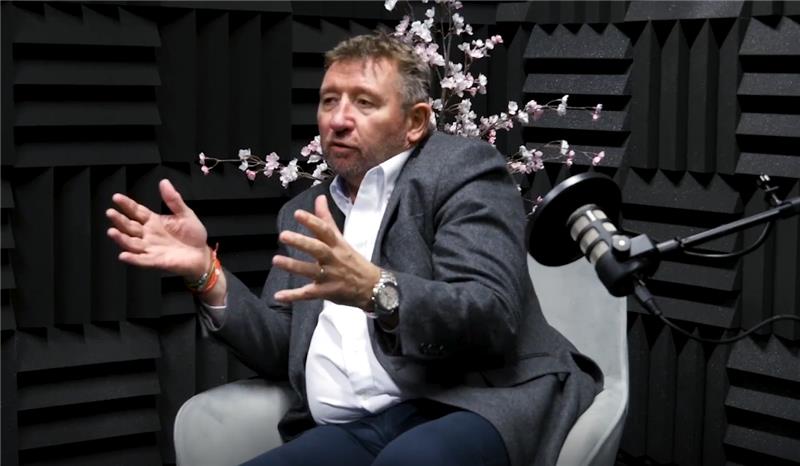
In this episode, hosts Alistair McDonald and Lesley Fairclough are joined by Mark Thompson, Managing Director of Ryder Architecture, to discuss how to scale without compromising your values or culture.
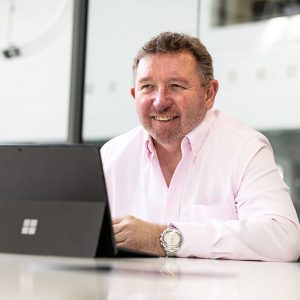
Mark Thompson, Managing Director, Ryder Architecture
If you’re leading growth (or about to), you’ll get practical insight on:
- How to step into change and set a clear strategic direction
- How a clear strategic framework and annual planning keep the team aligned as the business scales
- How to expand into new markets while protecting standards, culture and momentum
- How moving to an Employee Ownership Trust changes decision making, accountability and long-term resilience
From Newcastle to London, Hong Kong and Vancouver, Mark shares the thinking behind Ryder’s growth and the leadership habits and support that keep it sustainable.
Listen on Apple Podcasts or Spotify


You can find out more about Ward Hadaway Fastest 50 here. For the Fastest 50 podcast and access to all episodes, click here.
Alistair McDonald:
Hello and welcome to the Fastest 50 Podcast. Today I’m joined by my co-host Lesley Fairclough. Lesley is a partner at Ward Hadaway and she leads our house building team, which is part of our wider built environment team. I am very happy to say that we are joined today by Mark Thompson. Mark is the managing director at Ryder Architects UK, a leading UK design practice known for its innovative approach, strong northeast roots and people-first culture. Mark, Thank you very much for joining us. It’s great to have you on the show.
Mark Thompson:
Thanks for the invite.
Alistair McDonald:
So, Ryder have been a presence in the North East for decades. How would you describe the journey over the years from regional practice now to an international firm?
Mark Thompson:
Interesting, fun. I remember when Peter Buchan and I took the business on, Pete was already a director in ‘94 and we were going to do our own thing and then through retirement and illness, unfortunately, Gordon Ryder had retired, Ted Nicklin was there and was on his way to retirement, but then took ill and it was sort of, well, should we leave and do our own thing? Or should we pick up the batton and take this on? And we decided to underwrite the overdraft, which was about £75, £85,000 on a turnover of £400,000 pounds, so quite highly geared actually. And we decided to take it on. I think we went from 26 people to 14 people, because a lot of people have been retained for worthy reasons, good people who had been there a long time, but, you know, the industry had changed and we had to adapt.
What we did then was we developed, well, we wrote a paper called Blueprint, which set out our aims, goals, and shared it with all the staff who remained. Back then it was quite innovative to have a profit share, sabbaticals. They’ve become more commonplace, but 30, 40 years on down the line.
So we did that and that blueprint’s been a key part of setting our direction every year since. We didn’t do it again until ’97, when we went from Ryder Nicklin as the practice was then, to Ryder, and we’ve done it every year since.
And I think having done that and setting that direction every year and having the discipline effect every year in an honest, candid way with all of our people keeps you focused. I think it’s easy to drift off course if you don’t. Well, I don’t know, I haven’t done it, but I can imagine, how we get from A to B, you know, there’s different routes you can do it, but at least you know where you’re going and I think that’s kept us. We never set out to grow, we just set out to do a good, good job for people, including yourselves at that time, at Ward Hadaway.
I think we were the only architect that you invited back to do a second building down on the Quayside. I know it sounds like a cliche, but just growing by doing a good job for people and word of mouth and, you know, I’d like to think doing the right thing.
Alistair McDonald:
How did you go from a regional practice to an international firm?
‘94, we took it on. By about ‘97 we’re doing Cobalt Business Park and it was Highbridge Properties down there and a guy called Steve Bantoft, who’s sadly passed away, were doing all the enterprise zone stuff and they were saying, well, if you had an office in London, you could do work down there. So, we looked for somebody to recruit or to collaborate with. There was a firm looking at doing St. James Boulevard at the time, who we had a collaboration with. We were doing a lot of work for Bannatyne at the time, so we had a lot of work down in the south. And we ended up joining forces with a guy called Paul Hyatt, who was, at the time, going on to be president of the RIBA. So, I guess we funded his presidency in we got his business out back of it.
I guess we were only 30 people at the time. They would’ve been about 10 and it’s when it first dawned on me the importance of getting the culture right, because after about a year, there was only him one architect and his secretary left from his side of the firm.
Just people hadn’t, it just hadn’t worked out. But we grew it from there, got us established in London. And I think it’s not, I was talking about this to somebody yesterday, back then, if you weren’t in London, you couldn’t do anything anywhere else in the country. People from around the country would go to London for what they needed, but they probably wouldn’t go to Manchester or Newcastle or vice versa and so on.
And I guess you’ve witnessed the same thing with your firm. And I think regionalism, if that’s the right term, has changed a lot over the past few years. And I remember being, or trying to pretend we weren’t from Newcastle in the London market, and we had a very well established London business to now we openly say we are a Newcastle Firm.
Lesley Fairclough:
That’s great.
Alistair McDonald:
Very proud. Very proud of that. Yeah.
Mark Thompson:
And I think, I actually think, we don’t sometimes get the credit we deserve because we’re not in London.
Alistair McDonald:
Right.
Mark Thompson:
And I’m not bothered about it anymore. If the clients like what we do, then that’s what’s important and our people enjoy working and we can attract people then what other people think doesn’t really matter.
Lesley Fairclough:
And the quality of your scheme says it all, doesn’t it?
Mark Thompson:
Yeah.
Lesley Fairclough:
You have so many fantastic flagship schemes.
Yeah, so it went from London and then we had the opportunity, well it was in 2010, the financial crisis, everybody was so it was before everyone realised it was a global crisis, I guess, but we wanted to be more resilient and we had the opportunity to do some work in Hong Kong as a collaboration.
And off the back of that, we ended up with a guy actually from Gosforth moving to Hong Kong and running the team out there. And another guy from Gosforth who I knew, but I met when I was in Vancouver, visiting my daughter, and it was an opportune meeting with him just to catch up and have a coffee and he was doing a business plan.
He was leaving the firm he was in and he asked me to have a look at his business plan. And one thing led to another, and we ended up funding that venture and that’s, so we got two guys from Gosforth running offices at either side of the map, as we usually look at it, from West to East.
Alistair McDonald:
Great. So, I mean, you referred to when you took over, and I think you joined Ryder in in the late 1980s, what do you remember most vividly about the sort of early days, but also what keeps you excited about business today?
Mark Thompson:
God, in the early days, coming from the shipyards, which was multi-discipline, because essentially one firm built the ship and they had all the experts there, to the construction industry where Ryder was unique in having engineers in house, which is how I got a job there, is how backward the industry was.
Alistair McDonald:
Right.
Mark Thompson:
And I think obviously understand it more now, but it’s still so siloed. Every silo or every interaction with a different company is a risk. Legal perspective, wherever there’s an interface, whether that’s between companies or building materials, there’s a potential risk there. And I was bemused that that was so complicated. But I guess that’s part of how I did alright, Because we implemented CAD and lots of other systems for running the- what’s now called – ‘design management’ because we were unique as a multidisciplinary firm.
Alistair McDonald:
And so, what about now? What keeps you excited about business today? Or does it?!
Mark Thompson:
No, I’m still excited. I wouldn’t be here if I wasn’t excited. I just think there’s still huge opportunity. There’s, there’s always huge opportunity. I hope, if the economy starts to stabilise, then I think there’s going to be a hell of a lot of exciting projects coming forward. We’ve just had to go-ahead on a job that’s been on hold for a year. Huge project in London. We’ve got a growing portfolio in the sports sector including, just had a call, colleagues just had a call, with the high commissioner for Jamaica, for their national stadium.
Lesley Fairclough:
Wow.
Mark Thompson:
Which is brilliant.
Alistair McDonald:
Yeah.
Lesley Fairclough:
Site inspection required, perhaps!
Mark Thompson:
Well, yeah, I think there’s somebody else will beat me on the flight for that.
There you go. Best you can get. Every four years we we’re in a leadership program for people who aspire to progress to leadership roles and just doing some interviews today, we’ve got two external people helping us with that and just the enthusiasm and excitement for those people in their mid-thirties and a bi t later, but just their ambition. That’s very exciting.
Alistair McDonald:
Yeah, definitely.
Mark Thompson:
They can see where they want to head and it, I think in terms of having a business, it’s having the environment and the structures, frameworks, whatever you can do, to let people, encourage people, and give them the freedom within certain guardrails, I guess to fulfil their potential.
Lesley Fairclough:
So obviously Mark, the firm has grown massively under your esteemed leadership and the most recent big event being the transition to an employee ownership trust, which received great acclaim across the business community here in the North East. Can I just ask you, what drove that decision and how has it changed the business dynamic at all on a day-to-day basis?
Mark Thompson:
First of all, thank you for crediting me with everything, but there’s quite a few other people alongside me over the years.
There was a lot of people knocking on the door wanting to, ‘do you want to merge?’. When the business had been going on for a couple years and a couple of years ago it came to the situation where, I don’t know if subconsciously – I’ve just had a significant birthday – so I don’t know if subconsciously, I was thinking, ‘well, maybe it’s a good time to think about these things.’
So, I spoke to somebody and they insisted, they said, look, why can’t we just tell you what we think we’d be able to do? It was a venture capital, and I wasn’t really that interested because you know, I wasn’t interested in retiring or anything. But we did that and they came back with a proposal and I thought, well, I need to share that with the other shareholders.
I thought, well, how do we do this? And then we commissioned a shareholder strategy where UNW looked at lots of different options for us, presented them to the shareholders in the November, just last year actually. So, that started in September, presented to the shareholders in November, and really it was the younger shareholders – I think were made the cut off 50ish – that we said, ‘right we want you, this group, head cohorts, by age really, which was a bit of a difficult conversation to have the first time around. But if these guys didn’t buy into it, then it was no good for anybody. So, they went off and looked at the different options and MBOs and all rest of it. Uh, there was other organisations interested in buying, you know, the trade sale type thing. I think that was very quickly dismissed, and doing nothing was still there as an option.
But there just seemed to be a lot of things were aligned with the EOT. And the tax benefits for staff if, IF we get back to making the profits. Because I think, like a lot of people, we have been treading water and the profits haven’t been what we’d have liked over the past two or three years but if we can get back to that, then there are big tax benefits for, for all of us, for the shareholders and, you know, past shareholders and all of our colleagues as well in terms of profit share and stuff like that. And I think, in terms of the transition, we all, we had a lot of things in place. We had some criteria we marked each option by, and one of them was the freedom. Freedom to do is what we think’s right, I guess. Which, if you go into another organisation, you’re going to lose a lot of that, despite what it says on day one. we already had things, like a representation of a staff representative on the EOT board.
We had something we like to call Ryder 360, which is a group we’ve had since, or over 20 years representing all of people at different roles, different levels of seniority, different teams, locations. So, Fran Harrison, who chairs that at the minute, sits on the board. She’s an associate within Ryder. And then we had somebody, David McMahon, joined that board, who is representing the non-shareholding part of the leadership team, and myself. So, you probably know, in an EOT you can’t have more than 50% on the EOT board of selling shareholders. We’ve only got 20%. Which is me. Then we’ve got external directors as well, non-exec directors on there as well.
And it day-to-day hasn’t really changed much. Although, yesterday, something cropped up where I said, well, we should inform the EOT board about that. So we’ve always had that discipline. Going back to Blueprint, we’ve always had that discipline of doing that business plan. Now it’s a bit more formal. We will present it and get the approval of the EOT board and then let you get on with it as long as you don’t deviate. So things can change, obviously in business, opportunities come along. If something comes along that we want to do that isn’t within the confines of the financial model in the business plan that we can go there and say, look, we think this is what we want to do. And their remit is to – their focus is on looking after the best interest of all our people.
So it doesn’t mean to say you can’t go and, I don’t know, set up a new office. It might be detrimental of people in terms of profit share this year, but in two years’ time it could be more resilient, more set in a new sector and all those things. And we’ve always run Ryder by consensus.
Some people might laugh at that, but generally speaking. Sometimes you just need to make decision and get on with it. I only remember one time where we’ve actually had to have a vote on a decision. It’s always been by consensus. And I think that was the decision move to an EOT. It was.
Lesley Fairclough:
It sounds like it was very much driven off a platform of success after success. And when autonomy is the key driver, I think you’re going to get staff buy in, aren’t you? You’re going to get engagement to basically preserve what’s worked so well for you. So, yeah, I was fascinated when I read that news. Thinking about these highlights, more highlights, obviously, Ryder Architecture has been the recipient of many high-profile awards. The Queen’s Award for Enterprise, the Buildings Architectural Practice of the Year, and of course, our very own beloved, Fastest 50. What do you think sets the firm apart in such a very competitive landscape?
Mark Thompson:
I think each successful business has its own way of doing things. That might be right for us, but not right for another architectural firm.
And there’s a few people come and they decide it’s not for them and they move on, that’s fine. For me, if people move on from Ryder, but remain an ambassador for the firm, that’s fine by me.
I think our discipline to stick to what we think is right. I mentioned Blueprint underpins everything we do. And then now we’ve got goals around our people, our clients, our projects, and finance.
We are very much focused on all of those, all those four, all the time. I think if any one of those is out of kilter, then you’re probably going to be underperforming. If your clients aren’t happy, you’re going to be underperforming. If the product isn’t, doesn’t matter what industry you’re in, if your product isn’t right or your service, you’re not going to be doing well and you’ve got to have the money and get the right people.
It sounds very simple. Well, it is very simple. I think too often you see businesses either chasing the money or dropping their guard in terms of people. I think being candid with the right people, it can take six months to recruit somebody, but six minutes to know if they’re the wrong person. It’s taking action if you do make that mistake.
I think we’ve been relentless in the investment in our people, and I see what other firms do in our sector and, you know, we won an award for the leading business in the year for investment in our people a couple years ago. And for me, yeah, money’s important, all the rest of it. But for me, in terms of business doing that personal growth that for your people has got to be right up there amongst the best, one of the best things that you can do. Because if they’re motivated through that, they’re going to do a great job.
So, over 30 years we’ve been investing our people, and I’ve don’t think it’s an accident that.
Lesley Fairclough:
Good things happen then, don’t they? The accolades flow, don’t they? So it’s the togetherness really isn’t it.
Mark Thompson:
Yeah, there is that.
Lesley Fairclough:
Keeping all your people on the same page.
Mark Thompson:
Yeah. Which is a challenge, especially as you, you grow and you’ve got new vocations.
Alistair McDonald:
So, just on that point, other than sending people from Gosforth to other parts of the world, it’s clear that you have got a strong culture and a strong identity, and that the blueprints are a core part of that. But how have you protected your culture as the business has grown?
Mark Thompson:
Continue to invest in it. So remember, in the financial crisis, in those situations, we’re going to be a bit smaller. We’re not going to stop the good things. We’re not going to cut back on training. Every business needs to be invested in those things. You’re just going to be a bit smaller, but you’re going equally committed to doing, well, doing it properly. Doing it well, and, and not cutting corners. At Ryder. I think it’s been a bit more of a challenge these past few years for all businesses, especially for young people and possibly especially in London with the, you know, the cost of living and all rest of it. But we’ve remained resolute of the belief that we’ve done these things for many years, since the mid-nineties, and it’s got us to where we are, so I’d be, I’d take some convincing not to do them now.
But you might have to do it, you might, the business might get smaller, but proportionately, we’re still doing those, those things that have got us to where we are.
Alistair McDonald:
So who or what has influenced you the most as a leader?
Mark Thompson:
It’s a teacher called Mr. Espinner, maths teacher, who took a huge interest in me as a person, I guess. So I was in the second top set for maths. And we had double maths just before lunch on a Monday. And he always used to start off, he’d say, ‘Oh, how do you get on a rugby weekend?
Or my mate, ‘How do you get on football?’ And for me, he spent a couple of minutes with, and different people in the class obviously, talking about us, and it made me realise – not at the time, at the time, I just, oh, I like him – I’d listen and I’d do what he asked me to do. And then I did so well at maths, I got put into the top set and I couldn’t stand the teacher in the end I scraped a C.
Anderson was the games teacher. He was a great guy. Still is a great guy.
And then I suppose people I played rugby, with who were older than me. Then Bruce I mentioned earlier, and Ted Nickel and Peter Buchan and obviously Lorna Moran in the financial crisis. I was invited out for lunch with the CBI and I ended up sitting next to Lorna and she said ‘how are things’, and I was really down and dumps and she said, ‘get a nice suit, go in and smile, because if you don’t, nobody else will.
I didn’t know her at all at the time. It was just lovely for somebody who’d already become established in her business and the rest of it to take time out to say that. I felt it was great and there’s lots of others, I suppose along the way.
Alistair McDonald:
My wife’s a teacher and it’s remarkable how many times when we’re out and about, an ex pupil sees her and they’re wildly excited to see her, and they’ll tell a similar sort of story about how she’s influenced them and raised their level of aspiration and stuff. So it’s, it’s interesting that you use that example.
So. I’ve heard you use, and then I’ve subsequently stolen the phrase, ‘regionalist’ and you’ve used it today and I’ve heard you use it before. The question that I’ve got here is about what it means to you and how does the North East compete nationally and globally. And you’ve kind of touched on some of that, but I am very interested to hear what your thoughts are on this particular region and what we need to do because you, you mentioned the sort of investment before, and if we can get the economy going, like what do we need to be doing in, in the North East? I’m across all of our offices and I spend a lot of time in Manchester and we’ve just opened in Birmingham, they’re big markets, lots of opportunity and you see the, the scale of things that’s going on, particularly in Manchester. So, we’re just keen to get your views on that.
Mark Thompson:
If I had my way, it’d be one local authority across the whole patch. And I think, about being regionalist, I think, and Ben Houchen, I’d say he’s a regionalist because he’ll do what’s right for the region rather than what’s right for the Conservative Party or whatever else. Kim (McGuiness)’s out there doing stuff and all the rest of it. I just think, you know, as a region we seem to be held back by the parochialism. We could do with one planning authority across the region. I just think it would free things up and make life so much similar. And lots of other things, social care and all that type of thing can be very focused. For the bigger things, and we’ve got the combined authority there, but I think it’s a massive opportunity and you know, you want the combined authority become something that, when is it changing government, which will be one day.
It doesn’t get abolished like one North East. I mean, One North East had outgrown its scope I think, but it’s there for the region. Nobody, no politician at Westminster would seek to get rid of it because it’s doing good things for the region. With everything that’s going on the world and reform and all rest of it, at the minute, I think politicians are become very entrenched. I understand, because they want get voted back in.
You know, I think, chasing the vote rather than the longer term. And there’s no way the Chancellor wouldn’t have put up tax if it was a business income tax. Just you’ve inherited something, change your mind. There’s nothing wrong, if you said in a manifesto, Idon’t think there’s anything wrong with coming in and saying ‘Alright, we’ve got the detail now’. I’ve made lots of wrong decisions. So, you go back and say, ‘look, I’ve got it wrong. We’re gonna change course’. And that’s what leadership is, not just ploughing on regardless.
People would’ve forgotten about it, by now, if they’d done it a year ago.
Lesley Fairclough:
I was going to ask, Mark, if you could give one piece of advice to the new generation of business leaders in our region, what would it be?
Mark Thompson:
Be a regionalist. I think the region’s a far better place now than it was in the nineties, and I think there’s a lot to play on the back of that. You know, I think the investment coming into the region and I think being an ambassador for the region is really good. So, there’s that, and then I, I don’t have the answers to all types of businesses, but it’s pretty simple. Just work hard and do the right, do what you think is the right thing.
I was at the Newcastle Rugby Foundation, this morning, I had two young lads who the foundation had helped, these guys recent, I think it was Charlie and they’re like the new Ant and Dec. They were absolutely brilliant, but they said that they’d left school with nothing, they’d had no guidance, no inspiration or ambition, and they sat there in front of a room of a hundred or so people just chatting about where they were now, and this is three or four years down the line.
And they talked about just doing the right thing. And I thought for a young guy to sit there saying, you shouldn’t be get marked, tick for saying please and thank you. Should just be every day. Good manners and just doing the right thing by each other.
Alistair McDonald:
Yeah.
I was at the same event this morning and, and the two of them, they just lit that room up.
Mark Thompson:
It was amazing, wasn’t it?
Alistair McDonald:
It was, it was absolutely brilliant.
And without you having seen my questions, that neatly leads me on to, to the next one. I know you are a big sports fan. In fact, I was sat with my son a few rows in front of you, at the cup final there not long ago when Newcastle eventually won something.
What role do you think sport plays in regeneration? And, you know, you’ve touched on the Jamaica aspect. How does Ryder fit into that?
Mark Thompson:
I think sport’s got a huge part to playing all walks of life. think schools should be marked on sports attainment, as well as mathematics attainment, for example.
If Ofsted, I don’t know if they do it now, they didn’t use to, but if career’s advice and sport weren’t part of the criteria and didn’t get done. And I think schools should be encouraged to do that. And going back to Mr. Anderson, who spent hours encouraging us on what to do on a rugby pitch, football pitch, the rest of it.
Teamwork’s a massive thing. I know there’s sports that are solo sports as well, but I think it’s massive at a young age and you learn a lot of things from it. For me, it starts in education and it starts at school and then it goes through. And I think in terms of regeneration, yeah, there’s big venues and all the rest of it, but I think it’s not about the big shiny new stadia or whatever else might be done. It’s about the wider parts of a city or place and the impact that has.
And if the team’s successful, obviously it helps. Doesn’t matter what sport you’re in and what city you are, it obviously helps. But I think getting kids involved with sport or the arts or anything, you know, things like that, I think are really important.
And then it manifests itself if they’re interested in places that grow.
Alistair McDonald:
You mentioned that you attend the NewCastle United Foundation ‘do’ every year and it is absolutely inspirational. I know the new building that the foundation’s got in Newcastle has made a massive difference and that’s part of that regeneration.
There’s a building there but it becomes a focal point for the community, and that makes it a massive difference.
What I wanted to ask you was, what does success look like for you and for Ryder over the next five years?
Mark Thompson:
If Ryder’s happy, I’m happy. So, a happy Ryder, happy people at Ryder, happy people with the rewards they get – financial and professional – in terms of challenge and exciting projects.
Continuing to grow the profile, continue to be able to invest. You know, we do a lot for the community, you mentioned the Newcastle United Foundation. We raised £ 12,000 pounds for them a couple weeks ago, and you know, it’s a privilege to be in a position to build this support, things like that. Plan B, which I think you’re familiar with, the apprenticeship programme, which Ryder kicked off in 2016, won a Queens award yesterday, last night. So keep on doing things like that as well as, you know, the projects like Pilgrim Street, which is looking great now. If that all goes well, then I’ll be happy as well.
Alistair McDonald:
It’s sort of time for us to wrap up now. That’s been really illuminating. I’ve really, really enjoyed that. I mean, I think from my point of view, what’s interesting is it’s an enormously successful business.
It’s been in our Fastest 50. It’s won numerous other awards, including one last night, obviously. But it doesn’t feel like there’s ever been like a grand plan to be the, the most profitable, the biggest. It feels very much like your business has been successful by the Blueprint, the focus on the people, leadership in the difficult times, being very much a part of the community that you’re operating in, in terms of the sort of stuff with the foundations and, and the charities and stuff, so I just think it’s a great business. I really enjoy having worked with you and, some of your colleagues, particularly over the last few years. And I think it’s, it’s excellent to have a business like yours in the region.
And hopefully we’ll see you in Fastest 50 again in the next few years.
Mark Thompson:
Thank you very much.
Lesley Fairclough:
Thanks Mark.
Mark Thompson:
Thank you. Been a pleasure.
Please note that this briefing is designed to be informative, not advisory and represents our understanding of English law and practice as at the date indicated. We would always recommend that you should seek specific guidance on any particular legal issue.
This page may contain links that direct you to third party websites. We have no control over and are not responsible for the content, use by you or availability of those third party websites, for any products or services you buy through those sites or for the treatment of any personal information you provide to the third party.
Contact a specialist

Follow us on LinkedIn
Keep up to date with all the latest updates and insights from our expert team