Writing Yorkshire’s business stories with Greg Wright
19th November, 2026
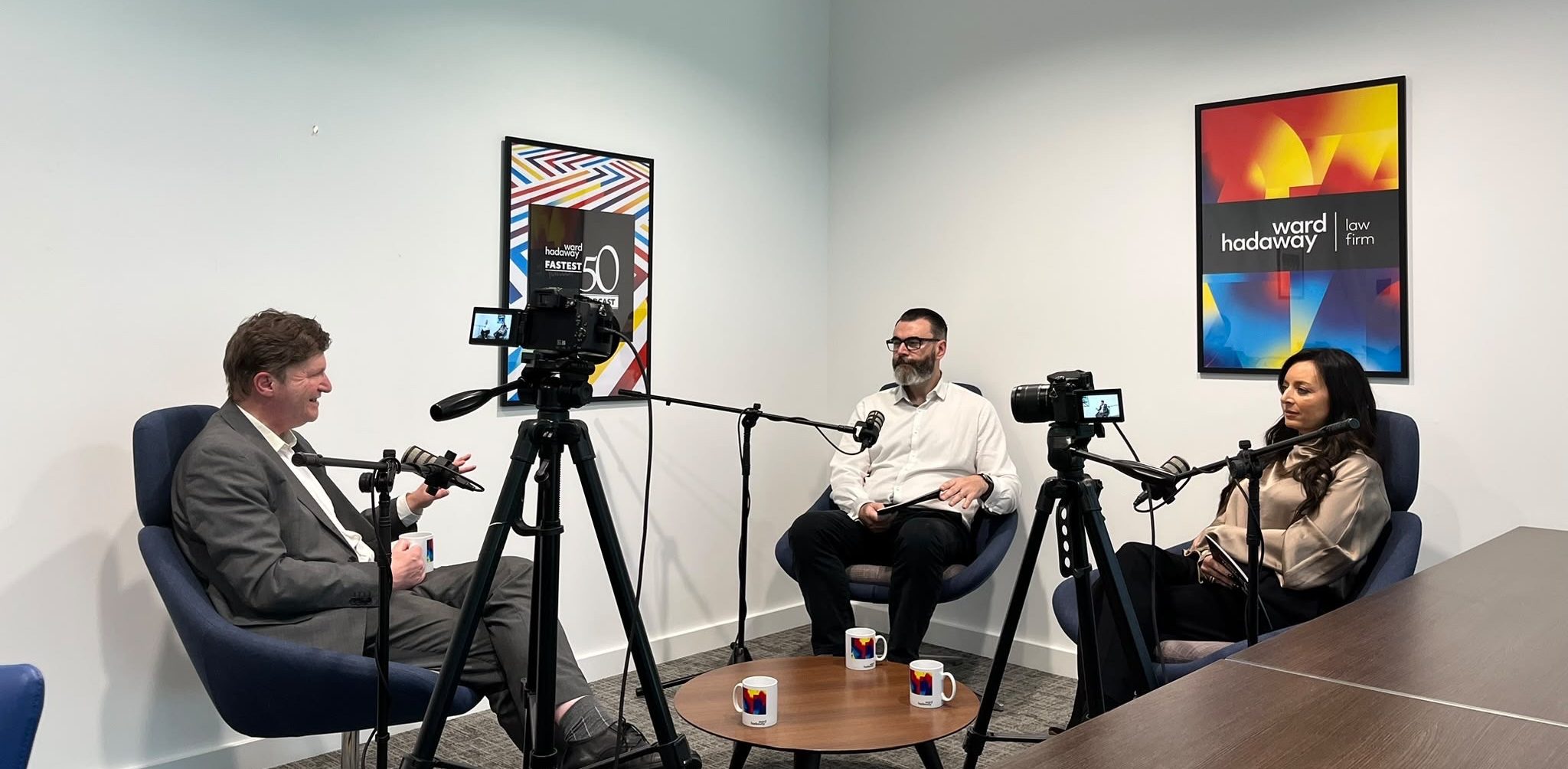
Welcome to the Ward Hadaway Fastest 50 Podcast, where we sit down with entrepreneurs and business leaders who are rewriting the rules of growth in the UK and beyond.

Greg Wright, Deputy Business Editor, The Yorkshire Post
In this episode, Alistair McDonald and co-host Emma Digby are joined by Greg Wright, Deputy Business Editor at The Yorkshire Post.
An interviewer turned interviewee for this episode, Greg shares the journey of his journalism career from hospital radio in Huddersfield to breaking the story of the Calendar Girls in 1999. For the last 25 years, Greg has been writing stories on Yorkshire businesses and he explains what makes the Yorkshire brand unique. He highlights how Yorkshire founders adapt and innovate whilst staying true to their values.
He also speaks on the importance of entry level jobs and why businesses should build relationships with schools to provide opportunities for young people today. They discuss why celebrating success matters and how the Fastest 50 awards in partnership with The Yorkshire Post, provide important recognition for Yorkshire’s fastest growing businesses.
You’ll hear practical insights on:
- Why the Yorkshire brand is constantly evolving
- Why young people need more entry level jobs and stronger links with industry
- Why being an optimist is an essential trait for every founder
- How celebrating success inspires the next generation of founders
- How to get your business story in the paper and why print still matters
- Why staying curious is the one rule every growing business should follow
Listen on Apple Podcasts, Spotify or YouTube


Fastest 50 is our annual celebration of the fastest growing businesses across the North of England. We are passionate about recognising and inspiring growth, which is why we launched the Fastest 50 Podcast – to hear candid insights from those leading the way in the UK business landscape.
Greg 0:00
In my experience, when a business fails, it’s usually multi-causal, but you got to be an optimist.
Greg 0:06
If you’re not an optimist, there’s there’s no reason to go into business.
Greg 0:09
At the second you become embedded in very rigid ways of thinking and rigid ways of behaving, then you become obsolete.
Greg 0:16
I think a lack of financial education is making people vulnerable.
Greg 0:21
What you want is somebody to emulate.
Greg 0:23
You know, it’s the old saying, if you can see it, you can be it.
Greg 0:26
Getting your name and print in in the paper has immense gravitas.
Greg 0:33
The key thing about people in business in Yorkshire is they’ve shown time and time again, decade after decade, they’re so adaptable, they’re flexible.
Greg 0:41
They really can rise to any challenge.
Alastair 0:51
Hello and welcome to the Fastest 50 podcast.
Alastair 0:54
I’m Alastair McDonald, Business Development Director at Ward Hadaway.
Emma 0:57
And I’m Emma Digby, Executive Partner for the Leeds office of Ward Hadaway and Al’s co-host for Season 2.
Alastair 1:04
And today we’re joined by Greg Wright, Deputy Business Editor at the Yorkshire Post.
Alastair 1:10
Greg has spent more than 25 years telling the stories of Yorkshire business and has won several business journalism awards, including Regional Business Journalist of the Year at the Society of Editors Awards.
Alastair 1:22
He’s played a key part in establishing the Yorkshire Fastest 50 and has done for many years.
Alastair 1:28
It’s a real pleasure to have him on the podcast today.
Alastair 1:32
Greg, welcome to the Fastest 50 Podcast.
Greg 1:34
Thank you, I’m delighted to be here.
Greg 1:36
Thank you for inviting me to take part.
Emma 1:37
We’ve shared a stage for many years at the Fastest 50, so it’s great to have you here.
Emma 1:43
Also very privileged that you letting us turn the tables on you and ask you a few questions.
Emma 1:48
Let’s take you back to the beginning.
Emma 1:49
How did your career in journalism begin?
Greg 1:52
Well, going way back, I actually started out as a volunteer in hospital broadcasting.
Greg 1:57
Many journalists start this way.
Greg 1:58
I started off as a volunteer working in the library of Huddersfield Hospital Radio as a teenager.
Greg 2:04
So my very early experience is going around the wards chatting to the patients and obviously it’s lots of different patients in hospital.
Greg 2:10
You get a chance to speak to lots of different people and they would have a request, a record they wanted playing.
Greg 2:16
So you go and get the request, you go back to studio, which is about a mile away from where the hospital was, and you play it for them, which is amazing.
Greg 2:24
One night the news presenter didn’t show up for the show, so they asked me as a 19 year old, do you want to go on air and do you want to read the news tonight?
Greg 2:35
And I thought, well, why not give it a go?
Greg 2:38
So I started hosting a show on Huddersfield Hospital broadcasting.
Greg 2:41
I did it for quite a few years.
Greg 2:43
I got an interest in that.
Greg 2:44
So then went on to do a degree at what is now Leeds Trinity University in history and media.
Greg 2:49
Then I basically became a trainee journalist and I moved through the ranks and I joined the Yorkshire Post initially in 1997.
Greg 2:57
Almost 30 years ago, which does make me feel quite old when I talk about it, I think about all the changes I’ve seen.
Greg 3:03
It’s fascinating.
Greg 3:04
So my first decade of my career, I was in news reporter, so I was doing general news, crime, politics, the arts and lots of different things.
Greg 3:12
One of the stories that really sticks in my mind from that time is a story that really made sort of waves around the world, and that’s the story of the Calendar Girls.
Greg 3:22
I was on duty one day in 1999.
Greg 3:24
I was a duty reporter on a Sunday and we got this fax from Rylstone Women’s Institute.
Greg 3:31
I was looking to find a good picture story for the Yorkshire Post for the following day and I picked up and had a look.
Greg 3:37
I thought, that’s interesting.
Greg 3:38
And it said: it’s a long way from Jam and Jerusalem.
Greg 3:42
I started reading this and thinking this sounds really interesting.
Greg 3:46
And as we all know now, it was a charity calendar in which members of the Women’s Institute in Rylstone had decided to partially disrobe for a calendar.
Greg 3:56
This was just amazing.
Greg 3:57
This is a great story.
Greg 3:58
So obviously I told the news desk about it.
Greg 4:00
I thought this is great.
Greg 4:01
What we need to do now is persuade them to give us the pictures for the calendar before anybody else sees them.
Greg 4:09
So I, I sort of phoned them up and say look, this sounds a great story.
Greg 4:12
Can we please have them for the Yorkshire Post tomorrow before we actually officially launched the calendar?
Greg 4:16
So we got the pictures of Rylstone WI and it was a really famous front page image of the Yorkshire Post of the Calendar Girls and it was just amazing.
Greg 4:27
It’s one of those things where a story like that lands in your lap and like 25 years later you are still telling people about it.
Greg 4:33
So it was incredible and obviously there was a massive amount of interest in them.
Greg 4:37
There was a Hollywood movie, there was a musical, which is still going strong.
Greg 4:41
And I’m still in touch with them after all these years.
Greg 4:43
But it’s, it’s an amazing story.
Greg 4:44
But I think at the heart of that story, it’s a really great human interest story about women who are determined to do something for charity.
Greg 4:50
Who are quite audacious but very tasteful in the way they did it.
Greg 4:54
I think it’s amazing that it’s, it’s now, you know, 25 years later, we’re still talking about it.
Greg 4:58
So I did that for the first decade or so.
Greg 5:00
I worked as a news reporter at the turn of the century, about 2000.
Greg 5:05
There was a really fascinating news website established in Leeds called ananova.com, which was the world’s first virtual newscaster, based in Holbeck, about 5-minutes walk from this office.
Greg 5:17
And I was given the chance to work in the business desk there, working, writing stories about business and global business.
Greg 5:23
And it was a fascinating opportunity to work in a business that was really making waves in the global stage.
Greg 5:28
It featured in the Guinness Book of Records.
Greg 5:30
So was there for a couple of years and then I, I joined the Yorkshire Post business desk in 2004.
Greg 5:36
Fascinating time, 2004.
Greg 5:38
It’s one of those times when you look back on it, it was a different world.
Greg 5:41
There was no social media as we understand now, and the world moved at a very different pace.
Greg 5:45
So what I’ve seen in the last sort of 25/30 years is the biggest revolution in terms of communication that we’ve seen in, in generations.
Greg 5:54
Which makes it an absolutely fascinating job.
Greg 5:56
So it’s been interesting sort of, you know, period of change and development.
Greg 6:00
I’ve loved every second of it.
Greg 6:01
There’s nothing more exciting than writing about Yorkshire.
Greg 6:03
It’s amazing business people.
Alistair 6:06
I think the, the WI thing was, would have gone viral before going viral was a thing.
Alistair 6:12
So that’s, that’s an example of how things have changed.
Alistair 6:14
But so you know, you’ve, you’ve written about business and the sector regionally and, and nationally.
Alistair 6:21
How do you think Yorkshire founders are represented at national press level?
Greg 6:27
I think it’s interesting because they, they, there’s a sort of a, a Yorkshire persona.
Greg 6:32
There’s a really strong Yorkshire brand.
Greg 6:34
I think people, you know, see Yorkshire people, Yorkshire business people as down to earth, straightforward, hardworking, believing in really good traditional values.
Greg 6:42
I think the, the thing about Yorkshire and Yorkshire business people is it’s an amazing brand that is understood globally as well.
Greg 6:49
But what we actually have in Yorkshire is a single brand, but lots of really powerful sub regions around different cities.
Greg 6:55
So I think founder businesses.
Greg 6:56
I mean, I think when you think of the epitome, the personification of Yorkshire business, I always think of Sir Ken Morrison.
Greg 7:03
Obviously Sir Ken passed away a decade ago.
Greg 7:05
But if you think about Sir Ken, he served this amazing business, really modest business from a, a market stall in Bradford and took on the world almost
Greg 07:13
And built this, this very significant business.
Greg 7:15
So I think there’s a lot of interest, I think in Yorkshire now.
Greg 7:18
I think attitudes are changing.
Greg 7:20
I think things for example about getting Channel 4 to based in in Leeds.
Greg 07:25
Which again is a sign that a national organisation wants to be based here.
Greg 7:28
The fact we’ve got the Financial Conduct Authority.
Greg 07:30
Having hundreds of staff in Leeds and continue to grow significantly in the years ahead.
Greg 07:35
That is really significant.
Greg 7:36
Also the Bank of England.
Greg 7:38
So I think in terms of we look at the Yorkshire founders and entrepreneurs, I think there’s a great interest in them nationally.
Greg 7:43
But I think the, the key thing from our perspective is to continue to show the sheer range of them.
Greg 7:48
You know, it it we focus in manufacturing, we focus on bioscience, there’s a focus in, in sort of, you know, personal finance and financial services.
Greg 07:56
But it’s very diverse.
Greg 7:57
So I think that what you want to do almost is step away from the stereotypes and focus on the sheer range and diversity and creativity of businesses in Yorkshire.
Greg 8:07
I think it’s absolutely amazing.
Greg 8:09
The other thing I think which has made a very significant impact in the last decade, a really significant developer of business
Greg 08:15
is the success of the Leeds Digital Festival which has really taken off.
Greg 8:20
So you’ve got some amazing technology based businesses here in fintech, medtech and lots of other areas.
Greg 8:26
But I think it’s been transformed incredibly.
Greg 8:29
I mean, it’s, it’s almost like when I look back to the early stage of my career, it’s a different lifetime.
Greg 08:33
It’s a different era in terms of the, you know, understanding Yorkshire.
Greg 8:37
Yorkshire is a brand is constantly evolving, constantly developing and I think constantly innovating.
Greg 8:42
Which I think is so amazing, which again, all plays into the Fastest 50 because you keep getting new members on the list, which is fantastic.
Alistair 8:49
You know, you’ve obviously got a really interesting perspective on, on business and, and we’ve talked about sort of the the last 25 years.
Alistair 8:56
But what, what excites you for Yorkshire businesses moving forward and what do you think the challenges could be?
Greg 19:04
It’s interesting.
Greg 9:05
I think that one of the great strengths of Yorkshire is its ability to adapt and and it’s been really tough for business over the last five years.
Greg 9:12
Obviously we had the pandemic, we’ve had significant change in taxation policy, which is affected businesses in many ways.
Greg 9:19
Businesses are great at dealing with adversity.
Greg 9:21
What they really want more than anything else is certainty.
Greg 9:25
If you face difficult times, you can face upheavals, but if you get certainty from government policy, that helps massively.
Greg 9:31
I think there will always be challenges in terms of geopolitics.
Greg 9:34
So certain things are completely beyond the control of Yorkshire businesses going forward.
Greg 9:39
What they want from government is certainty, stability, just a belief that if you support a business, you you sort of back an entrepreneur.
Greg 9:48
They will always deliver because they’ve got the the drive to do that.
Greg 9:52
So I think, you know, when I look at the businesses around here, I see great opportunity, great potential,
Greg 9:57
But I think also what they really want from the government, what they want from policy makers is a sense of certainty and focus, particularly taxation policy.
Greg 10:07
But things like apprenticeships, people really want to take apprentices.
Greg 10:10
But when I speak to people, they say actually there’s this false belief that apprentices are cheap labour.
Greg 10:15
They’re not – anything but – because obviously you’ve got to hire the right people, you’ve got to get your own workforce to engage with this.
Greg 10:22
And then it actually is quite a big drain on resources.
Greg 10:25
It’s a good thing in the long term.
Greg 10:26
But I think there has to be a more joined up approach to apprenticeships.
Greg 10:29
And also I think also more positive approach to our traditional industries like manufacturing.
Greg 10:36
Encourage young people to go into manufacturing, build links between schools and manufacturing companies.
Greg 10:41
All these things must be done if we’re going to make sure that people are economically inactive, have a chance to really achieve their potential.
Greg 10:48
The key thing about people in business in Yorkshire is they’ve shown time and time again, decade after decade, they’re so adaptable, they’re flexible.
Greg 10:56
They really can rise to any challenge.
Alistair 10:59
Yeah, definitely.
Alistair 11:00
And I think part of the government policy that I’ve picked up recently is, is a desire to reindustrialize the North.
Alistair 11:07
And I think if that is going to happen, you are going to need young people to to look at those sorts of careers and see that they’re ones where they can have successful careers.
Alistair 11:15
And you don’t have to be a tech whizz or a, you know, an influencer or whatever.
Alistair 11:20
You can just, you can have a really good career by by working in an industry.
Alistair 11:24
So yeah, I think that’s a good point.
Greg 11:26
And I think there’s a growing frustration about manufacturing business, in particular about the lack of connections with schools.
Greg 11:31
And obviously Leeds manufacturing Festival, which again, I’m very proud to support the manufacturers in Leeds who are really trying to make a difference with the festival.
Greg 11:39
They’re actively doing something about it.
Greg 11:41
They’re encouraging young people to get jobs in manufacturing.
Greg 11:44
I think that’s so important.
Greg 11:45
But I think it’s it’s a two way street obviously see manufacturers themselves have got to really be very proactive.
Greg 11:50
Ditto with the schools.
Greg 11:51
I think it’s it’s a really important issue about being able to have a really enlightened view of manufacturing.
Greg 11:56
People have this view.
Greg 11:57
It’s all, you know, the grimy days of the 1980s.
Emma 12:00
Steal works. Yeah.
Greg 12:00
Exactly.
Greg 12:01
And if you go on it now, it’s not like that.
Greg 12:03
It’s, it’s very different and you do really interesting, you know, work as well.
Greg 12:08
But I think again, that’s about entry level jobs.
Greg 12:10
It’s, it’s important to focus on things like high level apprenticeships and obviously graduates.
Greg 12:14
But just what people want are entry level jobs
Greg 12:16
are somebody who may perhaps have not done particularly well at school, but has is highly motivated, wants to work well, can be mentored properly,
Greg 12:24
get them into work, give them a chance and they can achieve a lot.
Greg 12:28
I think part of the way in which you tackle this issue around economic inactivity, which I think is one of the biggest issues among young people at the moment.
Greg 12:36
The fact that so many people are completely inactive and there’s a loss of hope and loss of focus.
Emma 12:41
Then I think the frustration for business owners and, and we’ll explore this a little bit more in a moment, is they want to give those opportunities.
Emma 12:50
But right now political policy is making that very expensive and very risky for them.
Emma 12:57
And I think, you know, I certainly strive for a bit more balance.
Emma 13:02
Our business owners can’t be expected to take such big risks all the time, particularly as you rightly say, over the last five years.
Emma 13:10
It’s been tough, it’s been tough.
Emma 13:13
But look, you and I, we love to celebrate success in this region, but it has been hard.
Emma 13:18
And you cover stories as well.
Emma 13:20
When business owners, very notorious companies in this region, are struggling, How do you approach those stories?
Emma 13:27
They’re often harder and much more emotional than celebrating all the fun stuff and good stuff that’s happening in the region.
Greg 13:34
It’s very hard.
Greg 13:34
I think partly my background in news is helpful with this.
Greg 13:38
Because if you start as a news journalist, you’re used to having difficult conversations with people doing news.
Greg 13:43
You often have to do things like contacting grieving families, people under stress, people in distress.
Greg 13:48
And you understand the importance of being sensitive and professional and dealing with that.
Greg 13:52
So likewise, if you’re dealing with, you know, corporate environment where somebody’s under distress,
Greg 13:56
hopefully the qualities you gain, the understanding, the empathy you gain, covering news when you’re dealing with really sometimes quite horrific stories is quite helpful.
Greg 14:06
So I think, you know, you’ve got to put yourself in the shoes of the other person.
Greg 14:08
I think empathy is key.
Greg 14:10
You will write stories about companies in distress and obviously sometimes it’s administration or something’s going wrong.
Greg 14:15
But the most important thing is to have no prejudices, to approach it in an open minded way, to try and find out what’s gone wrong and why.
Greg 14:23
And obviously give them the chance to comment.
Greg 14:25
Understandably when things are going well, people are very keen to speak to you.
Greg 14:29
When things aren’t going well, understandably they aren’t in many cases.
Greg 14:32
But it’s understanding why that should be.
Greg 14:34
I think I mean to be fair and balanced we have to cover the positive stories and the negative ones, but I think it’s understanding the reasons why.
Greg 14:42
In my experience, when a business fails, it’s usually multi-causal.
Greg 14:48
Often it’s just bad luck.
Greg 14:50
Often it’s due to a change in the economy.
Greg 14:52
The owner becomes ill somebody dies, perhaps seen it in the company.
Greg 14:56
All sorts of things can happen or somebody leaves.
Greg 14:58
So I think it’s understanding that ultimately it’s not a single narrative.
Greg 15:01
There are lots of different trends to it.
Greg 15:03
It could be energy costs are too high, employment costs are too high, and all these things come together.
Greg 15:09
And even a very well run and very well managed business, if it’s confronted with multiple challenges at the same time, can fail.
Greg 15:18
And it’s not really about portioning blame.
Greg 15:20
It’s about listening and trying to understand why it happened.
Emma 15:23
What do you see, you know, in business owners who are facing really quite difficult trading conditions at the moment?
Emma 15:30
What are those traits that you see in those successful businesses?
Greg 15:35
It’s very interesting.
Greg 15:35
I think you’ve got to have a very positive attitude.
Greg 15:37
I mean, it sounds a really obvious point to make, but you’ve got to be an optimist.
Greg 15:41
If you’re not an optimist, there’s there’s no reason to go into business because you have really bad days, very difficult days.
Greg 15:46
I know speakers we’ve had previously, the Fastest 50 awards have talked about.
Greg 15:50
People like to have this sort of Instagram image where everything’s going really well and everything’s perfect.
Greg 15:56
They don’t talk about the burning, the midnight oil or the nights of despair when you’re worrying about paying the debts or paying your bills.
Greg 16:03
There’s that side too as well.
Greg 16:05
There has to be optimism.
Greg 16:06
That’s to be flexibility.
Greg 16:07
I think also the ones that succeed in the long term have got good people skills.
Greg 16:10
You understand how people work.
Greg 16:12
I think understanding how people work is very helpful, particularly in times of crisis and tension.
Greg 16:17
You know, the, the ones that I really respect and look up to are good people people, whatever area you have to work in.
Greg 16:24
And it’s a very important point.
Greg 16:25
It’s because you can be technically very proficient at a particular job or way of doing things, but nobody teaches you how to lead.
Greg 16:33
Nobody’s, you know, you don’t have a course in leadership unless you do an MBA or something like that, which most people don’t do.
Greg 16:39
And I actually think actually understanding the importance of becoming a leader and actually acquiring the skills to become a leader,
Greg 16:45
you need to step away from the day-to-day grind of the job to understand that.
Greg 16:49
So I think what you to go back to question what you need is optimism, empathy and also commitment to innovation and change because things are changing so quickly.
Greg 16:58
In my sector, it’s changed significantly over the years in every sector exchange and you’ve got to keep constantly learning.
Greg 17:04
It’s about self-improvement.
Greg 17:05
I think people who do become very locked into very rigid ways of working and thinking find it much harder to to survive in the long term.
Alistair 17:13
So you’ve met a huge number of founders over the years, both through the work at the Yorkshire Post and, and through the the partnership with the Fastest 50.
Alistair 17:22
Are there any founders in particular where, you know, you’ve really wanted to follow their journey and you’ve you’ve sort of kept in touch or followed where they’ve gone?
Greg 17:30
Yeah.
Greg 17:31
I mean, I’ve been so fortunate.
Greg 17:32
There’s so many people I’ve known for many decades who’ve done really well in business.
Greg 17:36
And in a way, if I had to highlight one individual who was actually speak at the Fastest 50 awards a couple of years ago,
Greg 17:42
I would say Zandra Moore, who’s done really well in terms of being a role model for so many people.
Greg 17:47
Somebody who’s really passionate, really committed, but also somebody who’s committed to raising other people up, particularly other women up.
Greg 17:54
And I think what is so refreshing about something like Zandra is she’s not about herself, she’s about the team.
Greg 17:59
And she really puts a lot of time and energy into obviously developing the business.
Greg 18:02
She’s had Panintelligence, a great business.
Greg 18:05
She’s obviously got other business ventures at the moment.
Greg 18:08
But you sort of think about somebody who’s really focused not on themselves solely, but about the bigger picture,
Greg 18:14
about getting more funding for female founders,
Greg 18:17
about changing the perception of the sector.
Greg 18:20
And also I think being a great ambassador for Leeds and Yorkshire as a whole, which I think is really important.
Greg 18:26
So obviously Zandra is one of them.
Greg 18:27
There’ll be many, many others, it must be said.
Greg 18:29
But if I had to talk about somebody who personifies what is really good and really great about business,
Greg 18:34
I think you could say very strongly that Zandra would be that person.
Alistair 18:39
So specific to to to Yorkshire, is there, is there something about Yorkshire founders that make them unique as compared to people who’ve grown businesses in other parts of the country?
Greg 18:50
I think it’s interesting because people often talking stereotypes and I think there’s a danger in that because you can use a stereotype positive.
Greg 18:58
They’re like, you know, the, the strong values, you know, the, the sort of the grit and things like that.
Greg 19:03
But it becomes a bit hardened and rigid.
Greg 19:05
Whereas the reality of life in, in Yorkshire is constantly changing and fluctuating.
Greg 19:10
I think particularly in in recent years with the, you know, the arrival of significant sort of national and global players, it’s changing.
Greg 19:17
I think when I write about Yorkshire, talk about, I always say that there’s a Yorkshire brand.
Greg 19:22
And if you, for example, are from Huddersfield and you’re on holiday and you meet somebody from Hull.
Greg 19:27
You may never visit Hull, you may never a person from the Hull may never visit Huddersfield.
Greg 19:31
But they will have a sense of kinship and identity by being from Yorkshire because Yorkshire is a brand.
Greg 19:38
And if I meet somebody from Scarborough in, I don’t know, in, in France, I will feel a very strong sense of affinity with that person because they’re from Yorkshire.
Greg 19:46
But then at the same time what we get within Yorkshire is we get different cities competing against each other, which is understandable.
Greg 19:53
You know, Leeds competes with Bradford.
Greg 19:54
I would imag… I would suggest.
Greg 19:56
And you know, some of the sub regions like Sheffield compete, not unreasonably, with the cities as well.
Greg 20:00
So you have this sense of competition between different sectors.
Greg20:04
A single brand with strong sub regions was really powerful sense of identity.
Greg 20:10
So it’s an interesting issue that I think around using the brand positively.
Greg 20:14
But I think also if you think about it is it’s constantly changing.
Greg 20:18
And I think over the years we’ve had, you know, different people coming in from different parts of the world who’ve really added dimensions, different dimensions to our economy.
Greg 20:26
And it’s important to remember that we’re not, we’re not static.
Greg 20:28
We’re constantly changing, constantly evolving
Emma 20:31
When we look at the Fastest 50 it is a great day in itself and you know I walk away feeling 6 foot tall, which is tall for me.
Emma 20:40
As we know.
Emma 20:42
Sometimes it might seem a bit self-indulgent having an award ceremonies and things like that.
Emma 20:48
I don’t agree with that, but how important is it from your perspective that we recognise success in the region and recognise successful business owners?
Greg 20:58
I think it’s so important.
Greg 20:59
I think what you want is somebody to emulate.
Greg 21:03
You know, it’s the old saying, if you can see it, you can be it.
Greg 21:06
And I think the beauty of the Fastest 50 Awards is that it’s such a wide variety of businesses.
Greg 21:12
You’ve got, you know, family businesses who’ve been around for generations with start-ups, have been around for maybe 2, you know, four or five years.
Greg 21:19
It’s so important to do to have, you know, heroes and people who emulate success.
Greg 21:23
But I think it’s also really important, it’s across a wide variety of sectors.
Greg 21:27
So you’ve got, you know, university startups, you’ve got, you know, lots of different businesses.
Greg 21:31
So to me it’s absolutely vital.
Greg 21:33
We shine the spotlight and successful firms, we shout about the great successes, but also the range of businesses as well is really important.
Greg 21:41
So if you see an entrepreneur who has the same interests as you or the same outlook as you,
Greg 21:47
or came from the same part of Leeds as you, or Bradford or or Sheffield,
Greg 21:51
you say, well, that person could be me because they’ve got the same background, they’ve got the same interests as me and they’ve made it.
Greg 21:56
And there’s no reason why if I find my niche, if I focus strongly, I can make it as well.
Emma 22:02
I mean, you’ve been interviewing and been in and around business owners for a long time.
Emma 22:08
What do you notice that’s different for founders now and the characteristics of a founder and the approach of a founder compared to even five years ago?
Emma 22:18
I think what has changed massively is technology, in simple phrase.
Greg 22:22
I think AI is significant.
Greg 22:25
It’ll get even more significant as time goes by.
Greg 22:27
It’s it’s going to change everything we do.
Greg 22:29
It will challenge some companies and it will elevate others.
Greg 22:32
But I think if there’s one thing I would say has happened in the last five years, I would say the growth of AI.
Greg 22:37
And people are not entirely sure how to deal with it.
Greg AI 22:40
Some people say it’s a fantastic opportunity.
Greg 22:43
Some people feel threatened by it.
Greg 22:45
The fact is it will change everything.
Greg 22:46
I think use intelligently, it can free up human beings to do things that human beings can do well.
Greg 22:52
Which is obviously make contacts, make connections and meet people.
Greg 22:56
And I think we’ll get rid hopefully of more laborious, more time consuming tasks so people can do what they do best.
Greg 23:02
But I think if there’s one thing that’s going to change everything is the growth of artificial intelligence.
Greg 23:06
And it’s something that scares people.
Greg 23:07
But I think also you got to embrace it because the fact is here to stay.
Greg 23:10
It’s a bit like in the late 90s when people talk about the Internet that appeared and there was a dot.com boom, and then it obviously went downhill after that.
Greg 23:17
The fact is it’s changed everything and, and you know, we wouldn’t do without our apps or streaming services.
Greg 23:22
I think in terms of AI, every business needs to be aware of this and use it intelligently, whatever sector you happen to be involved in.
Greg 23:29
But I think there’s a lot of, you know, myth making and, and concerns about it.
Greg 23:32
And I think it’s, it’s important to listen to expert advice, a list of people who really understand the sector before making decisions about it.
Emma 23:39
I mean, part of a growth journey for a business owner is building brand being recognised.
Emma 23:44
And so to have a publication like The Yorkshire Post behind the brand reporting on them is huge in terms of that notoriety.
Emma 23:52
What do business owners need to do to pique your interest and have that kind of exposure from from a great publication like The Yorkshire Post?
Greg 24:00
I think what we’re looking for is a human story behind the business.
Greg 24:04
I think you’ve got to remember writing for the general audience, so a lot of people are very focused on certain specific technical areas.
Greg 24:11
So it’s about people.
Greg 24:12
It’s about are you creating jobs, are you attracting investment?
Greg 24:16
Are you overcoming obstacles and barriers to growth?
Greg 24:19
Are you helping a particular part of a city that might have had a difficult time in recent years to achieve it’s potential?
Greg 24:26
The other thing we we really value are great, great pictures.
Greg 24:30
I always think think visually about everything.
Greg 24:32
If you think about the way in which you put a newspaper together, it’s like a massive jigsaw puzzle.
Greg 24:38
But the heart of that puzzle is a fantastic image.
Greg 24:41
I always say if you can get me a great image that tells your story that you know does tell a fact, it’s worth 1,000 words more than that because it’s how we build the page.
Greg 24:51
So we’re looking for stories about people, stories about growth, stories about overcoming adversity, but also how it affects our readers lives.
Greg 24:59
If you’re working in a particular sector, for example, we don’t like people to use jargon excessively.
Greg 25:05
We want basically to explain in plain English what you’re doing changes people’s lives.
Greg 25:10
So clarity, humanity, empathy, all those qualities are so important in telling a great story.
Greg 25:15
But we’re always proud to to bang the drum for businesses of all sizes and all shapes and all sectors.
Emma25:23
I, I think of late kind of the generational gap is becoming quite noticeable.
Emma 25:30
And I know it, it affected me when we were on holiday and my parents said to me, oh, we feel quite excluded from this technological world.
Emma 25:38
And it was about the fact that the hotel had put this big screen up and you had to book your sunbed on this touch screen.
Emma 25:45
On a serious note, now there’s a lot of talk about social media, about influencers.
Emma 25:51
And we like to think that us as an older generation, it’s a topic that we’ve been talking about on this podcast, we can still influence too.
Emma 26:00
Do you think that business owners miss a trick sometimes in terms of forgetting all of the mediums of social media
Emma 26:08
and publication and news and branding and, you know, and, and forget the good old days as well and the impact that that can have on business?
Greg 26:17
That’s really interesting because I think obviously influencers are quite important.
Greg 26:20
Instagram’s important.
Greg 26:22
And obviously when people look at a business, they’ll Google them and they’ll see, you know, what’s about them online.
Greg 26:28
I think having a good Instagram account or social media account is really important, but I think it’s all about credibility.
Greg 26:33
And again, to bang the drum of the Yorkshire Post, getting a story in the Yorkshire Post does add credibility to your business.
Greg 26:38
If you’re, you know, searching, you know about your business and what you’ve done and the first thing you see under search item is a story about in the Yorkshire Post.
Greg 26:46
That has more weight, I would respectfully suggest, than something that’s been posted by an influencer or someone else because it’s got that element of gravitas to it.
Greg 26:56
I think it’s interesting because there’s so much content on social media and it’s a noise, it’s a really loud noise.
Greg 27:02
And being able to get your message to cut through in that is extremely difficult.
Greg 27:06
You know, a lot of us live our lives on our mobile phones, scrolling Instagram, going through X or whatever social media site we follow or TikTok.
Greg 27:14
And it’s really important.
Greg 27:15
Obviously we use social media as well.
Greg 27:16
We use it in a very proactive way.
Greg 27:19
But I still believe that actually getting your name and print in the paper and then, you know, appearing online as a, as a story in the Yorkshire Post has immense gravitas.
Greg 27:29
And something that people want.
Greg 27:31
And whenever I write stories about people, so I’m doing the, you know, thousand word weekend interview.
Greg 27:35
So many times people say, well, I have a framed copy of that from my mum and dad to put it on the wall.
Greg 27:40
And you can’t put an Instagram post on your on your wall.
Greg 27:42
And then and it’s, it’s that thing.
Greg 27:44
It’s, it’s something tangible and something magical about going to newsagent and,
Greg 27:49
you know, opening your, your wallet and that old purse and just paying for a newspaper and take it away and your pictures in there.
Greg 27:56
That, that is magical.
Greg 27:57
And it’s, it’s something that people still value.
Greg 27:59
And it’s, it’s, it’s a different experience reading newspaper
Greg 28:01
because it’s a sort of, very sort of, you know, you’ll sit down, you’ll sit in your seat, you’ll, you’ll, and you’ll spend time absorbing the information in it.
Greg 28:09
And I think that’s different.
Greg 28:10
It’s, it’s a different way of absorbing information.
Greg 28:12
I think it’s more enjoyable actually in many ways
Greg 28:15
Because the constant scrolling, it’s harder to concentrate,
Alistair 28:18
It is.
Greg 28:19
But it’s actually, it’s like reading a good book, you know, really good newspaper.
Greg 28:21
You can focus on one thing, one story, one process of information.
Greg 28:26
I think it’s really healthy as well.
Greg 28:27
I think it’s good for your mental health to do that, not be constantly bombarded with all these competing images.
Alistair 28:33
I think you’re absolutely right.
Alistair 28:34
I think you can spend an hour or two scrolling on your phone and if somebody asks you what you’ve looked at, you couldn’t tell them.
Alistair 28:41
And if you can get something that cuts through all that stuff, particularly as a he’s a business founder who’s looking to get the message out there.
Alistair 28:46
I think there’s a lot of value to that.
Greg 28:48
I still think if you’ve got a broadsheet paper and the full spread is about you, that means something has real impact.
Greg 28:54
And I think it always will.
Greg 28:56
And he put it on your wall.
Greg 28:57
And that’s, that’s different.
Greg 28:58
I think people like tangible things in an era when things are very fleeting.
Greg 29:05
I think that’s very important to people.
Alistair 29:07
You’ve mentioned about how businesses are more likely to get into the paper if they use a good, you know, a good image and something that tells the story.
Alistair 29:16
But for founders who want to get their story out there, have you got any advice for, for working with journalists?
Alistair 29:24
Because, you know, we’re talking about the fact that people don’t ask you the questions very often.
Alistair 29:27
So it’s, it’s a good opportunity for you to explain how, how businesses can can develop a relationship and get the best out of work with journalists.
Greg 29:35
Yeah, I think the best way is just contact us.
Greg 29:36
I mean, drop me an e-mail.
Greg 29:37
That’s one of the best ways to initially.
Greg 29:40
Just for context, I get something like 300 emails a day.
Greg 29:44
So actually going through the e-mail itself is almost a full time job.
Greg 29:48
But if I hear from somebody I’ve never heard from before, say a business owner gets in touch and say, you know,
Greg 29:52
I’ve got a business in Cleckheaton or somewhere in Selby or something like that.
Greg 29:57
And it’s not a business I’ve heard from before.
Greg 29:59
And I think actually I’d like you to write about the business.
Greg 30:01
It’s got a good story to tell.
Greg 30:03
Instinctively, my curiosity is sort of piqued and I want to find out a bit more about it.
Greg 30:09
So what I would do is just drop me a line and say, look, I think I’ve got an interesting story here.
Greg 30:13
We’re expanding, we’re taking a new staff, we’re we’re developing.
Greg 30:16
I think it’s worth perhaps a story in the Yorkshire Post.
Greg 30:20
I can then look at it and take it forward from there.
Greg 30:22
But also, you know, people who would be good at candidates for a longer sit-down interview.
Greg 30:26
I, I really enjoyed doing a longer pieces where sitting down interviewing a business owner or founder for an extended.
Greg 30:32
Because it makes it really interesting.
Greg 30:34
So that kind of thing works.
Greg 30:35
So drop me a line, get in touch and I’ll, I will do my best.
Greg 30:38
I’ll do my very best to, to sort of write about it.
Greg 30:40
But it’s, it’s always nice when people get in touch completely of their own initiative.
Emma 30:44
This is the most important question as we start moving towards wrapping up.
Emma 30:50
If Greg Wright was Prime Minister, what is the one thing you’d change or implement?
Greg 30:56
It’s a really interesting question.
Greg 30:58
There’s so many things I’d like to change, so many things like to change.
Greg 31:01
One of the things I’ve been thinking about is the importance of financial education.
Greg 31:07
I would make financial education compulsory in schools, certainly in secondary schools,
Greg 31:13
because I think the danger in our society is that teenagers are leaving school with no real understanding about managing the finances.
Greg 31:20
And it’s almost like you find out by trial and error once you’ve once you’ve left.
Greg 31:25
Understanding things like interest rates, how to manage finances, how to budget and how taxation works.
Greg 31:32
I think it’s really important.
Greg 31:33
And I think obviously you can study them in economics, but I actually think it should be good to have a compulsory module on finance and personal finance.
Greg 31:43
I think that’s really important.
Greg 31:44
I think a lack of financial education is making people vulnerable.
Greg 31:49
And a lot of the stories I write about are scams or people praying on vulnerable people and mis selling things.
Greg 31:56
But if you start life with the knowledge about how money works, how finance work, how business works,
Greg 32:03
then in a much stronger position to deal with the challenges that you know, you’re inevitably going to face financially.
Greg 32:10
And I think, you know, like anybody, I when I sort of left school, I didn’t written some finance at all.
Greg 32:15
Writing about business has been its own education process because by meeting people and talking about finding things out.
Greg 32:20
But I actually do think that things like financial exclusion is really important and digital exclusion and, and inactivity, you know, unemployment among young people.
Greg 32:30
If you equip young people with the skills financially to understand how the world works, that really sets them up for a lifetime.
Greg 32:39
And then they don’t have to make mistakes initially and be punished for them because of, due to lack of knowledge.
Greg 32:44
But I, I think there’s so many things I’d like to do.
Greg 32:46
I mean, I think our regulatory system is too weak in many ways.
Greg 32:49
A lot of the stories I’ve written about the scandals of the loan charge scandal, which is a massive tax scandal, which cause significant distress to thousands of people.
Greg 32:58
But I think also, you know, it’s just educating people to be aware of how vulnerable we can be.
Greg 33:03
If you don’t understand finance, you don’t understand business, you don’t understand economics
Greg 33:07
because it’s it, it makes you much more prey to people who behave badly.
Alistair 33:12
Just before I summarise, I’ve got my final question and that is what do you think the one rule that every growing business should follow?
Greg 33:22
Innovation. Always innovate.
Greg 33:25
I mean, in journalism we have to innovate all the time.
Greg 33:28
I see my career as a constant personal development journey.
Greg 33:32
And when people say to me, how do you become a journalist, I say I’m still learning.
Greg 33:37
I don’t know, I’m still learning.
Greg 33:38
I’m still trying to find out because and that’s, that’s the important thing to stay curious at.
Greg 33:42
The second you become embedded in very rigid ways of thinking, rigid ways of behaving, then you become obsolete.
Greg 33:50
Innovation is key in everything.
Greg 33:51
Just thinking differently, you know, having dissenting opinion within the company, people who challenge you, if you stop being challenged, you can’t develop.
Greg 33:58
So innovation.
Greg 33:59
Are willing to have dissenting opinion, people who will challenge the way you think, the way you behave.
Greg 34:05
That’s the best way.
Greg 34:06
Because the second you think you know it all, whatever you do, if it’s journalism, if it’s law, if it’s whatever,
Greg 34:11
the second you think you know it all, then you’re on a very dangerous path towards complacency and ultimately becoming obsolete.
Alistair 34:20
I think staying curious and innovating is extremely positive.
Alistair 34:24
And I was at a computer games conference yesterday and there’s a chap there who invented PlayStation.
Alistair 34:32
Fascinating guy, really interesting story.
Alistair 34:35
He’s 76.
Alistair 34:36
And he said the same thing about future businesses.
Alistair 34:39
He said stay curious.
Alistair 34:41
That was the thing that he said.
Alistair 34:42
And to hear somebody who’s 76 years old saying that, I think, you know, there’s a lot of value to that.
Alistair 34:47
So, well, thanks very much for that, for that answer and, and for all of your comments and, and, and responses today.
Alistair 34:53
It’s been really interesting.
Alistair 34:56
There’s a lot to summarise.
Alistair 34:58
So I think one of the things that you’ve said is about the Yorkshire brand
Alistair 35:05
and the value that that has and what that can mean for the characteristics of people setting up businesses in in Yorkshire.
Alistair 35:14
But also that competition between cities across the the patch, which can can inspire people and, and can motivate people.
Alistair 35:22
I think that’s really interesting.
Alistair 35:24
Something that’s come through loud and clear is about leaders having to be optimistic and having to innovate and, and the value in that.
Alistair 35:36
But I think probably the main thing that’s that’s come through a number of times is how we all,
Alistair 35:43
in particular business leaders, need to ensure that young people are involved and that we are finding opportunities to get people into into jobs.
Alistair 35:54
Making sure that people find entry level jobs is, is just absolutely critical.
Alistair 36:00
And also people in businesses having those links between education to be able to show younger people what jobs look like and how they can work.
Alistair 36:10
And then the, the whole point about sort of education for, for, for younger people in terms of finance and that sort of thing.
Alistair 36:17
So I think that’s a, a really, really valuable message for, for, for us all.
Alistair 36:22
And something that’s not just specifically Yorkshire, but I think is, is, is a really valuable point.
Alistair 36:29
And I think the last one is about optimism and, and being optimistic.
Alistair 36:32
And, and I think that’s really, really a brilliant message to, to, to, to end on.
Greg 36:38
Absolutely.
Greg 36:38
Long may the Fastest 50 continue.
Greg 36:40
I’ve been to all of them since 2011, every single Fastest 50 Awards in Yorkshire since 2011.
Greg 36:45
So long may it continue.
Alistair 36:47
Brilliant.
Alistair 36:48
And long may the partnership continue and we’re really grateful for that.
Emma 36:50
Absolutely.
Greg 36:51
It’s a pleasure.
Greg 36:51
We’re proud to be partners with you.
Alistair 36:54
Great.
Greg 36:54
I’ve got the mug as well.
Emma 36:56
Cheers.
Alistair 36:57
Let’s leave it there then.
Emma 36:59
Thank you, Greg.
Emma 37:00
Been a pleasure.
Please note that this briefing is designed to be informative, not advisory and represents our understanding of English law and practice as at the date indicated. We would always recommend that you should seek specific guidance on any particular legal issue.
This page may contain links that direct you to third party websites. We have no control over and are not responsible for the content, use by you or availability of those third party websites, for any products or services you buy through those sites or for the treatment of any personal information you provide to the third party.
Your hosts

Follow us on LinkedIn
Keep up to date with all the latest updates and insights from our expert team