Building Yorkshire’s tech community with Stuart Clarke MBE
12th November, 2026
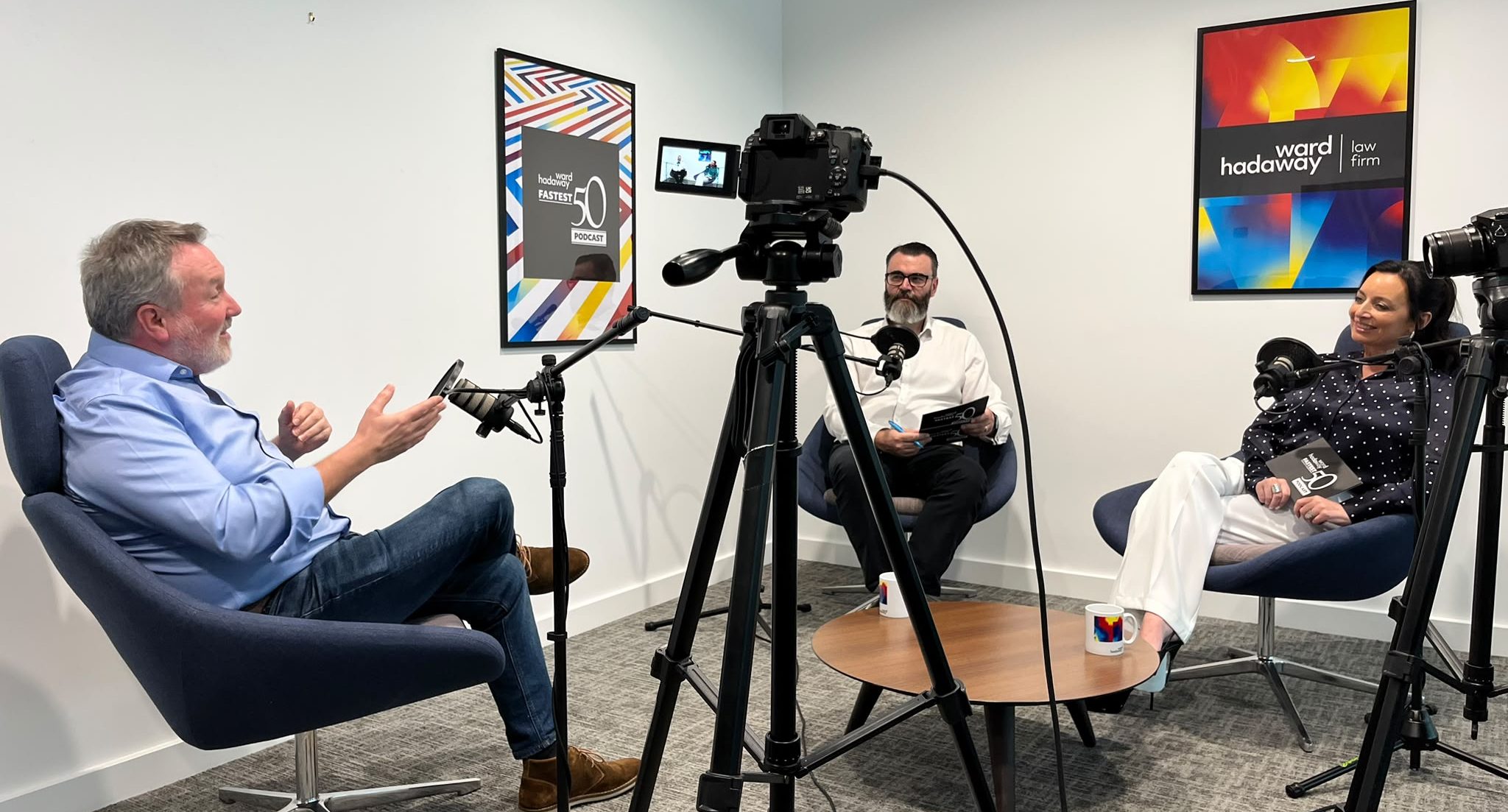
Welcome to the Ward Hadaway Fastest 50 Podcast, where we sit down with entrepreneurs and business leaders who are rewriting the rules of growth in the UK and beyond.
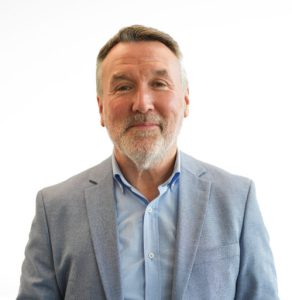
Stuart Clarke MBE, UK Tech Week founder & Leeds Digital founder and chair
In this episode, Alistair McDonald and co-host Emma Digby are joined by Stuart Clarke MBE, UK Tech Week founder & Leeds Digital founder and chair.
He shares how Leeds Digital festival grew from a few events in its first year into hosting hundreds of events across Leeds and how it became the success it is today. He praises how Leeds Digital became more than just a festival and how it has transformed into the largest tech community in Leeds and Yorkshire with a wide range of support available for businesses of all sizes.
He explains why the North is such a collaborative place to build a tech business and why founders here can find their network faster than in London. Stuart also reflects on stepping back from the festival and talks about how UK Tech Week brings regional ecosystems together to show that tech is happening everywhere.
You’ll hear practical insights on:
- How Leeds Digital Festival grew from a single event into Yorkshire’s biggest tech community
- Why the North needs to be more confident about telling its tech story
- How tech businesses in the North can build their community faster than in London
- Why founders should talk to customers and investors long before they need them
- How building a strong team makes it easier to step back from your business
- Why staying focused is the one rule every growing business should follow
Listen on Apple Podcasts, Spotify or YouTube


Fastest 50 is our annual celebration of the fastest growing businesses across the North of England. We are passionate about recognising and inspiring growth, which is why we launched the Fastest 50 Podcast – to hear candid insights from those leading the way in the UK business landscape.
Stuart 0:00
But there were a couple of times when I had thought, I have I made a mistake here.
Stuart 0:04
So that first year was 56 events, second year was 150, 180, 240 and it just exploded.
Stuart 0:11
And I always say to London funders, you know, come up the hall, they don’t know what they’re worth.
Stuart 0:14
You’ll get, you’ll get a proper bargain
Stuart 0:16
You know, because you think you’re building the right thing and you go out and sell it
Stuart 0:19
And actually the market doesn’t want that.
Stuart 0:21
And there is that time sometimes you have to realise that actually this isn’t working.
Stuart 0:27
But no matter what you do in your role, there’s there’s a there’s a group, there’s a community for you.
Alistair 0:41
Hello and welcome to the Fastest 50 Podcast.
Alistair 0:44
I’m Alastair McDonald, Business Development Director here at Ward Hardaway
Emma
And I’m Emma Digby, Executive Partner of the Leeds office of Ward Hadaway and your co host for this series.
Alistair 0:55
So today we are lucky enough to be joined by Stuart Clark.
Alistair 0:59
Stuart is a leading voice in UK tech collaboration, connecting industry, academia, investors and policy makers to strengthen regional ecosystems.
Alistair 1:10
He’s led initiatives including Leeds Digital Festival and UK Tech Week and founded tech-focused marketing consultancy Paceline.
Alistair 1:20
A start up advisor and investor supporter, Stuart has been recognised by Tech Nation, Digital Leaders, the Northern Leadership Awards and Yorkshire Business Insider.
Alistair 1:32
Stuart, welcome to the Fastest 50 podcast.
Stuart 1:34
Thank you very much for inviting me.
Emma 1:36
Stuart, thanks ever so much. Great to see you.
Emma 1:39
You’re well known in the region for your involvement in the tech community.
Emma 1:43
How did your career start?
Stuart 1:45
My first sort of proper job after the university was working for Her Majesty’s Treasury on on Whitehall.
Stuart 1:51
So I spent about a year trying to find a, a proper job.
Stuart 1:55
I was worked as a bin man for a few weeks, a paint spray in a factory, furniture salesman, really enjoyed that.
Stuart 2:02
And then, you know, worked for the, for the treasury in the, you know, to be good civil servant, you need to be intelligent and dedicated.
Stuart 2:08
So I left and then I started the career marketing which which suited me more.
Stuart 2:13
So I started off with working for the Prudential in Kent.
Stuart 2:17
Then another insurance company down there.
Stuart 2:19
And moved up to Alliance and Leicester, their head office, for a few few years.
Stuart 2:24
And then when I moved back to Leeds, worked for the likes of First Direct Bank.
Stuart 2:29
And my last seven years of having the proper job was
Stuart 2:33
TD Bank of Canada looking after their corporate relationships in the in the UK.
Stuart 2:37
And that last couple of years, even though it’s financial services
Stuart 2:40
Getting involved in more tech firms, much more interested in what was going on in tech at the time.
Stuart 2:48
So I was ready to set out and do something on my own.
Stuart 2:51
And I thought, well, I’m going to focus on, on tech
Stuart 2:54
That, that first 18 months, you know, you take the money where it comes in when you, when you start on your own.
Stuart 2:59
Did a bit of consultancy for tech for financial services firms.
Stuart 3:02
But after about 18 months, and you know, this was 2013, I set it up.
Stuart 3:07
So the last 10, 11 years it’s just been purely working with, with tech firms.
Emma 3:11
So how did you take that leap in terms of saying Leeds is the place that needs a dedicated space for tech?
Emma 3:19
And I’m going to go out on a limb and I’m going to create it.
Stuart 3:22
2015 Leeds City Council had this strategy day about, you know, well, what they wanted to do
Stuart 3:27
and, and sort of invite more tech firms to start and move into the to the city.
Stuart 3:34
So a bunch of us got together after that, you know, we’re looking at how do we make more noise?
Stuart 3:38
There was some incredible firms already in at that point in Leeds.
Stuart 3:41
How do we make more noise when obviously London’s got this incredible reputation and, and tonnes of, of firms.
Stuart 3:48
But the likes of Manchester and Birmingham were saying, hey, wait, where the the tech sector outside of London.
Stuart 3:55
So we thought, let’s get together, let’s do something, let’s put an event on.
Stuart 3:59
So I said I’d run the first Leeds Digital Festival, just the first one wasn’t going to run anything else.
Stuart 4:05
We had 56 events in our first year.
Stuart 4:08
It was hard to get going.
Stuart 4:09
I was going around town asking people to sponsor and we’d say we’re building this thing, we’ve never done it before.
Stuart 4:15
We don’t know how many events, don’t know how many people are going to turn up, don’t know what it’s going to look like.
Stuart 4:19
But could you give us some money?
Stuart 4:21
So that first year was 56 events, second year was 150, 180 and 240 and it just exploded.
Stuart 4:28
And so September of of 2026, it was our 11th festival.
Stuart 4:34
So it keeps you know, keeps getting bigger and better each year, you know,
Stuart 4:38
And it and it covers everything you know, from fintech to health tech to data, obviously AI, there’s lots of AIAI events at the moment.
Stuart 4:48
But it really covers everything.
Stuart 4:49
And again, from startups to big international firms, it’s open platform.
Stuart 4:53
So absolutely anybody can take part.
Alistair 4:57
So Leeds Digital is Yorkshire’s biggest tech community.
Alistair 5:02
How do you view Yorkshire as a hub for for tech and innovation?
Alistair 5:08
And then in addition to that, what’s happening in the region that you think the rest of the country should know about?
Stuart 5:15
Leeds is obviously one of the sort of biggest sectors for that,
Stuart 5:18
but you’ve got things like up in Bingley and Baildon and in the Bradford district
Stuart 5:23
Really good for space tech, you know, and it’s one of the things we should shout out about more.
Stuart 5:27
You look over in the East Yorkshire and whole lots of stuff on the energy, you know
Stuart 5:32
Whether it’s hydrogen or whether it’s turbines, that sort of thing.
Stuart 5:35
South Yorkshire, incredible stuff going on, advanced manufacturing.
Stuart 5:39
So there are a lot of success stories and, and it’s been really interesting in the last few years
Stuart 5:44
We’ve had things like Tech South Yorkshire that’s that’s come along the last few years
Stuart 5:49
And Dealroom, we’ve seen that, that South Yorkshire is like the fastest growing region for start-ups in the UK, which is fantastic.
Stuart 5:56
Get some noise down there about what’s going on.
Stuart 5:59
One of the things we’re doing at Leeds Digital is, is launching something called Tech West Yorkshire
Stuart 6:03
And it’s funded by the Combined Authority to, to use the expertise and, and knowledge and contacts that we have at Leeds Digital.
Stuart 6:12
Thinking, you know, how can we, how can we work with tech firms and organisations in Bradford, Calderdale, Kirklees and Wakefield?
Stuart 6:18
Again, that that agglomeration effect: bring people together, connect people.
Stuart 6:24
So we’ve got more to shout out, shout about.
Stuart 6:27
So it’s, you know, there’s tonnes of great examples of homegrown tech
Stuart 6:31
And companies are moved in as well, you know, because it can see the advantages of being in a place like Leeds and a place like Sheffield.
Emma 6:39
I mean, in terms of the community here, it’s obviously huge, as you say, and expanded phenomenally.
Emma 6:46
How how are you bringing that to kind of increase our recognition nationally and and internationally as well as a region?
Stuart 6:55
Part of it is the the more firms we have and the more firms that grow, then the story becomes easier to tell.
Stuart 7:01
And, you know, national media, we know, know most national media is focused on London.
Stuart 7:07
So, you know, you need to have something interesting and exciting to, to get the sort of attention of, of that media.
Stuart 7:15
So the more we grow, the more just as the numbers go up, you can, you can, you can see more.
Stuart 7:20
It helps, you know, Manchester’s grown as well over the sort of last decade, huge numbers of firms and, and, and employees.
Stuart 7:28
The chances are to look at Manchester, think what else is going on, you know, look at Leeds or look at Bradford, look at Sheffield.
Stuart 7:34
So that becomes easier, but I think we’ve got better at telling our story as well.
Stuart 7:39
I think that’s the key thing.
Stuart 7:40
And I think, you know, going back to 2015 when we came up with the idea of the festival, I think there was a bit of, you know, that Yorkshire reluctance.
Stuart 7:48
You know, this is a stop, you’re bragging, you get a clip around the ear.
Stuart 7:51
Must be confident about telling people what we’ve got.
Stuart 7:54
And part of that is is helped by money coming in.
Stuart 7:58
We’ve got sort of more homegrown funding opportunities.
Stuart 8:01
Plus there’s more opportunities for London-based firms where much of the money is to actually think, let’s go out and see what’s outside the capital.
Stuart 8:10
And I always say to London funders, you know, come up North, I don’t know what they’re worth.
Stuart 8:14
You’ll get, you’ll get a proper bargain.
Stuart 8:17
And, and so you’ve seen over the last few years of London-based firms having a base in the, in the North.
Stuart 8:23
Often it’s Manchester, but then again, it’s easier for them to come to Leeds from Manchester than it is to, to come up from London.
Stuart 8:29
So it’s a, it’s a, it’s a real positive across the North.
Emma 8:33
I mean, it started out as a network community really, didn’t it?
Emma 8:36
And we’ve, you know, we hear a lot of business owners, founders who talk about having a really good community around them.
Stuart 8:42
So for example, our all-year-round platform Leeds Digital, that came a few years after the festival
Stuart 8:48
because we found that, you know, we’re having this amazing two weeks every September
Stuart 8:53
And then we just say, right, see you again, see you again in sort of 11 and a half months.
Stuart 8:58
So we thought: what can we…
Stuart 8:59
So we, we built the, the community on the back of that.
Stuart 9:03
And, and it wasn’t just, you know, lots of, I think Leeds has something like 76, 78 different technical meetups.
Stuart 9:11
And some of those are quite large, like Yorkshire DevOps, have a couple of other people
Stuart 9:16
Others are sort of smaller, sort of, you know, Leeds JavaScript, Leeds WordPress, that sort of thing.
Stuart 9:21
But no matter what you do in your role, there’s, there’s a, there’s a group, there’s a community for you.
Stuart 9:27
And I think Leeds Digital has helped sort of bring some of that together and
Stuart 9:30
And, you know, connect people and promote and, and just generally shout out about, you know
Stuart 9:35
What this incredible tech ecosystem that we have.
Emma 9:39
Yeah, in terms of, I mean, you tell a great story.
Emma 9:42
But in terms of founders who are wanting to promote themselves and and scale up their business,
Emma 9:49
How important is that storytelling and what are the keys to really building a brand?
Stuart 9:53
Well, say storytelling is really important because, you know, it’s how we’ve grown the festival,
Stuart 9:57
It’s how we’re growing UK Tech Week as as as well.
Stuart 10:02
And also, you know, work with lots of clients in the in the tech all who want to tell that story.
Stuart 10:06
And I hope that help them to tell that story.
Stuart 10:09
But with, you know, start-ups and I meet loads of start-ups and I’ve met hundreds and hundreds of over the years.
Stuart 10:16
And I think it is important to get you the story across about yourself, about the the products, about what you’re doing and the brand.
Stuart 10:24
But the key thing about it is to make sure that people know what it is that you’re doing.
Stuart 10:30
And I think sometimes people think the story is, it’s me.
Stuart 10:33
I have to stand on the stage and tell my own story and forget they’re actually building something
Stuart 10:39
and and maybe sell the company in in two, three, 10 years for gazillion dollars.
Stuart 10:44
So it’s like focus on the thing you’re building and why people want that.
Stuart 10:49
Sometimes when I see this in in sort of pitch decks, investor decks all the time and it’s just full of numbers and or technical stuff.
Stuart 10:57
We’re building this by doing this and doing this.
Stuart 10:59
I think, well, no cares about that.
Stuart 11:02
They’re care about what it does for them.
Stuart 11:04
It’s going to save them time.
Stuart 11:05
It’s going to save them money.
Stuart 11:06
It’s going to make them all handsome.
Stuart 11:07
It’s going to.
Stuart 11:08
So that’s the key thing.
Stuart 11:10
Tell that story.
Stuart 11:11
Just focus on what that that key of that story is.
Stuart 11:14
Be consistent and get out there and just just tell it to the right people, tell it to potential clients, tell it to potential investors.
Alistair11:23
It’s quite interesting the point you made about individuals like talking about themselves rather than talking about the product.
Alistair 11:31
But if somebody has got a profile and they have got visibility that they’ve worked on, like can you translate that into a growth strategy for your business?
Stuart 11:40
It’s not just going up to talk about yourselves for the sake of talking about yourself.
Stuart 11:44
It’s finding the right opportunity to, to talk about yourself and the business.
Stuart 10:49
People are interested in in, in people.
Stuart 11:51
But at some point you’ve got to, you’ve got to bring in the fact that you’re building something.
Stuart 11:57
And most people want help.
Stuart 11:59
And that help isn’t always about money.
Stuart 12:02
And that help is sometimes about who can help me build this thing, who can help me, who can be a mentor, who can be a, an advisor, that, that sort of thing.
Stuart 12:12
And, and, and, you know, so building up that sort of
Stuart 12:16
I think I’ve seen too many people say that I’ve got to build a personal brand before I build the thing.
Stuart 12:22
And it’s, it’s, it’s a bit, bit of a mix of both.
Stuart 12:24
But I think sometimes it swings too much to the personal brand.
Stuart 12:28
And let’s get it back to what you’re building, you know, are you going to get it out of there?
Stuart 12:32
Are you going to sell it?
Stuart 12:33
Are you going to make money?
Emma 12:35
You stood back supposedly, allegedly from Leeds Digital Fest at the moment.
Emma 12:40
How have you found that standing, you know, standing away from it?
Stuart 12:45
Well, it, it was the right thing to do.
Stuart 12:46
I think after about a year, I think after her eighth festival, I was thinking, am I, am I running out of ideas?
Stuart 12:53
Am I running out of steam for for this?
Stuart 12:56
We’d had Deb Hetherington, who’d been a director at the time.
Stuart 13:00
Deb was doing some really interesting things.
Stuart 13:02
She’s, you know, some great stuff for the likes of Leeds Beckett and Scarborough Group.
Stuart 13:07
So after about come out to the ninth festival, I approached Deb and said would you like to take over as executive director in in a year’s time?
Stuart 13:16
So so I bowed out after the 10th festival, which seems, you know, nice, nice round number.
Stuart 13:24
Under this last year, I’ve been chair and Deb stepped into the exec role.
Stuart 13:29
Still involved, you know, they still attended Wednesday team meetings, still get involved with sort of the marketing strategy and and what have you
Stuart 13:38
And give that support for for Deb and it’s worked really well.
Stuart 13:41
You know, this is going to be a fantastic festival this year.
Stuart 13:45
But there were a couple of times when I had thought I haven’t made a mistake here.
Stuart 13:49
Not because anything was going wrong with the team. It was just seamless.
Stuart 13:53
You know, we’ve been doing, doing a really good job for years, but
Stuart 13:57
I think the first time, at about three or four months we’d had some press and the quote was from Deb and, and not me
Stuart 14:04
and, and it did sort of stop me in my tracks a little bit and thought, oh, so you know, I used to be Stuart Clark
and now I’m not.
Stuart 14:15
Didn’t take long to think, well, actually, you know, leaving was the right thing to do and it’s still the right thing to do.
Stuart 14:21
You know, it’s not that fresh ideas, fresh blood and, and I’m still, it’s not like I’ve just disappeared.
Stuart 14:26
So, and it’s giving me a bit more time to focus on UK Tech Week, which I set up three years ago.
Stuart 14:33
So we’ve got our forth one and the launch will be in Leeds next March.
Stuart 14:38
And that brings about 60 different regional ecosystems from Tech East in Norfolk and Suffolk to Digital Plymouth.
Stuart 14:46
To Glasgow Tech Week, Sunderland Software City, all come together in in one week.
Stuart 14:51
Everyone puts events on and shouts about the fact that tech is absolutely everywhere.
Stuart 14:56
It’s not just in London, Manchester, Leeds, Birmingham, the biggest cities, it’s literally everywhere.
Stuart 15:02
And that that’s that’s really exciting to see where we can take that over the next few years.
Emma 15:07
I mean, you mentioned there about being in the press and no longer being in the press.
Emma 15:11
And you know, a business is part of the family, isn’t it?
Emma 15:15
It’s like your child that you’ve brought into the world and, and being there while it’s grown up.
Emma 15:21
What advice would you give to our listeners if they’re thinking of or wanting to build a business that they can sell on and step back from as a founder?
Stuart 15:30
Get some great members of your of your team around you so they don’t need you. The company doesn’t need you.
Stuart 15:35
And, and I’ve seen, you know, over the years working with and knowing lots of start-ups and scale-ups that have gone on to to want to sell.
Stuart 15:44
The ones who have sort of have got a fantastic team, management team, exec team, you know, depending on how big the business is.
Stuart 15:51
The ones who can literally go on holiday for weeks and weeks at a time and things happen without them.
Stuart 15:58
They’re the ones that are more attractive to be bought.
16:01
Flipside, the ones who there’s founders who can’t let go of everything and they know to the penny what’s been sold and they don’t know how many widgets have been and they’re just everything.
Stuart 16:12
It’s they find it really hard to to sell.
Stuart 16:15
And if they do sell, it’s often with a sort of three to five year earn out.
Stuart 16:19
So it’s not like they can sell and either, you know, buy a, buy an island in the Pacific or start something else.
Stuart 16:26
So they’re locked in, get a great team without you, make yourself around you and make yourself redundant.
Alistair 16:33
You touched on what you’re doing with UK Tech Week and the fact that there’s, there’s all these techs happening everywhere and there’s opportunities.
Alistair 16:43
From your point of view, what advantages are there for a, a tech business starting in the North as as opposed to London?
Stuart 16:51
I think part of it is that, that, that community, I think it’s easier to find the people who can help you
Stuart 16:57
in the likes of Sheffield, Leeds, Manchester, Newcastle than it can be in London because you know, there’s 10 million people there.
17:05
It’s really hard.
Stuart 17:06
It’s, it’s, it takes two hours from one side, the other.
Stuart 17:10
So it’s not a sort of easy community to build around there.
Stuart 17:15
Whereas I know one of the startups I I’ve worked with for, for a number of years
Stuart 17:19
And they moved into Leeds and, and they say if you come to Leeds within six weeks of going to the right events, you’ve built your inside community.
Stuart 17:28
You know, you can find the people.
Stuart 17:30
And I’ve found people have been so generous with contacts and help.
Stuart Stuart 17:35
And again, over the years, if I’ve had the startup come to me for a bit of help and I couldn’t help them because it wasn’t my sector, I didn’t have quite the, the, the specific experience.
Stuart 17:46
Every time I’ve asked someone else to say, can you meet this person for half an hour, they’ve said yes every time.
Stuart 17:53
And then it’s often a couple of hours and they’ve taken them for dinner, they’ve taken them for a pint.
Stuart 17:58
They’ve, you know, and so you can find the people who can help you across the board.
Stuart 18:03
People are generous.
Stuart 18:04
And I don’t think it’s that sort of cliche Northern as we’re all friendly and everything.
Stuart 18:07
I think it’s just because it’s easier to have that community feel around because it’s easy to get across.
Stuart 18:14
You know, Leeds is a big city, but it’s compact.
Stuart 18:16
So you can be sort of 15 minutes from one side to the other.
Stuart 18:19
So it’s easy to, to, to, to meet people easy say, come, come along with me and we’ll pop around the corners and meet so, and so I think that’s a real big advantage.
Alistair18:29
I suppose it’s sort of practical piece of advice, given that that’s the beauty and that’s the the thing.
Alistair 18:36
Like what should startups be doing locally to, to get going and to scale up and to grow?
Stuart 18:42
Let’s get out there and talk to people.
Stuart 18:44
And I’d say talk to two people, talk to potential clients.
Stuart 18:48
And it sort of breaks my heart when I meet a start-up.
Stuart 18:51
They’ve been working for 3, 6, 9, 12 months building.
Stuart 18:56
And when you say, you know, how many clients, oh, we’re not ready to talk to clients yet.
Stuart 19:00
Doesn’t matter how ready, just get out there, talk to people, you know, because you’re thinking you’re building the right thing and you go out and sell it.
Stuart 19:07
And actually the market doesn’t want that.
Stuart 19:09
Sell them one thing at a really cheap price because you’ve got a customer you can go back and forth with and get some improvements.
Stuart 19:16
And, and talk to investors early.
Stuart 19:18
And they, and again, I think a lot of companies make this mistake.
Stuart 19:21
So, oh, we don’t want investment till we’re 12/18/24 and then we’ll go out and start looking for investors.
Stuart 19:28
Get, get your network early, you know, keep in touch.
Stuart 19:32
You know, you bump into someone and say, oh, I’ll drop your line and drop them a line in six months.
Stuart 19:36
Say, well, I told you about such and such.
Stuart 19:38
Well, we’ve now got five paying customers and we’ve got, you know, we’ve, we’re building this and we’ve got this extension to the product and just keep in touch.
Stuart 19:46
So when your month 18 comes around and you do want some money, you’ve already got all those contacts and the conversation is easier because it’s not really cold.
Stuart 19:57
You’ve built a little bit of rapport with them.
Stuart 19:59
So it’s easier for them to to have those conversations about, you know, do you want to fund us?
Stuart 20:04
Yeah.
Stuart 20:05
And again in the investment community, I find it really generous that companies, you know, their minimum cheque might be 20 million,
Stuart 20:12
but I find people talk to a start-up that only wants say 500,000 and introduced to some them to someone who can help them without 500,000.
Stuart 20:21
Because you know, obviously it’s not, it’s not all pure generosity.
Stuart 20:25
It’s like at some point they might want 20 million and we’d rather be first in the queue then join, join other people.
Stuart 20:31
But again, just get out there and talk to people.
Alistair 20:34
It’s key, isn’t it?
Alistair 20:35
So I mean, it sounds from what you’re saying like there is investment appetite locally at the 20 million, at the half a million side of things.
Alistair 20:45
But I guess within the tech space, there’s going to be some some new stuff, some some stuff that’s maybe not quite ready to go to the sort of private market.
Alistair 20:57
And you mentioned the combined authority earlier.
Alistair 20:59
Like do you feel like there’s public investment or publicly funded opportunities to get the sort of the ones with that longer proof of concept sort of journey?
Stuart 21:11
It’s hard to get grants.
Stuart 21:13
It really is.
Stuart 21:14
You know, I think one of the places that’s been that’s given out most money of the years is Innovate UK.
Stuart 21:21
You know, they’ve gone through a big change over the last sort of 6 to 12 months, lots of criticism about how they gave money out.
Stuart 21:30
So I think we’ll see that coming, coming back in.
Stuart 21:33
And you know, there’s longer deeper tech where you do need more money and and longer time.
Stuart 21:38
It’s often either public money or the likes of Northern Gritstone that and it was Leeds, Sheffield and Manchester University set it up first.
Stuart 21:46
And it’s, I think it’s gone a bit wider.
Stuart 21:48
So there’s, you know, deep med-tech where you need £5m but who knows if there’s going to be a result for 5, 8, 8 years.
Stuart 21:58
So it’s really key that public money underpins that, that investment.
Stuart 22:04
But if you’re, if you’re not a deep, deep tech and you want 20 grand, 50 grand, 100 grand, it’s hard to get that from the public sector.
Stuart 22:14
And, and to an extent it, it probably should be.
Stuart 22:17
I think the public sector should be there more to give people a helping hand to get going and point them in the right way to people who can help them.
Stuart 22:24
Point them into, you know, I think you’re better off getting a cheaper seat.
Stuart 22:29
Public sector, giving someone a free seat in a, in a Co working space then maybe fund them for 10s of thousands of pounds to, to start employing people, just help them get going in the first place.
Stuart 22:41
And then signpost.
Stuart 22:43
And the signpost thing is, is difficult.
Stuart 22:45
And that’s one of the things we’ll be doing within Tech West Yorkshire to make sure it’s easier for people.
Stuart 22:49
Whether you’re at day one or you’re at day 10,000, whatever help you need.
Stuart 22:55
Let’s make it as easy as possible for people to, to, to find out where to go and get their help.
Emma 23:01
It’s fantastic seeing the diversity of tech across all of Yorkshire.
Emma 23:06
As you rightly say, you know, each of the regions are known for different areas of tech, from the M1 corridor up to Leeds and health science, and you know, it fascinates me.
Stuart 23:19
But do you think there’s enough consistency and enough collaboration between the combined authorities to really put Yorkshire and the North on the map?
Stuart 23:31
If you’d have asked me that question three or four years ago, I probably would have said no.
Stuart 23:37
And I think we we have had a change and partly because there’s been a few more combined authorities
Stuart 23:42
And then in the North East and and York and North Yorkshire from down to East Midlands, and partly because of the devolute more devolution.
Stuart 23:51
And I think also partly because those mayors across the north, apart from Hull and East Riding roll from the same party.
Stuart 23:59
So that makes cooperation easier and they think, well, how to how do we make, you know, how do we
Stuart 24:04
Pull together and collaborate more and make the most of what we’ve got?
Stuart 24:08
And I think obviously helps that the PM is from Manchester and the ex, ex regional mayor.
Stuart 24:14
But I think that focus on how do we do more things out of London?
Stuart 24:18
How do we fund more things out of London?
Stuart 24:21
So I think now it’s a different story of that.
Stuart 24:24
I do think it’s more collaborative.
Stuart 24:25
I know that Oliver Coppard in, in South Yorkshire works really closely with Tracy Brabin in, in West Yorkshire
Stuart 24:31
Particularly, particularly across tech and advanced manufacturing because both sides, both areas are really strong in advanced manufacturing.
Stuart 24:40
So how do we encourage universities to work together?
Stuart 24:43
How we encourage firms to work together?
Stuart 24:45
So I think there is that that story.
Stuart 24:47
It would help and I promise myself I won’t talk about transport today,
Stuart 24:52
but it would really help if you could get from Hull to Liverpool and Liverpool to Newcastle and Leeds, to Newcastle half the time it does
Stuart 25:00
But I think the collaboration, like across the north is way stronger now than it has been in the past.
Alistair 25:07
If you were given a start, a tech start up, some advice, what area of branding would you ask them to focus on to increase their visibility?
Alistair 25:17
What’s what’s the one thing you would recommend?
Stuart 25:20
I’d say find their their voice.
Stuart 25:22
And and by that I mean the, you know, what it is, what they’re doing, what’s their positioning.
Stuart 25:28
You know, we’re building this because of of that and be consistent about it.
Stuart 25:33
And it’s not just, you know, it’s not just a linked LinkedIn process
Stuart 25:37
That’s how old I am, it’s not just a TikTok.
Stuart 25:41
But I mentioned now about networking.
Stuart 25:42
You know, networking is just find the right networking because it’s so much out there.
Stuart 25:47
You can go to two or three things every night and and I often often do.
Stuart 25:53
But you know, find the right network for you, build those collaborations, build that community around you, build those introductions, but keep that consistent voice.
Stuart 26:04
You know, I am doing this and I’m going to build, build that across.
Stuart 26:09
But coming back to us and in the middle of that, why are you doing it?
Stuart 26:12
Not just this is a tech we’re using.
Stuart 26:15
We’re building this because bang, it’s going to be best of this.
Stuart 26:19
It’s going to make people’s lives easier.
Stuart 26:21
It’s going to do XYZ.
Stuart 26:23
Transfer money quickly.
Stuart 26:24
Whatever it is, whatever you’re building, tell people what what’s in it for them.
Stuart 26:29
But but again, face to face, face to face, just, you know, stop sending emails, cold emails.
Stuart 26:36
Get out there and and and and meet real people.
Emma 26:40
So my last question, Stuart Clark for PM, what is the one thing you would change or implement?
Stuart 26:49
Well, I talked about this the other day with, with one of my children and and she she’s kept a list of all the things over the years where I’ve said “when I’m in charge!”.
Stuart 27:00
But I think the key thing is, is, you know, I think,
Stuart 27:04
and Andy Burnham stole my Thunder on this because he’s already starting to, to do.
Stuart 27:08
It is get public officials, civil servants minister never been to, to look outside of, of London.
Stuart 27:16
And it’s easier to focus on London because that’s where all the policy makers are decision makers.
Stuart 27:22
That’s where a lot of the money is.
Stuart 27:23
So it’s easy to focus on that.
Stuart 27:24
But, you know, pushing absolutely further out.
Stuart 27:27
And, and then so with UK Tech Week over the last few years, found some incredible examples of, of great tech firms all over.
Stuart 27:26
The, the marine-tech or blue-tech as it’s called.
Stuart 27:39
I think I didn’t realise this, you know, down in the, in the South West, but it’s hard for a lot of those firms get funding down there because it’s, and it’s a long way from London.
Stuart 27:48
It’s all six hours, hour drive.
Stuart 27:50
So that’s the one thing I would change.
Stuart 27:52
I would make it statutory that every public body has a real obligation to get out into the regions
Stuart 28:01
and, and really encourage that, that growth and not just, you know, don’t go anywhere more than this or two mile radius from from Westminster.
Alistair 28:10
OK, well, final question before I try and summarise things.
Alistair 28:14
You know, the Fastest 50 is all about fast growing businesses.
Alistair 28:20
A lot of the the businesses come from from that, from the tech sector.
Alistair 28:24
What do you think the one rule that every growing business should follow is?
Stuart 28:29
I think, I think be focused because it’s it’s easy.
Stuart 28:32
And you know, I’m guilty of this as anything to, you know, look after the follow the shiny stuff.
Stuart 28:38
And and again, I’ve done so many firms over the years where they start building this thing.
Stuart 28:43
Oh, well, we’ll do that as well.
Stuart 28:44
And we’ll do that.
Stuart 28:45
And also the product itself is the so unwieldy it it doesn’t work.
Stuart 28:50
Or you’re splitting people off from the sort of core thing to start building side projects.
Stuart 28:56
And before you know it, it’s you know, you just what who are you?
Stuart 28:59
What what are you And you know, the Fastest 50 last year.
Stuart 29:03
Speaker was Adam Hildreth built Crisp and again over the years is very focused on on their core, core features, you know, online safety, keeping people and brands safe,
Stuart 29:15
Loads of other stuff that could have could have done, you know, lots of offers to help and lots of offers of funding to do different stuff.
Stuart 29:22
But they’re really, really focused on that one thing.
Stuart 29:26
And that’s why they became a global leader.
Stuart 29:29
And that’s why they were bought by, you know, one of the biggest firms in, in the, in the world,
Stuart 29:35
But still build it out with Leeds and it’s still in Leeds Now the, the, the Chris, I think that’s a great example.
Stuart 29:41
Just focus on what, on what you’re doing.
Stuart 29:43
And there is that time.
Stuart 29:44
Sometimes you have to realise that actually this isn’t working.
Stuart 29:47
And so you can do the old pivot, scrap it, start again.
Stuart 29:52
But if it is working, if it is growing, just focus on what you’re doing and you will get there.
Alistair 29:58
I love that answer because it’s a great answer.
Alistair 30:00
But you’ve shoehorned in Leeds, tech,
Stuart 30:03
Yeah
Alistair 30:03
Fastest 50
Stuart 30:04
Yeah.
Alistair 30:04
You’ve, you’ve nailed it so I’ll let you have that one, so.
Stuart 30:05
That’s that’s really good.
Emma 30:06
And pivot.
Emma 30:08
And pivot, yeah, really comes out loud as well.
Emma 30:10
That ability to be agile, but stick to your strategy.
Emma 30:14
Just know how you can just
Stuart 30:15
Yeah
Stuart 30:15
Just.
Emma 30:16
Yeah. Yeah.
Stuart 30:17
Little swerve.
Alistair 30:17
Excellent.
Alistair 30:18
Well, thanks very much.
Alistair 30:18
Well, I’m going to try and summarise some of the the the points that we’ve discussed.
Alistair 30:25
I mean, one of the things I’ve learned is that Bradford’s a space-tech hub.
Alistair 30:29
I mean, who knew that?
Alistair 30:31
That’s fantastic to hear.
Alistair 30:34
I think one of the things that’s come across loud during the conversation is the the importance of collaborating and the ability to collaborate.
Alistair 30:43
And I think it’s mad to hear that people are not wanting their product to get out there.
Alistair 30:49
You know, I understand that people have worked on it a long time, but you’ve got to get it out there.
Alistair 30:52
You’ve got to find your clients, you’ve got to find your tribe.
Alistair 30:54
You’ve got to find the people that are going to help you find investment.
Alistair 30:58
So I think you’ve got to, you’ve got to do that.
Alistair 31:00
And what it sounds very much like is that within Leeds and within the wider Yorkshire area, there’s, there’s a brilliant community there.
Alistair 31:07
And it’s been worked on by people like yourself and, and Deb and, and I’m sure lots of others that have created a not just a network, but a festival that’s got 250 events attached to it.
Alistair 31:18
So in terms of places to operate your business, whether that’s you’re in Yorkshire already or you’re looking at somewhere to go to set up a business, this sounds like a really, really positive place to do it.
Alistair 31:30
And I think the, the other thing is just the, the value of talking, the value of picking the phone up or go to an event and not hiding behind, you know, an e-mail or a LinkedIn post or whatever.
Alistair 31:41
There’s a, there’s a place for all of those things, but it’s that human connection.
Alistair 31:45
And it’s that the value of that is absolutely massive.
Alistair 31:48
And I think that’s, it’s great that that exists locally.
Alistair 31:52
And then I think, you know, to your last point, that that focus, whether that’s from a branding point of view.
Alistair 32:01
Focusing on what your brand is, what your product is, or just focusing on your business and your one at a time.
Alistair 32:09
You know, I guess it’s easy if you’re if you’re an entrepreneur and you’re somebody who’s got a lot of ideas and that sort of thing.
Alistair 32:14
It’s easy to fall in the trap of trying to do all things and be all things to all people.
Alistair 32:19
But focus what your brand is, focus on your value proposition and focus on your business.
Alistair 32:25
And then there’s networks and there’s people and there’s investment and there’s all the ingredients that you’re going to need to have a successful business are
Alistair 32:32
You know, right on the doorstep here in Leeds in the wider Yorkshire area.
Alistair 32:35
So I think it’s a great place to do business by the sounds of things.
Alistair 32:38
And it’s great to hear that the tech students got that.
Alistair 32:41
So thanks very much for that and thanks for coming in today.
Stuart 32:43
It’s absolute pleasure.
Emma 32:45
Thank you,
Stuart 32:45
I really enjoyed that, thank you.
Please note that this briefing is designed to be informative, not advisory and represents our understanding of English law and practice as at the date indicated. We would always recommend that you should seek specific guidance on any particular legal issue.
This page may contain links that direct you to third party websites. We have no control over and are not responsible for the content, use by you or availability of those third party websites, for any products or services you buy through those sites or for the treatment of any personal information you provide to the third party.
Your hosts

Follow us on LinkedIn
Keep up to date with all the latest updates and insights from our expert team