Building high-performance teams with Steven Forrest
2nd April, 2026
Fastest 50 Podcast
2nd April 2026
Building high-performance teams with Steven Forrest
Find out more
26th March 2026
Forecasting business trends with Joanna Feeley
Find out more
19th March 2026
Building legacy and resilience with Andy Carr and Paul Callaghan
Find out more
12th March 2026
Scaling a tech consultancy with Tom Lawson
Find out more
5th March 2026
Using advisors to support growth with Raman Sehgal
Find out more
5th March 2026
Growth by design with Mark Thompson
Find out more
Welcome to the Ward Hadaway Fastest 50 Podcast, where we sit down with entrepreneurs and business leaders who are rewriting the rules of growth in the UK and beyond.
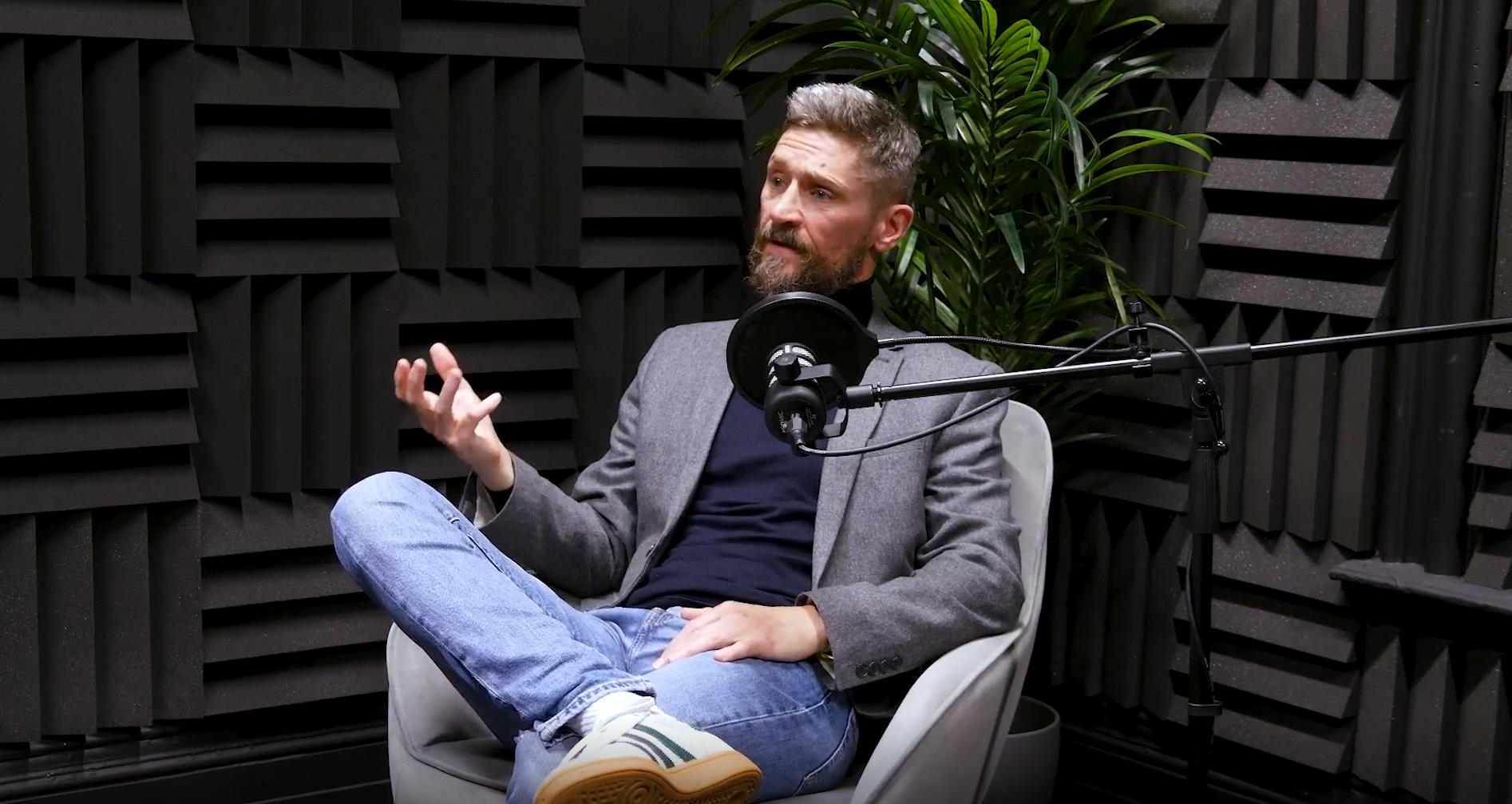
In this episode, hosts Alistair McDonald and Matt Cormack are joined by Forfusion CEO Steven Forrest. Forfusion is a Newcastle-based technology business that designs, delivers and manages mission-critical IT infrastructure for clients across the public and private sectors. Steven shares how Forfusion has built its reputation by staying true to a quality-first strategy.
Steven Forrest, CEO, Forfusion
If you’re leading growth (or about to), you’ll get practical insight on:
- How to build a technology business on a foundation of quality output rather than chasing revenue at pace
- How to use apprenticeships and ex-military recruitment to build a diverse, high-performing team from the ground up
- How to balance innovation with operational and financial risk when delivering complex IT infrastructure
- How to grow through client expansion and referrals rather than aggressive outbound sales
- How to maintain a strong culture and shared values as a business scales rapidly
Listen on Apple Podcasts or Spotify


You can find out more about Ward Hadaway Fastest 50 here. For the Fastest 50 podcast and access to all episodes, click here.
Alistair McDonald 0:08
Hello and welcome to Ward Hadaway’s Fastest 50 Podcast, where we shine a spotlight on entrepreneurial success, fast growing businesses and their role in the regional economy.
Alistair McDonald 0:19
I’m Alastair McDonald, Business Development Director at Ward Hadaway.
Alistair McDonald 0:22
I’m joined by my Co host today, Matt, Matt Cormack.
Alistair McDonald 0:24
Say hello, Matt.
Matt Cormack0:26
Hi everyone.
Matt Cormack0:26
Yes, I’m Matt Cormack.
Matt Cormack0:27
I’m a partner in our Commercial team.
Alistair McDonald 0:29
Thanks very much.
Alistair McDonald 0:30
And our guest today is Stephen Forrest, Chief Exec of Forfusion. Forfusion designs, delivers and managers mission critical IT infrastructure for organisations across the public and private sectors.
Alistair McDonald 0:45
The business is focused on helping clients drive digital transformation while balancing innovation, security and operational resilience.
Alistair McDonald 0:53
The business has seen impressive growth, ranked 21st in our 2025 Ward Hadaway Fastest 50 North East Steven, welcome to the podcast.
Steven Forrest 1:03
Thanks very much delighted to be here.
Steven Forrest 1:04
Thank you.
Alistair McDonald 1:05
We’re delighted you’ve come along. So thanks very much.
Alistair McDonald 1:07
If we could start at the beginning, if you could tell us about your journey into technology and what led you to Forfusion.
Steven Forrest 1:16
It’s been more incidental than anything else.
Steven Forrest 1:19
I had a bit of, let’s just say a poor start at university didn’t do particularly well.
Steven Forrest 1:27
I was a bit of a wayward chap when I was young so thought actually I’m going to join the armed forces, try and get a bit of direction.
Steven Forrest 1:35
Again, nothing to do with technology at all.
Steven Forrest 1:38
I decided to join the Royal Engineers to get a trade working class lad from Wallsend I thought let’s give that a go.
Steven Forrest 1:44
Next thing you know, I’m in the armed forces and I land a trade and my first post and I started designing blast walls to absorb rocket energy.
Steven Forrest 1:56
And I also end up doing a bit of a side job.
Steven Forrest 1:59
And that was essentially as a military diver searching for dead bodies.
Steven Forrest 2:02
As part of my remit, I was working in a design cell at the time and they didn’t have anybody to look after the computer network.
Steven Forrest 2:09
One of the officers came in one day and said, does anybody fancy looking after the computer network?
Steven Forrest 2:13
And I said, I’ll give that a go.
Steven Forrest 2:16
Bearing in mind I’d had a bit of a false start with me computer studies, I thought why not give it another go?
Steven Forrest 2:22
And that’s what I ended up doing.
Steven Forrest 2:24
Fast track a few years later, I ended up working for a very large Cisco networking company and within relative short order, I started designing and architecting some of the largest, most complex networks for large wealth management companies, banks and oil companies.
Steven Forrest 2:43
And that lead the foundations to start the business Forfusion.
Matt Cormack 2:47
One of the things that you guys are passionate about is, is apprenticeships.
Matt Cormack 2:50
And I when, when you’ve told me that story before, you know, it’s really clear that, you know, both for you and the executive and people you bring into the business, you know, you, you look for people with that, you know, desire and that and that drive, you know, and, and you know, you’re not always looking at, you know, university grads with, with a first class degree and everything else.
Matt Cormack 3:07
I see you do a lot with, with apprenticeships in, in the business.
Steven Forrest 3:10
So I know it’s, it sounds a little bit cliche, but it’s, it’s kind of to an extent, it’s the bedrock of the, of the business.
Steven Forrest 3:15
We’ve got, we’ve got quite a diverse workforce in terms of, you know, kind of political background, educational background, ethnicity, gender.
Steven Forrest 3:25
It’s, it’s a real mixed bag.
Steven Forrest 3:28
But one of the things that we’ve managed to do regardless of diversity is to ensure there’s a kind of a common goal, a common message.
Steven Forrest 3:35
It kind of, it comes, it fills down from the top, but it’s also built from the ground up.
Steven Forrest 3:40
One of the things we did and we still do today is basically launched apprenticeship programmes, but we also have fast track programmes to take apprentices through to engineer and through the consultancy into senior management and on occasion of the director level as well.
Steven Forrest 3:57
I suppose part and parcel of that.
Steven Forrest 3:59
We run civilian work, attachment schemes, so resettling ex service personnel, this huge emphasis and it has been from the, you know, from the outset in contributing society.
Steven Forrest 4:09
So helping the which is the King’s Trust now helping the disadvantaged find roles either in our business or other businesses.
Alistair McDonald 4:17
Do you think that’s contributed to the success of the business in terms of like clear sense of corporate responsibility in terms of recruiting people and clients and all that stuff?
Steven Forrest 4:26
It definitely has, we are incredibly selective about who we employ and it doesn’t mean to say that we want a specific person from a specific background, but that individual’s got to have the right qualities from an aptitude and an attitude standpoint.
Steven Forrest 4:41
What we really like to do is bring people on as young as possible, you know, creative people, people that with ambition, allow them to bring fresh ideas to the table that perhaps people that have got 10 or 15, 20 years-experience don’t have, but also allow them to flourish.
Steven Forrest 5:01
I mean, I’m from Wallsend, two of the other shareholders that, you know, start with me in 2008 and eight 2009, they’re from Newcastle as well.
Steven Forrest 5:12
So essentially we want to, we want to bring something back to the North East and, and, and help those apprentices flourish.
Alistair McDonald 5:18
And we’ve actually had a another couple of tech organisations as, as guests on, on the podcast.
Alistair McDonald 5:23
And I think if you’re not from the North East, you maybe don’t realise what a flourishing tech scene there is.
Alistair McDonald 5:30
People had to leave to get work and to get good paying jobs.
Alistair McDonald 5:33
And I think that’s changing definitely.
Alistair McDonald 5:35
And I think that’s something that we need to get the message out there that you, you know, by all means go and travel and go to other places, but you don’t have to, to get a, a really good paying job, no matter what background you’re from.
Alistair McDonald 5:44
I think that’s really, really important.
Alistair McDonald 5:46
So if a non-technical business leader asked you what problem you solve, how would you describe it?
Steven Forrest 5:51
I’ll, I’ll give you the kind of the party line first and I’ll kind of, I’ll offer a little bit more context.
Steven Forrest 5:56
I mean essentially we as I mentioned before, my backgrounds, design and very large complex networks, mission critical IT infrastructure typically for mid market and enterprise clients in the private sector space and for in the public space defence, government agencies and NHS trusts.
Steven Forrest 6:14
So the more complex the better.
Steven Forrest 6:17
So one of the things that we do and we pride ourselves on is allow organisations to innovate our pace, but critically also remediate remediate operational and financial risk as they’re innovating.
Steven Forrest 6:31
So finding that balance and that’s something that we do really well.
Matt Cormack 6:33
How do you take a client through that and get that balance right?
Matt Cormack 6:36
Because I guess, you know, to me you’d say, well, stability’s over here and then innovation and change are over there.
Matt Cormack 6:43
So how do you kind of guide clients through that?
Steven Forrest 6:45
Don’t do what the big guys do.
Steven Forrest 6:46
I mean, we’ve laid our own bed to an extent.
Steven Forrest 6:50
We’ve chosen to operate in the mid market and enterprise space.
Steven Forrest 6:53
We’re typically competing with organisations, you know, doing many tens or hundreds of millions, sometimes a billion dollars in revenue.
Steven Forrest 7:02
So we’ve had to be a little bit more creative.
Steven Forrest 7:05
One of the things that that we, we do 100% of the time, we don’t sell features, functions
Steven Forrest 7:12
And better from our standpoint, it’s about stakeholder engagement. Understanding the real problems, not just the technological problems, working with them, not clearing plan, creating a plan that essentially we can digest and we can approach in bite size chunks, looking at current state and evaluating what we need to do to get into a certain place in four or five or six years down the line.
Matt Cormack 7:33
I wanted to ask you, Steve, about what changes you’ve seen in in client expectations over the years.
Steven Forrest 7:39
So you know what, what are, what are organisations expecting of, of Forfusion and, and your services
Steven Forrest 7:47
Aside from the obvious, when we’re talking about AI and ML formal machine learning. I mean, what we’re seeing and, and it’s, it’s been more kind of prevalent over the last sort of 12, 18 months is, is lower tolerance for interruption.
Steven Forrest 8:02
And I know it seems like a bit of an obvious thing to say, but you know, with the advancements of technology, software defined networking, in our case, the ability to automate in some instances to remediate problems before they even arise.
Steven Forrest 8:17
They want to know about the event after the event, we need to tell them about the event, but it needs to be seamless to business operations.
Steven Forrest 8:24
So that’s one of the major changes that we’re seeing right across the board is I don’t mind knowing after it’s happened.
Steven Forrest 8:32
I don’t want the business to be failing.
Steven Forrest 8:33
It’s, it’s more now about proactive remediation rather than very quick reactive remediation.
Steven Forrest 8:40
And that’s one of the kind of seismic changes that we’re seeing specifically in managed services.
Matt Cormack 8:44
And I guess particularly knowing a bit about your client base with, with retail, you know, when you, when you look at some of the organisations in, in retail have been hit with, you know, cyber incidents and other, other, other difficulties with network, you know, in that competitive landscape, that can make a huge difference to that, to that client.
Steven Forrest 9:01
It’s, I mean, it works hand in hand with, with security, security incidents again, zero downtime.
Steven Forrest 9:06
This comes back to kind of how do we help organisations innovate our pace and mitigate the operational and financial risk.
Alistair McDonald 9:13
One of the services you offer is FusionCare and you know, I think managed services is, is more of a, a thing that people expect.
Alistair McDonald 9:25
So what, what do customers value about that particular offer?
Steven Forrest 9:28
I suppose it’s aligned with, you know, the, the topic we’ve just, we’ve just covered is the visibility is a big thing now.
Steven Forrest 9:36
So to give the client visibility, transparency, so they under know, understand what’s happened, why it’s happened and how it’s been remediated.
Steven Forrest 9:48
That’s the kind of that’s the key driver as an organisation.
Steven Forrest 9:51
I mean, we deliver into mid market enterprise clients, which typically means they’ve got fairly robust experienced IT teams.
Steven Forrest 10:01
So it’s only the really important stuff, the critical stuff, you know, challenges or problems that are escalated that that end up in our care.
Steven Forrest 10:10
That’s what they want to say that that’s being dealt with with you know at speed and proactively.
Alistair McDonald 10:14
Yeah, I think a lot of the time it’s that assurance.
Steven Forrest 10:18
I think clients more so now than ever they want to be reassured that’s essentially we’re we’re ahead of the market or at least in line with the market.
Steven Forrest Alistair McDonald 10:29
So if there is change of foot, we’re across it and we can communicate that with the clients and that either directly or indirectly influences how we tailor products and services to to deliver for clients.
10:43
I think that kind of starts to touch on on my next question, which was like from from your point of view, where do you see the market going over the next few years?
Steven Forrest 10:51
It will be primarily focused on as far as we’re concerned on visibility, visibility, observability, telemetry, essentially having having the data, but having the data presented in a way that can be ingested and understood by the layperson or by business unit owners or directors.
Steven Forrest 11:11
So, and the pace of changes such that that that needs to be almost, and I hate this term, a single pane of glass, one place to look to understand what’s going on right across your networking infrastructure, either on premise or cloud.
Steven Forrest 11:27
It’s been happening for some time, but in 3, 4, 5 years’ time, it’s, it’s going to be a must have.
Matt Cormack 11:34
Do you, do you think that’s, has that always been the case or, or is it more of a recent trend that you know, this is board level stuff?
Matt Cormack 11:44
You know, I guess we talked earlier about incident response, Is it a bigger issue around the ball table now than it was when you guys started?
Steven Forrest 11:51
I think one of the, you know, the major influencing factors here is that as we experience kind of, I suppose more challenges in and around skill shortages, more technologies become available, you know, the the network becomes much more complex.
Steven Forrest 12:08
That further compounds the challenges that we’ve got with the skills shortage.
Steven Forrest 12:12
More specifically in public sector where you’ll have pay bands, for example, they can’t employ people with the right skills and if they do, they don’t keep them very long.
Steven Forrest 12:20
So what it’s doing essentially it’s it’s elevated, I suppose it to board level.
Steven Forrest 12:25
Yeah, because they don’t have sufficient skills at the right levels within the business and there’s that.
Alistair McDonald 12:30
Are those skills shortages something that you see in the private sector as well?
Steven Forrest 12:33
Is that specifically the public sector?
Steven Forrest 12:35
We do see in the private sector, but in the private sector there’s, there’s more flexibility in terms of what organisations can pay under what circumstances and there’s a little less in the way of of red tape.
Steven Forrest 12:47
So obviously competitive advantage is quite important in the private sector.
Steven Forrest 12:50
So you kind of you can pay your way into that.
Steven Forrest 12:53
Whereas with public sector, obviously you don’t want to fall behind, but it’s more about safety, security, compliance, adherence to to standards.
Matt Cormack 13:01
Well, we want to talk about the Fastest 50, don’t we, because we’re on the Fastest 50 Podcast and Forfusion ranked this year, which was great, great to see.
Matt Cormack 13:09
And we’ve had a had a few years that we were almost in the in the 50 and brilliant to get you guys in.
Matt Cormack 13:14
And what do you think the, the sort of key strategic decisions are that you’ve made in recent years that have have contributed to that growth?
Steven Forrest 13:22
We haven’t changed our strategy.
Steven Forrest 13:24
We haven’t changed the strategic direction of the business.
Steven Forrest 13:27
One of the things that we’ve always been big on always is ensuring the quality of output we’ve chosen to, you know, work in in complex environments.
Steven Forrest 13:37
The more complex the better, essentially because that’s the way we’re geared up to deliver.
Steven Forrest 13:44
But this whole quality of output thing can only go so far if the market dictates the big players can use brute force to push you out.
Steven Forrest 13:54
Now what happened when COVID reared it’s head, an indirect consequence of that was a worldwide silicon shortage that meant that our competitors, you know, doing hundreds of millions of billions couldn’t use buying power and brute strength to win clients.
Steven Forrest 14:10
And that’s when we could use creativity, guile, strategic planning and road mapping and coming out the other side of COVID.
Steven Forrest 14:18
That’s that’s what turned it turned the taps on essentially.
14:24
And it’s it’s wasn’t a change of direction.
Steven Forrest 14:25
It was us having the conviction, the strength of character, if you will, to stick with a plan, stick with a strategy that would architect at a board level and executed in its full.
Matt Cormack 14:36
I mean, through that period of, of fast growth, you know, you’ve got brilliant management team, quite a close group of, of directors and and execs.
Matt Cormack 14:47
I guess you’ve also got like extended team through professional advisors and that that that you guys work with.
Matt Cormack 14:52
What makes that sort of professional advisory network important and how, how can those advisors add value to, to your business as you’re growing?
Steven Forrest 15:00
Personally, and I, and I hope I kind of, you know, I’m, I’m echoing the thoughts of the board is we don’t look for anything different than when we’re engaging or employing senior people within the business.
Steven Forrest 15:14
It’s about trust, it’s about accountability.
Steven Forrest 15:17
There needs to be some humility there, experience, expertise and what’s really important to me and hopefully the board organisations and individuals, because I, I look at it in exactly the same way.
Steven Forrest 15:31
They’ve got to be open to challenge and, and I think that’s absolutely critical.
Steven Forrest 15:35
But what’s really important is, you know, they take challenge on board and also they’re prepared to be open to challenge even if they don’t necessarily believe in somebody else’s ideas.
Steven Forrest 15:46
And I think that’s really important for any professional services organisation.
Steven Forrest 15:50
I think one of the things that’s, you know, that’s continues to be important for our business is engaging with professional services companies that are at the top of the game.
Steven Forrest 16:00
So, and this is, you know, we accept that working with certain professional services and it’s not necessarily the the cheapest option, the benefits if you build the relationship in the right way from the outset, you accept challenge, you’re honest, etcetera, etcetera, then it’s in going off a long way.
Steven Forrest 16:17
And that’s, I mean, that’s the way we that’s the way we sell businesses into our clients kind of land and expand and do it in the right way.
Alistair McDonald 16:24
I think that proper relationship where it’s providing the assurance that you’re talking about, but also being able to be tested and challenged, then that’s the sort of the the key ingredient in any relationship there.
Alistair McDonald 16:35
So that’s that’s really interesting.
Alistair McDonald 16:36
Thanks.
Matt Cormack 16:36
I had one more question on on the growth side of things.
Matt Cormack 16:38
You’ve talked about not changing the strategy in, in terms of that growth.
Matt Cormack 16:43
Has the growth typically come from doing more with existing clients or has it been, you know, winning, winning new clients or combination?
Steven Forrest 16:52
Our growth has come from either existing clients, as you know, just as I was explaining before, you know, the ability to deliver one service really well on a specific technology or service and then expanding out. That’s a really important area of growth for us.
Steven Forrest 17:07
So obviously looking at white space, the next and second best area really is referrals, warm referrals, one client speaking with another client saying, by the way, we had these challenges, these problems, Forfusion came in, did an absolutely fantastic job.
Steven Forrest 17:21
We end up working with those clients.
Steven Forrest 17:23
And I mean, obviously it’s that kind of almost compresses the sales cycle for us, which is great, but it means that we’re working with a client that automatically trusts us.
Steven Forrest 17:33
So we’re, you know, we don’t necessarily have to go through the whole kind of sales pitch again and we can just get involved and get on with the stuff that really matters.
Steven Forrest 17:42
More recently we’ve we’ve done a lot more with sales and marketing.
Steven Forrest 17:45
We didn’t want to be, you know, particularly on the front foot with sales and marketing until we started taking some market share, until we started taking on large clients, until we’ve got the foundational components of proper board in place, proper structure, proper standards.
Steven Forrest 18:00
We’ve got that in place now and think we’re on board and a client every six to eight weeks at the moment, but we’ve got the foundational components and the platform to allow us to continue, you know, ensuring the quality of output.
Steven Forrest 18:13
So every single customer gets a good service and it’s not detrimental, we take on more.
Alistair McDonald 18:17
I think when you have businesses that are growing as as quickly as yours has, like that sort of chasing the sales and all that kind of stuff does take people’s eye off the ball.
Alistair McDonald 18:27
And then and then service suffers and then you, you know, it’s, it doesn’t really work for anybody.
Alistair McDonald 18:31
So it’s, it sounds like you’re doing that on the right.
Matt Cormack 18:33
Yeah.
Matt Cormack 18:33
And it’s taking those time on because the process stuff isn’t that attractive, is it?
Matt Cormack 18:37
You know, it’s not, it’s not a big client win.
Matt Cormack 18:40
You know, it’s not directly onto the bottom line.
Matt Cormack 18:42
It’s the process that sits underneath it.
Matt Cormack 18:44
And certainly from, you know, working with you guys that, you know, you have put so much detail into those, into those processes.
Matt Cormack 18:49
And then you reap the rewards because like you say, you’ve, you know, you’ve got consistency of.
Steven Forrest 18:56
One of the things that has slowed us down and it’s, it’s potentially more incidental than anything else is that we ensure we’re delivering what we consider to be our commitment in the local communities.
Steven Forrest 19:07
So that sometimes covers above generating profit.
Steven Forrest 19:12
As long as we continue to do that, it can’t help but slow us down slightly.
Steven Forrest 19:16
We, we actually think that’s a really good thing because it keeps, it keeps the employees bought in, it keeps the clients bought in.
Steven Forrest 19:22
We avoid any risk of greenwashing.
Steven Forrest 19:25
You know, what we say to the outside world we’re doing, we’re actually doing and the employees you, you know, certainly via the, the, the NPS scores that we’ve received, they really value that.
Alistair McDonald 19:36
We’ve done some of that work on the NPS scores ourselves.
Alistair McDonald 19:38
And that’s, it’s, it’s absolutely fascinating what comes back.
Alistair McDonald 19:40
But you’re right, you can’t, you know, I think that sometimes it’s, it’s a trend to show what you’re giving back and all that kind of stuff.
Alistair McDonald 19:46
And it’s, you’re doing it genuinely.
Alistair McDonald 19:48
And I think people understand that this they see through it when when it’s not genuine.
Alistair McDonald 19:51
But yeah, I didn’t expect that that would be part of the sort of growth process.
Alistair McDonald 19:56
So if we could move on to another aspect of the, the sort of the journey you’ve you’ve experienced managing acquisitions during your career, what did that teach you about both leadership, but risk as well?
Steven Forrest 20:11
Think the two are kind of intertwined in a in a sense, it’s that suppose it’s it almost kind of supported our core values, you know, talk a lot about accountability, ownership, transparency, openness.
Steven Forrest 20:27
I think any process that involves change the needs to be a greater degree of openness and transparency.
Steven Forrest 20:35
And I mentioned working with clients where you need all the stakeholders on board inward looking, it’s exactly the same.
Steven Forrest 20:41
You need the stakeholders on board and the stakeholders often are not just board members.
Steven Forrest 20:45
You know, it could be line managers, but it, it may also be influential individuals in the business that are not senior, but they might have put 10 or 15 years effort in to help and build the business.
Steven Forrest 20:56
It’s actually getting those individuals involved in the process and making them feel part of it.
Steven Forrest 21:01
And, and that in itself helps mitigate risk, operational risk and cultural risk, because the last thing you want is for the cultural fabric to get torn because you’re not living your values and you’re not making it all inclusive.
Matt Cormack 21:14
And actually because of the because of the people you’ve got in the business.
Matt Cormack 21:17
You know, you talked before about how seriously, rightly so, you take recruitment into the business.
Matt Cormack 21:24
You know that every single person in the business is passionate about its growth.
Matt Cormack 21:27
So that I guess with that comes that requirement for communication.
Matt Cormack 21:31
You know, you’ve not got people coming in thinking, well, I’ll sit here 9 to 5, you know, it’s just my job.
Matt Cormack 21:36
They genuinely care about where the business is going.
Steven Forrest 21:38
So a lot can be said about obviously, you know, development on courage and certain kind of way of thinking, a way of working and and culture as well.
Steven Forrest 21:46
And it’s really important when you go through the recruitment process, you’re employing people for the right reasons, not just because of their technical capabilities.
Steven Forrest 21:54
But what’s equally important if you want the business to thrive is that you don’t hold on to people that aren’t cut from the right cloth.
Steven Forrest 22:01
You know, that’s a critical thing.
Steven Forrest 22:03
And you know, some people may look at it as kind of hardnosed business person, a big cut throat, but that can be more damaging than any other activity is allowing somebody that doesn’t have the right kind of mindset to remain within the business.
Steven Forrest 22:18
So we like to make decisions quick and fast.
Steven Forrest 22:21
I mean, we’ve got one of the lowest attrition rates in industry both at employee and client level.
Steven Forrest 22:28
And we think that’s one of the main reasons for it.
Alistair McDonald 22:31
So I mean, you’ve kind of touched on, on some of this in your, in your answer, but like the as, as organisations grow rapidly, it is hard to maintain that culture of what you were when, when you set off.
Alistair McDonald 22:42
So is there are there any specific things that you’ve done to, to maintain that outside the, the recruitment piece?
Steven Forrest 22:47
Think the biggest challenge that organisations have, especially organisations that, you know, champion diversity.
Steven Forrest 22:55
So the first thing is encourage diversity, but make sure that diversity isn’t destabilising the direction of the business and the kind of core values of the business.
Steven Forrest 23:05
That’s a very tricky one to manage if you want to be a diverse business.
Steven Forrest 23:10
And I suppose the most important thing for us and as far as the board is concerned is make sure that quality of output drives and influences absolutely everything.
Steven Forrest 23:21
So it’s a non-negotiable, if the quality of output is non-negotiable, naturally a solid coherent culture will follow.
Alistair McDonald 23:31
And it’s emphasising that that’s the aim for for everybody in the business.
Alistair McDonald 23:35
Great, that was really good. Thanks.
Matt Cormack 23:37
And we touched on this a little bit already with your sort of armed forces background.
Matt Cormack 23:41
I’m interested in, you know, whether you think that background has shaped your leadership style and you know, your your approach to resilience and decision making.
Steven Forrest 23:51
I mean, we just kind of wind, wind back the clock to a time when I left uni and decided to join the armed forces.
Steven Forrest 24:00
There’s no shame in saying and admitting I was probably quite a selfish person in those days.
Steven Forrest 24:06
And this isn’t me saying I was selfish then and I’m great now.
Steven Forrest 24:09
Anything like that.
Steven Forrest 24:10
I was, I was pretty self-centred, you know, a lot of the sport that I did, you know, did judo for many years at a good level.
Steven Forrest 24:17
I ran a lot.
Steven Forrest 24:17
But essentially, I, I tended to choose sports where I could only blame myself if I wasn’t successful.
Steven Forrest 24:24
I joined the Army very, very similar mindset that soon got kicked out of me, fortunately, actually, and for the for the greater good and what that helped me get a real appreciation of and, and, and I’d like to think now it, it’s fairly prominent in some of the leadership decisions that I make.
Steven Forrest 24:42
And there’s certainly the team that we build is the need to work as a collective and that’s, you know, heavily influenced the core values of the business and the direction of travel.
Steven Forrest 24:53
So I think I’ll take that one thing from the armed forces.
Steven Forrest 24:57
I mean Forfusion to the employees, I think 25, 26% of its works workforce is ex services personnel.
Steven Forrest 25:08
And we love taking on ex services personnel for that very reason.
Steven Forrest 25:12
It’s, you know, when the going gets tough, they tend to be pretty robust, pretty resilient, roll up their sleeves and work together.
Matt Cormack 25:20
That environment that they’ve been in where where, you know, you, you have to operate as a team, don’t you?
Matt Cormack 25:24
I mean, I mean, you know, you’re literally talking about life and death situations there.
Matt Cormack 25:28
And if you’re not, if you’re not pulling in that direction, you’re not pulling in that direction together.
Alistair McDonald 25:31
How does that impact the rest of the people who aren’t from a Forces background ’cause I would imagine that is structured and it is following the leadership, but then you’ve got other people who aren’t and you you’ve talked about everybody’s pulling in the same direction around the same goal.
Alistair McDonald 25:45
So how do you marry those two things together?
Steven Forrest 25:47
I’ve not been asked that question before, but I think I can answer it hopefully succinctly.
Steven Forrest 25:52
I don’t know.
Steven Forrest 25:53
So essentially if if we if, if the 2 examples we’ve got there is if we take somebody that come that’s comes from university or somebody that has come from A levels or whatever it is, we’ve really got to kind of mould them and teach them about teamwork.
Steven Forrest 26:08
The values associated with teamwork.
Steven Forrest 26:11
It’s not all about you, it’s about the business and it’s about it’s about your team.
Steven Forrest 26:16
So there are certain approaches that we’ve got to take depending on the individual’s background.
Steven Forrest 26:21
The same goes for the forces.
Steven Forrest 26:22
So we don’t have to teach them about being regimented, structured, being organised, being robust teamwork.
Steven Forrest 26:29
But what we have got to teach them about is the commercial world.
Steven Forrest 26:33
The influence or the type of training that we that we give to these individuals is really quite different.
Steven Forrest 26:41
But one of the advantages of having ex forces personnel is they come in and they typically take roles on where you need to be process driven.
Steven Forrest 26:50
For example, you know, there’s a very high proportion of those individuals or project managers or the work for government agencies where it’s, you know, it’s, it’s quite prescriptive, the work, the work and work and day.
Steven Forrest 27:03
And it doesn’t necessarily suit every person.
Steven Forrest 27:07
But what we’ll do is we’ll make sure that all training plans are aligned to an individual in the background. It’s not generic and it can’t be.
Matt Cormack 27:12
You know, you’ve talked there about that changing you where you went from, you know, the sort of the personal ambition to the team ambition.
Matt Cormack 27:23
And you know, clearly in your role as chief exec, it’s all about team, team focus.
Matt Cormack 27:28
How do you sort of personally balance those two things?
Matt Cormack 27:30
Because I, I know you’re personally still ambitious for your personal goals, plus you’ve got the, the team goals of the business.
Matt Cormack 27:36
How do you balance all of those things?
Steven Forrest 27:38
I suppose to an extent it’s kind of setting again, the non-negotiables.
Steven Forrest 27:42
So I’ve got a business, got a young family, family come first, business come second and then training comes third.
Steven Forrest 27:53
I think you know, one of the things that I’ve been able to do and develop quite well over the years is work to a system.
Steven Forrest 28:03
I can quite easily get 2-3 hours training done before the working day starts.
Steven Forrest 28:08
That way it doesn’t encroach on business, it doesn’t encroach on the time owner spend my 6 year old daughter, exactly the same on the weekends.
Steven Forrest 28:17
If I’m, if I’m going to exercise, I go out very early and then I’ve still got the entire entire weekend and I’m fortunate enough to have be surrounded by an unbelievable board work pretty flexible, close knit bunch.
Steven Forrest 28:30
And I think that really, I think that really helps.
Matt Cormack 28:33
And and he talks a little bit about the the board there.
Matt Cormack 28:35
When you are very close knit team, how, how did you sort of react to being in the the fastest 50 as a group?
Matt Cormack 28:42
Because I said before, you know, you had a few years.
Matt Cormack 28:44
We had like right on the cusp of being there.
Steven Forrest 28:46
The board was delighted, but I think it’s, it’s other people in the business that were more delighted and felt, you know, with external validation, what they were doing is actually really being valued and it was really visible.
Steven Forrest 29:01
A lot of the people that do a fantastic job for the business.
Steven Forrest 29:03
They’re not, they’re not outward facing, They’re not, you know, they’re not sales people, not necessarily consultants.
Steven Forrest 29:09
It’s individuals working in the back office.
Steven Forrest 29:11
You, you know, the kind of the oil to the cogs in the engine, if you like.
Steven Forrest 29:14
It’s those individuals that often work in to a certain extent, thankless positions say, ah, that’s what I’m contributing towards.
Steven Forrest 29:23
So for everybody within the business, I mean, we were delighted, everybody was delighted, but I think it was also met with a bit of reality as well because we’re never complacent.
Steven Forrest 29:37
We don’t get carried away.
Steven Forrest 29:38
It’s one year that we chase for multiple years and hopefully we’ll be there again.
Steven Forrest 29:42
But as soon as it happened and we celebrated and we shook everyone’s hand, it’s back to business as usual.
Matt Cormack 29:47
It’s on, it’s on to the next, the next Roman ladder, isn’t it, with what I think that comes across from this conversation and the way that you guys are as a business.
Matt Cormack 29:55
But it’s nice to see that even if it’s just for the afternoon of the awards, you know, actually you get your team together and pat yourselves on the back and go.
Matt Cormack 30:02
Yeah, actually, let’s pause.
Matt Cormack 30:04
Just even if just for half a day, we’ll pause and we’ll just reflect on the on where we’ve got to here.
Alistair McDonald 30:09
So I want to ask in a very clearly articulated how you’ve managed to to grow and grow in a in a successful manner.
Alistair McDonald 30:18
What, what advice would you give to other founders who are listening to this about how they would go about doing that themselves?
Steven Forrest 30:25
I think a lot of it comes down to the anticipated rate of growth.
Steven Forrest 30:30
Because if you want to grow very aggressively without the foundations in place, then it’s going to affect the quality of output.
Steven Forrest 30:36
I’m not saying it’s a linear, but, but if you want to grow at a moderate pace and you haven’t got the foundations in place, then obviously the impacts less.
Steven Forrest 30:45
My view, our view as a board is if you want to grow at pace, you want to grow aggressively is be patient in the early years, get the foundational components in place, a strong team that you know you trust, similar values.
Steven Forrest 31:02
Diversity is a good thing as long as there’s a unified and collective goal.
Steven Forrest 31:07
Once those foundations are in place, take advantage of the fact that you’ve got a platform and you can accelerate from there with the primary focus being quality of output. And I think that’s a reasonably good recipe for any business.
Alistair McDonald 31:16
Moving forward over the next 2, 3, 5 years. What does success look like for Forfusion?
Alistair McDonald 31:27
And I’m going to add 1 in what it, what does it look like for you personally?
Steven Forrest 31:30
It’s a really good question because what a really strong year last year.
Steven Forrest 31:35
We like to do things in, in phases and cycles.
Steven Forrest 31:37
You can’t just continually grow kind of it iteratively or incrementally.
Steven Forrest 31:42
Then you need to take stock, especially with the advancement of technologies, the fact that you, you know, you may want to and we have done is actually build additional structure at board level at middle management because we’re at a point now we, we can’t scale much more aggressively.
Steven Forrest 32:01
But you need to take stock first and make sure the strategy is as robust as the team and as robust as the ideas that we’ve got.
Steven Forrest 32:09
So we’ve spent the last what 9, nearly ten months doing that now in preparation for much more aggressive scale.
Steven Forrest 32:16
So the next 2 or 3 years we anticipate to to grow much more quickly than we have done in the fast, but that’s owing to the fact that we’ve got the platform in place.
Matt Cormack 32:25
What about for you personally, more of the same.
Steven Forrest 32:28
If we can continue growing at a similar or faster rate, make sure that the cultural fabric remains intact, continue basically, you know, delivering, offering our support, you know, whether it’s financial, whether it’s resource into local communities, supporting things like work, walking with the wounded, resettling ex military personnel, bringing apprentices through.
Steven Forrest 32:53
If we can continue doing that as well as generating profit and growing, then I’m happy guy.
Alistair McDonald 33:00
What’s absolutely loud and clear with with you and with with Forfusion is that genuine purpose driven organisation that is, to me, it sounds like as much about the profit and the growth as it is what you put back into the communities.
Alistair McDonald 33:15
I think it’s fascinating to hear that that focus on the the community aspects being something that’s actually enabled you to to grow successfully and and grow in a sustainable manner, which, you know, I just think that’s absolutely amazing and you hear so many people talk about that, but to hear it genuinely be part of the, the, the the sort of recipe for for success with you is is amazing.
Alistair McDonald 33:37
I think the other thing that’s just abundantly clear is the absolute laser focus on the outcome and the, and the output, whether that’s board level for a client.
Alistair McDonald 33:50
It’s like you’ve got that laser focus and that’s enabled you to bring people from military backgrounds, non-military backgrounds, different ethnic backgrounds, different social backgrounds and pull all that together to create a very, very successful business that yes, generates profits and all that, but employs people and gives them good careers.
Alistair McDonald 34:11
And also to acknowledge that if there’s any threat to that fabric of your organisation that you’ve got to act on it.
Alistair McDonald 34:18
So that’s absolutely fascinating from from my point of view, if people want to get in touch with you or if they they can hear more about the the business, how should they go about doing that?
Steven Forrest 34:27
I think I mean, certainly LinkedIn, Steven, Steven Forrest, I’ll be delighted to hear from anybody any feedback they’ve go to forfusion.com.
Steven Forrest 34:35
That’s the that’s the that website, but we’re always happy to hear from from anybody.
Steven Forrest 34:40
Thanks so much for your time.
Alistair McDonald 34:41
No, thanks very much indeed.
Alistair McDonald 34:42
And and thanks for being my Co host today, Matt,
Matt Cormack 34:44
Absolutely pleasure.
Alistair McDonald 34:45
You’ve been great, really enjoyed that.
Alistair McDonald 34:46
Thanks very much.
Please note that this briefing is designed to be informative, not advisory and represents our understanding of English law and practice as at the date indicated. We would always recommend that you should seek specific guidance on any particular legal issue.
This page may contain links that direct you to third party websites. We have no control over and are not responsible for the content, use by you or availability of those third party websites, for any products or services you buy through those sites or for the treatment of any personal information you provide to the third party.
Contact a specialist

Follow us on LinkedIn
Keep up to date with all the latest updates and insights from our expert team