Building legacy and resilience with Andy Carr and Paul Callaghan
19th March, 2026
Fastest 50 Podcast
2nd April 2026
Building high-performance teams with Steven Forrest
Find out more
26th March 2026
Forecasting business trends with Joanna Feeley
Find out more
19th March 2026
Building legacy and resilience with Andy Carr and Paul Callaghan
Find out more
12th March 2026
Scaling a tech consultancy with Tom Lawson
Find out more
5th March 2026
Using advisors to support growth with Raman Sehgal
Find out more
5th March 2026
Growth by design with Mark Thompson
Find out more
Welcome to the Ward Hadaway Fastest 50 Podcast, where we sit down with entrepreneurs and business leaders who are rewriting the rules of growth in the UK and beyond.
In this episode, host Alistair McDonald is joined by Andy Carr and Paul Callaghan from Leighton, a North East based software development company, to discuss how regional businesses can scale whilst staying rooted in their values.
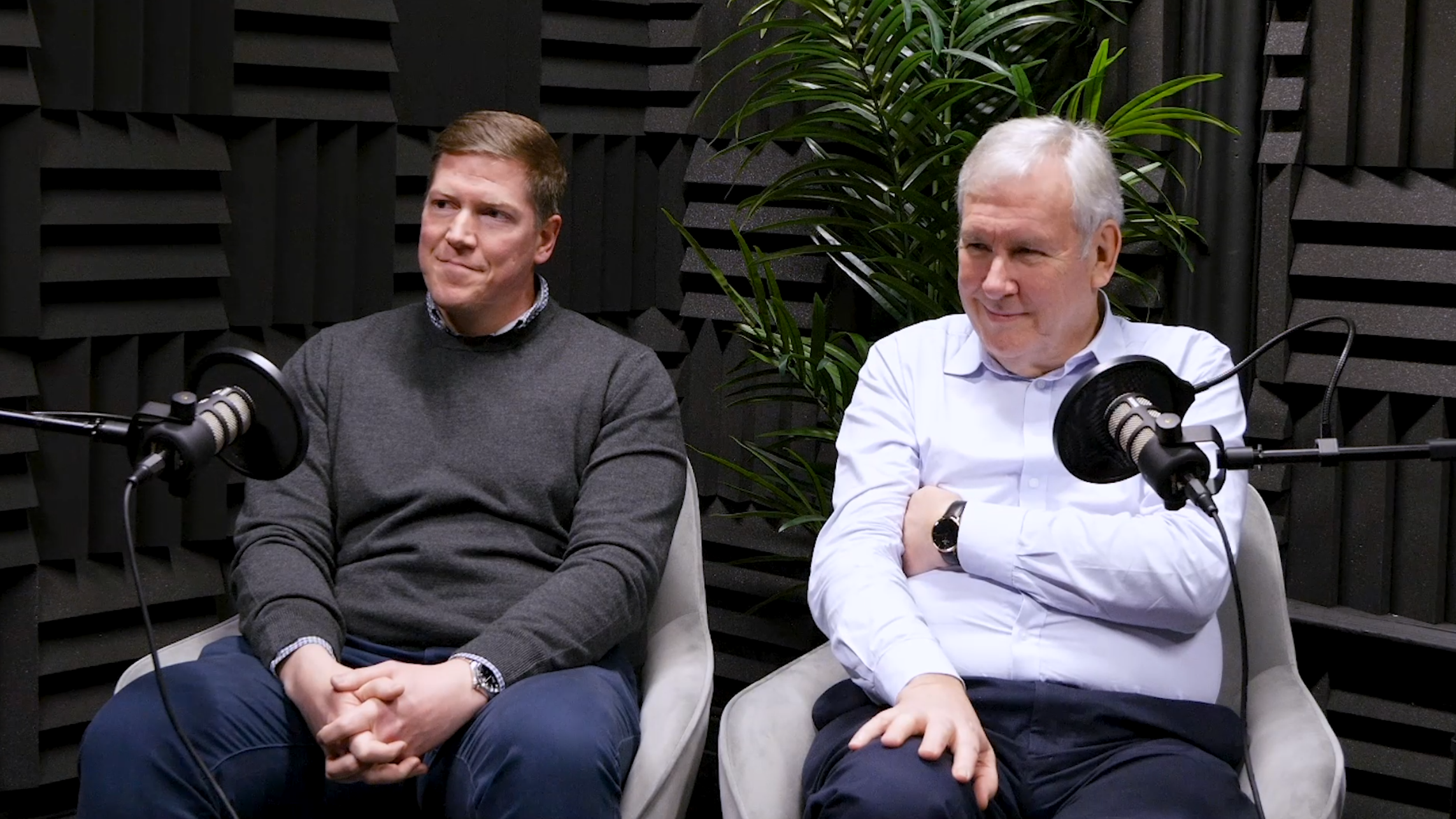
Andy Carr, Chief Financial Officer, and Paul Callaghan CBE, Chairman and Co-Founder, Leighton
If you’re leading growth (or about to), you’ll get practical insight on:
- How Leighton’s history and legacy have shaped its success in a competitive industry
- How to balance local, regional and global recruitment to acquire the right talent
- How to build and maintain strong client relationships as your business grows
- How to create an inclusive work culture that recognises team success and promotes a shared vision
- How to prepare your business for challenges and why having the right people in place makes adapting easier
From Leighton’s long-standing success and growth in the tech sector, Andy and Paul share how the business continues to adapt and evolve in a competitive industry.
Listen on Apple Podcasts or Spotify


You can find out more about Ward Hadaway Fastest 50 here. For the Fastest 50 podcast and access to all episodes, click here.
Alistair McDonald 0:08
Hello and welcome to the Fastest 50 Podcast, where we’re shining a light on entrepreneurial success, growing business and their importance to the economy.
Alistair McDonald 0:17
I’m your host today Alastair McDonald, Business Development Director at Ward Hathaway, and today I’m joined by the incredible Paul Callaghan, CBE, Co-founder and Chairman of Leighton, alongside Andy Carr, who’s their CFO.
Alistair McDonald 0:29
Leighton is a software development company that brings people and technology together to accelerate digital change and help organisations thrive.
Alistair McDonald 0:38
With over 30 years’ experience in software engineering, they help build bespoke software solutions that improve process, integrate systems and create efficiencies that drive growth.
Alistair McDonald 0:49
They’re recently ranked #10 in the North East Fastest 50 that recognises them as one of the most successful businesses in the North East region.
Alistair McDonald 0:58
Paul and Andy, welcome to the Fastest 50 podcast.
Paul Callaghan 1:01
Thank you.
Alistair McDonald 1:01
Good morning.
Paul Callaghan 1:02
Good morning.
Alistair McDonald 1:03
It’s great to see you both.
Alistair McDonald 1:05
So I’d like to start at the beginning, if that’s all right.
Alistair McDonald 1:08
You’ve both had very different entrepreneurial journeys.
Alistair McDonald 1:11
Paul, if we could start with you, where did it all begin and what led you to found Leighton?
Paul Callaghan 1:18
Well, we’re going back more than 30 years here.
Paul Callaghan 1:22
We had a we still have a quite a successful publishing business and that was established in the 1970s.
Paul Callaghan 1:31
I was obviously a child at the time, but during the 1980s computers started to be used in business and I remember buying a computer for the for the publishing business so that we could do our own typesetting.
Paul Callaghan 1:46
We then move on to 1991/92 and it was the start of the Internet and I realised that the typesetting language that was used for putting ink on paper was quite close to HTML, the code that was used to put websites together.
Paul Callaghan 2:05
And so we decided at this point to set up a business in 1992 called Leighton Internet, named after the street that myself and my siblings, we grew up in, Leighton Road.
Paul Callaghan 2:18
We were very much the earliest adopters of the Internet.
Paul Callaghan 2:22
Many people in those days didn’t think it would catch on.
Paul Callaghan 2:25
We began really by developing websites for businesses and that was really our first two or three years.
Paul Callaghan 2:36
We then started to see the opportunities that the Internet offered, not just for websites but for software.
Paul Callaghan 2:43
And we hired some good software developers in about 1995 and we’ve taken off since then.
Paul Callaghan 2:51
And what’s happened is that as we’ve developed businesses, some of them have been spun out in the, as entities on their own and they are then going on to be bought, to be merged, to be, to develop on their own.
Paul Callaghan 3:06
And Leighton is still our, we call it the mothership, right?
Paul Callaghan 3:10
It’s the place where great ideas are formed, great people work there often for a long, long time.
Paul Callaghan 3:16
We we have a very well established staff who’ve got a lot of experience who are really good at what they do and it’s great to see us yet again in the the Ward Hardaway Fastest 50.
Alistair McDonald 3:27
So Andy, from a from a CFO perspective, what’s it been like joining a business that’s grown at that pace and what’s your approach to supporting that growth as the CFO?
Andy Carr 3:41
Yeah, so what’s it been like?
Andy Carr 3:42
It’s been exciting and challenging and equal equal measure.
Andy Carr 3:45
So you think, great, the business has grown, grown really quick, but actually off the, the back of that, you need to make sure you’re making decisions in the, the right time and, and doing the right things by the people that work there, because just chasing growth doesn’t necessarily maintain culture or do the right thing for your customers.
Andy Carr 4:00
So it’s about getting that, that balance right.
Andy Carr 4:02
And if you remember back five years ago, we were in the midst of, of COVID now.
Andy Carr 4:06
So I joined at a time when the, the business had, had lost some projects and it was reshaping what it, what it wanted to be.
Andy Carr 4:13
So it was, it was quite an exciting time to join, to become part of that journey with the, the leadership team.
Andy Carr 4:20
But actually, every decision you made at that point was really vital because we weren’t, we weren’t making money.
Andy Carr 4:25
We were trying to make very small profits.
Andy Carr 4:27
And one wrong decision could, could throw you off.
Andy Carr 4:29
So that’s the, the bit when I say it’s, it’s challenging.
Andy Carr 4:33
It was, it was making sure that the decisions we were making were right to you.
Andy Carr 4:36
Almost in hindsight now when we look back, we should have made some decisions sooner, but you’re acting with caution, not knowing what the world was, was going to be like.
Andy Carr 4:45
But off the back of that, it has been very exciting.
Andy Carr 4:47
I mean, we’ve, we’ve had numbers 90% growth, 61% growth.
Andy Carr 4:51
We’ve been in the 30s, which is the thing that gets you in the, the Fastest 50 list.
Andy Carr 4:55
So it’s been an amazing journey.
Andy Carr 4:57
If I, if I look back, it was, it was just over 2 million revenue the first year I joined and we’re on track to be and probably close to 11 and a half million this year.
Andy Carr 5:06
Headcount has gone from from 34 people the day I joined when I were 110.
Andy Carr 5:11
So to create all those jobs and a lot of them in the North East, it’s been, it’s been really exciting and watching people develop.
Andy Carr 5:17
And like Paul says, a lot of the people I’m working with were there when I started and I’m still there there now, which is really nice.
Alistair McDonald 5:23
Yeah, it’s a good sign, isn’t it?
Alistair McDonald 5:25
And I think, you know, people look at growth and they look at it as being, you know, that’s the panacea and that’s what you’ve got to get after.
Alistair McDonald 5:31
But they don’t realise that the challenges and the difficulties of it and the the hard decisions that you have to make to to make those sorts of things happen.
Alistair McDonald 5:37
So it’s, it’s interesting.
Paul Callaghan 5:38
I mean, it’s, it’s interesting.
Paul Callaghan 5:40
I mean, and Andy’s talking about COVID as being a crisis point, but I think over the 30 years, we’ve most probably had about two or three or four of these.
Alistair McDonald 5:47
So I suppose how how do you prepare a business for that?
Paul Callaghan 5:49
You have very clever people working, right?
Alistair McDonald 5:52
Yeah.
Paul Callaghan 5:52
That’s the key.
Paul Callaghan 5:54
I always say I appoint people who are cleverer than me.
Paul Callaghan 5:56
It’s not just about intelligence, it’s actually about the culture that’s developed, how they treat not only customers and I think that’s quite important, but also how they treat the staff.
Paul Callaghan 6:07
And James Bunting, who’s the chief exec, started with us in the late 1990s, went off to work for one of our spin out businesses.
Paul Callaghan 6:15
And then there’s been come back into the company.
Paul Callaghan 6:18
And that’s really a reflection of what he he experienced when he first started working for us as a as a young man.
Paul Callaghan 6:25
And he’s brought all that experience back to the business now.
Paul Callaghan 6:29
And you know, that’s that’s what we’re trying to encourage.
Alistair McDonald 6:31
And was there anything that happened in, in those early days as you are kind of learning how to run the business and and you’re having those early stages of growth that influenced the business as it grew and developed?
Alistair McDonald 6:42
And what were the challenges in the early days?
Paul Callaghan 6:44
I think what you were always trying to do was to run a business that was profitable, sustainable and ethical.
Paul Callaghan 6:53
I think we’ve always sort of pride ourselves in being people who want to run a business that’s that’s decent, that pays its tax.
Paul Callaghan 7:00
What we want to be is much more part of the business community here.
Paul Callaghan 7:05
And it’s, it’s interesting that you go to a, an event Dynamo or one of the, the, the tech events here and you meet so many people whose careers started with us and they, they then gone off and either established their own business or working for somebody else.
Paul Callaghan 7:23
And they, they talk fondly about the, their period when they were straight out of university or second or third job and coming working for us.
Paul Callaghan 7:31
And you could see that talent and the whole thing about talent is recognising talent and giving it its head with certain constraints, but essentially encouraging people who are good at what they do to actually get better at what they do.
Paul Callaghan 7:46
And if that then means that they go off and set their own business up, well, that’s great.
Paul Callaghan 7:50
You encourage that because what we’re also trying to do is to develop a software ecosystem.
Paul Callaghan 7:57
It’s a word I don’t particularly like, but it expresses what we’re trying to do here in the North East, make it a powerhouse and some fantastic businesses here in the North East and we’re very proud to be one of them.
Alistair McDonald 8:08
So you mentioned talent there and you know, that’s whether that’s, you know, an architectural business or a construction business or a tech business, like that’s absolutely critical.
Alistair McDonald 8:17
And you mentioned the clever people that you’ve surrounded yourself with, like do you still focus on the North East as a place to get that talent or do you look globally now or is that has that changed?
Paul Callaghan 8:28
Online working is much more prevalent.
Paul Callaghan 8:31
Our client base is much more diverse and more widespread international and therefore both with Leighton and other other companies in the Leighton Group, we’re able to actually operate satellite offices at various places and also have people who essentially work from home.
Paul Callaghan 8:48
And so the the constraints of the North East have been reduced.
Paul Callaghan 8:53
It has advantages and disadvantages.
Paul Callaghan 8:56
When you, when you had to employ people from the North East, you, you felt as though you were making a real impact on the number of jobs.
Paul Callaghan 9:04
It’s possible to hire somebody in Europe or in America or or in India.
Paul Callaghan 9:09
And while that’s great for the business, perhaps it doesn’t help the North East as much as it used to.
Paul Callaghan 9:14
But nevertheless, actually the, the, the, the, the businesses are headquartered here, the strategies made here.
Paul Callaghan 9:22
And therefore what we’re doing is we’re using global talent rather than simply just North East talent.
Alistair McDonald 9:28
It sounds as if you know, when you reference the, the people that you’ve met at the, at the Dynamo awards and stuff, you’ve been an incubator for, for, for success in, in the region.
Alistair McDonald 9:38
And it’s just, I think there’s a lot of talent in the North East and it’s, it’s, it’s great to see that that’s been recognised and but also that you’ve got that global focus.
Alistair McDonald 9:46
So did you do you want to touch on that, Andy?
Andy Carr 9:48
We have got a national within the UK footprint of our our colleagues that’s from Scotland all the way down to the the South Coast.
Andy Carr 9:55
And probably a couple of reasons for that.
Andy Carr 9:57
I think Paul touched on one we’ve got, we’ve got customers around the country.
Andy Carr 10:00
We have to be conscious that we want, we want people where our our customers are as well as having access to to come to our our offices and our events as well.
Andy Carr 10:08
So one of our focuses when we when we recruit is we do have a North first approach if we can.
Andy Carr 10:14
So a lot of our customers are in the North, our head offices in the North.
Andy Carr 10:18
And so we will often look for people that are in the North to come and join us and it makes it easy for them to then be with our customers, come to the head office a bit easier.
Andy Carr 10:26
But sometimes if you’re looking for a really specialist skill or role or the right person, then we do have to look outside of the North.
Andy Carr 10:36
We went through a period probably about 2-3 years ago where tech talent was really scarce and salaries were going up and up.
Andy Carr 10:43
And actually it was then about how do we get the right person.
Andy Carr 10:46
So geography limits were a little bit less restrictive or we didn’t put as many restrictions on that geography limit.
Andy Carr 10:54
Whereas now I think that markets it’s calmed down a little bit.
Andy Carr 10:57
It’s enabling us to, to want to recruit in the North a little bit more to where we, we want to create jobs, particularly in the North East, but definitely in the North.
Andy Carr 11:05
So that’s where our our focus starts initially.
Alistair McDonald 11:08
Just staying with you, Andy, you know, as you start to work with a business that’s had steady growth and then really rapid growth and whether that’s influenced by external events or something that you’ve done internally or your strategy, whatever.
Alistair McDonald 11:23
Like how do you balance that and how do you make sure that the risks that the business are taken are, you know, appropriate to what you’re doing and and help you meet your goals?
Andy Carr 11:34
Yes, it’s a great question.
Andy Carr 11:36
I think it’s about taking balanced risks.
Andy Carr 11:38
So you can’t do everything at at once.
Andy Carr 11:40
I think you have to pick the ones that you think you will get the the best reward for at that point in time.
Andy Carr 11:45
So that’s often if we sit down as a leadership team, there’ll be lots of things we, we want to do.
Andy Carr 11:50
It’s about what can we do first, pick them in a priority order, but definitely the review stage afterwards.
Andy Carr 11:55
What did we get right?
Andy Carr 11:57
What isn’t working?
Andy Carr 11:58
And, and be willing to change it and be willing to, to hold your hands up and say we’ve got that bit wrong.
Andy Carr 12:02
Let’s slightly change what we’re, what we’re doing now.
Andy Carr 12:05
I think that’s, that’s probably one of the, the key bits.
Andy Carr 12:08
If you can’t learn from from what you’re doing, then you’re never going to continue to grow and develop as a, a person and a business.
Alistair McDonald 12:14
So one of the things that is, is that Leighton brings people and technology together.
Alistair McDonald 12:18
Like how does that work in practise with customers?
Andy Carr 12:21
It’s, it’s how do we, how do we build something for them?
Andy Carr 12:25
But them feeling like if they’re just going to outsource and why don’t they go abroad?
Andy Carr 12:29
Why don’t they go for cheaper rates?
Andy Carr 12:30
I think what we want to give them is you’re getting that really good level of service, you’re getting high quality, you’re getting people that will spend time with you and build those relationships and really understand what you, what you want.
Andy Carr 12:41
And we do pride ourselves on.
Andy Carr 12:42
We don’t just take a customer brief and go, oh, that’s great.
Andy Carr 12:45
They’ve asked for AB and C let’s give them that because we’ve worked on multiple projects
Andy Carr 12:49
we can then we can look at that and say, actually, have you thought about DE and F or can we can challenge their thinking a little bit as well.
Andy Carr 12:56
And I think that’s where the real value comes in to combining that people and, and technology.
Andy Carr 13:01
And in the end, hopefully most customers, all customers will feel like they’ve got a, a better solution through working with Leighton than if they just came and said, build this exactly as I’ve, I’ve said, I can’t think of a single customer project where we don’t want to work with them.
Andy Carr 13:16
And it’s, we have a discovery phase before we even start where it’s understanding what they need so we can offer that insight.
Andy Carr 13:22
That’s what they’re, that’s what they’re coming to us for.
Andy Carr 13:24
That’s what they’re paying for.
Andy Carr 13:26
If we’d just done what they said, then they’d probably go somewhere, somewhere else, probably offshore to get that at a cheaper rate.
Alistair McDonald 13:31
It’s, it’s how you stand out from the crowd.
Alistair McDonald 13:33
And it’s, it’s about client service, you know, and that that’s absolutely critical.
Paul Callaghan 13:36
You take pride in that where you where you, you develop that that portfolio of great customers and it’s about reputation, but it’s actually about delivery.
Paul Callaghan 13:47
It’s what we do and how we treat people.
Paul Callaghan 13:51
And let’s say it’s treating both your customer well, but also keeping your staff, you know, you want, you want the same people there and, and, and they do that.
Paul Callaghan 14:01
So that’s, it’s, it’s both sides.
Alistair McDonald 14:02
So just on that point, you mentioned the, the Dynamites award, which is a, you know, a tech sector awards here, here in the North East.
Alistair McDonald 14:11
You didn’t mention that you won an outstanding place to work.
Alistair McDonald 14:14
So I’ll mention that and congratulate you on that again.
Alistair McDonald 14:16
How in practise have you developed that culture and how do you maintain it?
Alistair McDonald 14:24
Because that’s not easy.
Paul Callaghan 14:25
Think that what you’re trying to do is to make people feel as though they’re part of the business, not simply an employee.
Paul Callaghan 14:32
Some people might only work for us for six months and they go.
Paul Callaghan 14:35
Other people worked for us for 25 years and they stay.
Paul Callaghan 14:38
And that’s because we have a similar ethic.
Paul Callaghan 14:42
We have a similar view of how of the world.
Paul Callaghan 14:44
And that actually is is built into the whole organisation.
Paul Callaghan 14:48
And I think that’s quite, that’s quite important.
Andy Carr 14:51
Yeah, I think it, it definitely starts with what was put in place back when Leighton was started.
Andy Carr 14:55
When we recruit, we always have two people in the interview.
Andy Carr 14:58
One is doing technical, can you do the job?
Andy Carr 15:01
One’s assessing cultural fit, will you fit within Leighton?
Andy Carr 15:04
You’re then getting people in the organisation that you want to be there, they want to be there.
Andy Carr 15:07
You can see the really good fit.
Andy Carr 15:10
And then it’s about, it’s about trusting them and, and letting them kind of lead the way.
Andy Carr 15:14
And yes, they make mistakes, yes, they’ll do great things as well, but it’s about learning from it and giving them that trust and, and responsibility and allowing them to work with that freedom.
Andy Carr 15:23
I think if you’ve got restrictions on people that that’s really difficult.
Andy Carr 15:27
And what we then do is we try and put in place things that people want.
Andy Carr 15:30
So we, we survey our survey our teams regularly and we ask them what’s important to them.
Andy Carr 15:35
I’m sure if we look at our, our overall offering and benefits package now, it’s probably completely different to, to 20-30 years ago, but that’s about things change.
Andy Carr 15:44
Ask the team what’s important to them, make changes, tweaks along the way.
Andy Carr 15:48
There’s nothing that we’ve done in that space.
Andy Carr 15:50
It’s more gradual listening, gradual tweaks to what people want, making sure it’s a really good place to work.
Andy Carr 15:55
So that’s working with good customers.
Andy Carr 15:58
It’s bringing good colleagues into the business.
Andy Carr 16:00
It’s that listening piece.
Andy Carr 16:01
I’ve just talked about it.
Andy Carr 16:03
It’s not just one thing that does it.
Andy Carr 16:05
It’s a lot of small things that make it a great place to work.
Alistair McDonald 16:08
Is there one aspect of that that makes you most proud in terms of is it the, the growth, the finance, the recognition, the people like
Paul Callaghan 16:16
It’s wonderful to have a successful if you, if you measure success simply in terms of, of the balance sheet.
Paul Callaghan 16:22
It’s great to have a successful business, but it’s also great to be part of a business that’s actually made a real impact in in the North East.
Paul Callaghan 16:31
I went to that Dynamos Award and I was proud not just of us, of the sector as a whole.
Paul Callaghan 16:38
What you hope is that the kids coming through actually now see that as a career path.
Paul Callaghan 16:44
Many of my, my contemporaries thought that the only way to get on any career was to go to London or wherever.
Paul Callaghan 16:52
And now seeing businesses like ours and the other businesses that that we’ve been talking about there in the in the Fastest 50 give people that, that ladder for achievement.
Paul Callaghan 17:06
And that’s, I think that’s really, really important.
Paul Callaghan 17:08
And so, and so if we can, if we can establish the North East as we have done as a, you know, hotbed of, of technology, that’s, that’s, that’s great.
Paul Callaghan 17:18
That’s that, that, that that gives me real pride.
Alistair McDonald 17:20
You’ve developed a really successful business and it continues to be really successful.
Alistair McDonald 17:24
And you’ve mentioned that sort of relationship with the wider sort of ecosystem.
Alistair McDonald 17:29
Is there any advice that you would give to anybody listening to the podcast who is looking to scale their business or grow their business?
Alistair McDonald 17:36
What what advice would you give to to budding entrepreneurs?
Paul Callaghan 17:39
About 20 years ago I was asked to give a speech at the Fastest 50 – 50 top tips for tip top entrepreneurs.
Paul Callaghan 17:48
And I won’t tell you the whole 50 of them, but two or three things which I think are important is is one to see that your business is about people, not about money.
Paul Callaghan 17:56
Your market is the world, not just the North East and take things seriously, but not too seriously.
Paul Callaghan 18:04
Understand that business is part of it, not all of it.
Paul Callaghan 18:09
And what the North East has to offer and why things like Dynamo are so important is that we like to support each other.
Alistair McDonald 18:17
We’ve been thrilled to, to support you at various different stages on your journey as as you’ve grown.
Alistair McDonald 18:25
Just an, you know, I’m just, I’m interested to know what qualities you look for when you’re appointing professional advisors and, and what you know, what helps people to, to stand out from the crowd really.
Paul Callaghan 18:37
You’re looking for commerciality.
Paul Callaghan 18:40
You actually have to understand how businesses operate and you’ve got to understand when time is of the essence and when you need to get things done.
Paul Callaghan 18:49
You need to get things done.
Paul Callaghan 18:51
And what I’ve always liked about Ward Hadaway is that understanding of what business is about, not just about what the law is about.
Paul Callaghan 18:59
So that I think that’s very important.
Paul Callaghan 19:02
And you also then it’s developing a, a personal relationship with people.
Paul Callaghan 19:08
You know, it’s, it’s if you, if you like the guy who’s, or the, or the woman who’s actually doing the deal with you, it makes it much easier.
Alistair McDonald 19:17
You know, we’ve talked about the sort of global markets, but we’ve talked about the North East as well.
Alistair McDonald 19:21
And I think some of the emerging businesses locally, I see our guys talking the same language, often having the same accent as them, and it’s not intimidating.
Alistair McDonald 19:33
And I think if we can establish those relationships early, early doors, we hang on to them and we support companies as they grow.
Alistair McDonald 19:40
And that’s that’s what we’re looking to do.
Paul Callaghan 19:42
Just your fastest Fastest 50 project, which has been going there for 20 years, is an example of that.
Paul Callaghan 19:48
You’re actually looking there to support the sector, not just the the tech sector, but the the industrial sector, the commercial sector in the region.
Paul Callaghan 19:56
And I think that encourages people.
Alistair McDonald 19:57
Yeah.
Paul Callaghan 19:57
You know, you know, you’re not just a distant law firm, you’re actually there on the ground with people who are trying to make a difference.
Alistair McDonald 20:06
It’s important to all of us.
Alistair McDonald 20:07
It’s important to me to be involved in communities and I’ll touch on something that we’ve worked together on a little bit as well.
Alistair McDonald 20:13
But the lots of my colleagues are doing, they’re active in their communities, not just in a, you know, out looking for business sort of way that they’re really contributing to to what goes on so.
Alistair McDonald 20:24
Yeah, I guess from, from your point of view, Andy?
Andy Carr 20:26
Yeah, it’s, it’s really similar to what Paul said.
Andy Carr 20:27
No, more similar to when you’re you’re looking for somebody to join your team, you’ve yes, you want the, the professional advisers have to be able to do the the job.
Andy Carr 20:34
They have to prove they can do the job.
Andy Carr 20:37
I’m going to call it cultural fit or relationship building is really important as well.
Andy Carr 20:41
I think if you’re going to, if you’re going to spend 14 hours locked in an office with someone doing a deal, you want to know that, as Paul said, yes, they can find a way to get that done for you as well.
Andy Carr 20:50
But actually that you work well with them and have that good, good relationship.
Andy Carr 20:54
And I think your business now business is really similar in, in that you can’t just pick up a phone and sell something to someone.
Andy Carr 21:00
It is all about that relationship building and, and spending time with people and understanding their business and what they want and how you can help.
Andy Carr 21:07
I think that’s what then leads to, to future then becoming a future customer.
Andy Carr 21:11
The, the, the cold calling world doesn’t exist in our, our kind of business,
Alastair McDonald 21:15
But we’ve never had a, a commander of the Order of the British Empire on the, on the podcast.
Alastair McDonald 21:22
So you were awarded the, the CBE in 2012.
Alastair McDonald 21:24
Do you want to just tell us what that meant to you?
Paul Callaghan 21:26
I was, I was on the board of One North East from about 2007 and, and I sort of ended up being chairman of One North East just as the government changed in 2010 and Margaret Fay had been chairman ahead of me and was an excellent chair.
Paul Callaghan 21:45
But of course, the, the incoming government decided that they were going to abolish the RDAs, which was a mistake.
Paul Callaghan 21:51
I mean, I’m, I’m 15 years on here and I still think it’s one of the big mistakes.
Paul Callaghan 21:56
But one of the things that happened was they had a period where they needed a lead RDA to ensure that the assets of the all of the RDAs actually were correctly accounted for and didn’t end up in the wrong hands.
Paul Callaghan 22:15
And so I was given the chair of chairs of all of the RDAs from 2010 until 2012.
Paul Callaghan 22:24
You weren’t developing things.
Paul Callaghan 22:25
What you were doing is you were making sure that an asset in Weston-super-Mare went to the right into the right hands.
Paul Callaghan 22:32
But I spent two years working with the then coalition government and I got on extremely well with secretaries of state and, and ministers of state, but also a civil servants.
Paul Callaghan 22:44
And the civil servants were quite important in this because they were doing what their political masters were telling them.
Paul Callaghan 22:51
And we were talking about big money was 3 or £4 billion worth of, of assets.
Paul Callaghan 22:56
And we got to the end of that two years where finally we, we locked the door and almost out of the well, completely out of the blue, I get a, a, a letter saying that they’d like to give me a, an award.
Paul Callaghan 23:09
And you, you, you don’t ask for these things you’re giving them.
Paul Callaghan 23:12
And I was, I was delighted to go down and, and, and get the CBE.
Paul Callaghan 23:16
And it’s something I am proud of, but it’s something that I’m not obsessed about.
Paul Callaghan 23:20
It was a very nice award and and and winning any awards always a nice and it’s a bit of an ego boost.
Paul Callaghan 23:27
But at the end of the day, my dad always used to say you judge people about what they put back into society rather than what they take out of society.
Paul Callaghan 23:39
And I think that that that’s really my view of the world a little bit.
Alistair McDonald 23:42
Well, that actually leads very nicely on to something that I just wanted to touch on before we wrap up.
Alistair McDonald 23:48
So, you know, I’m a business development director at a successful growing law firm, but a few years ago I used to work in the healthcare sector and I was lucky enough to establish a music festival that was called Chase Park and it was designed to be accessible to people with disabilities.
Alistair McDonald 24:03
You know, you mentioned Sunderland Software City.
Alistair McDonald 24:05
I think Sunderland Music City is a great project and there’s a lot going on in Sunderland at the moment.
Alistair McDonald 24:10
And I think if you look at other parts of the country, you see massive regeneration projects and you see huge investment going into places.
Alistair McDonald 24:17
But they can be quite soulless if they haven’t got the cultural element.
Alistair McDonald 24:21
So I don’t know if you just want to touch on on Sunderland Music City in the wider.
Paul Callaghan 24:24
Yeah, I mean, I’ve always seen civic regeneration as having three pillars, one of which is business.
Paul Callaghan 24:33
You’ve got to develop an economy, you’ve got to develop businesses that offer careers that actually are sustainable in the long term.
Paul Callaghan 24:40
And I think with Leighton and with other businesses, we’ve we’ve been to achieve that.
Paul Callaghan 24:44
The second thing which I think is important is education, and that’s education for all.
Paul Callaghan 24:48
And the North East traditionally has had a relatively low take of higher education.
Paul Callaghan 24:54
And over the last 10-15 years we’ve start to see that change, more kids going into into university or staying on for further education.
Paul Callaghan 25:03
And I think that’s very, very important because when you look at the Manchesters or the Londons, they have a much higher percentage of kids in university.
Paul Callaghan 25:12
So I’ve, I’ve been chairman of the university, I’ve been professor at Newcastle, various things over the years.
Paul Callaghan 25:18
But then the third element, that third pillar is culture.
Paul Callaghan 25:23
Because you can have a wonderful job, you can have your kids being educated, but if there is nothing happening in the place, then you’ll go somewhere else.
Paul Callaghan 25:32
So what you’ve got to do is you’ve got to create a culture which is right.
Paul Callaghan 25:37
It’s not imposed upon people.
Paul Callaghan 25:39
It’s what, what people want to be involved in and want to enjoy both as participants and as audiences.
Paul Callaghan 25:46
And you know what we, what we, we’ve tried to do is use music as a catalyst for this.
Paul Callaghan 25:53
I mentioned I was, I was chair of chairs of the RDAs.
Paul Callaghan 25:57
When I left that in 2012, we decided we would try and develop something in the cultural sector.
Paul Callaghan 26:01
We set up a thing called the Music Arts and Culture Trust, the MAC Trust and that over the years has done things like festivals and programmes and buildings like The Fire Station.
Paul Callaghan 26:14
But we wanted a, an international brand.
Paul Callaghan 26:17
I’ve been involved over the years with I think three bids to try and get international recognition.
Paul Callaghan 26:22
So this time I was determined that we were going to get something which actually had real meaning and, and, and significance.
Paul Callaghan 26:28
And so we developed the bid and were accepted into the World Music Cities Network.
Paul Callaghan 26:34
And so we’re part partnering with Sydney and Berlin and Hamburg and Brussels.
Paul Callaghan 26:39
I think that what we’re now being recognised is, is how Sunderland but the North East as a whole is using that to actually change the lives of people and how people outside the region perceive us.
Paul Callaghan 26:53
And I think it’s a very exciting time.
Alistair McDonald 26:55
Excellent.
Alistair McDonald 26:56
Well, just just to wrap up, that’s been great.
Alistair McDonald 26:59
I’ve really, really enjoyed that.
Alistair McDonald 27:01
I think a few observations are that, you know, you’ve clearly created an enormously successful business that’s sustained success over a long period of time, which which is absolutely excellent.
Alistair McDonald 27:13
It’s clear that the people, both in terms of the, you know, your people, but your clients are absolutely key to that ongoing success.
Alistair McDonald 27:24
And it feels very much that there’s an altruistic nature to the business in terms of, yes, having a good balance sheet and yes, giving people good jobs, contributing to the ecosystem, contributing to the culture.
Alistair McDonald 27:37
And, and it’s just, it’s brilliant to have you guys in the list and I’m really grateful for you coming in today.
Alistair McDonald 27:42
So thank you very much.
Alistair McDonald 27:44
Thank you, pleasure.
Paul Callaghan 27:45
Thank you.
Please note that this briefing is designed to be informative, not advisory and represents our understanding of English law and practice as at the date indicated. We would always recommend that you should seek specific guidance on any particular legal issue.
This page may contain links that direct you to third party websites. We have no control over and are not responsible for the content, use by you or availability of those third party websites, for any products or services you buy through those sites or for the treatment of any personal information you provide to the third party.

Follow us on LinkedIn
Keep up to date with all the latest updates and insights from our expert team