Tees Valley expert opinion: Gary Dawson, Chairman of AV Dawson
16th November, 2026
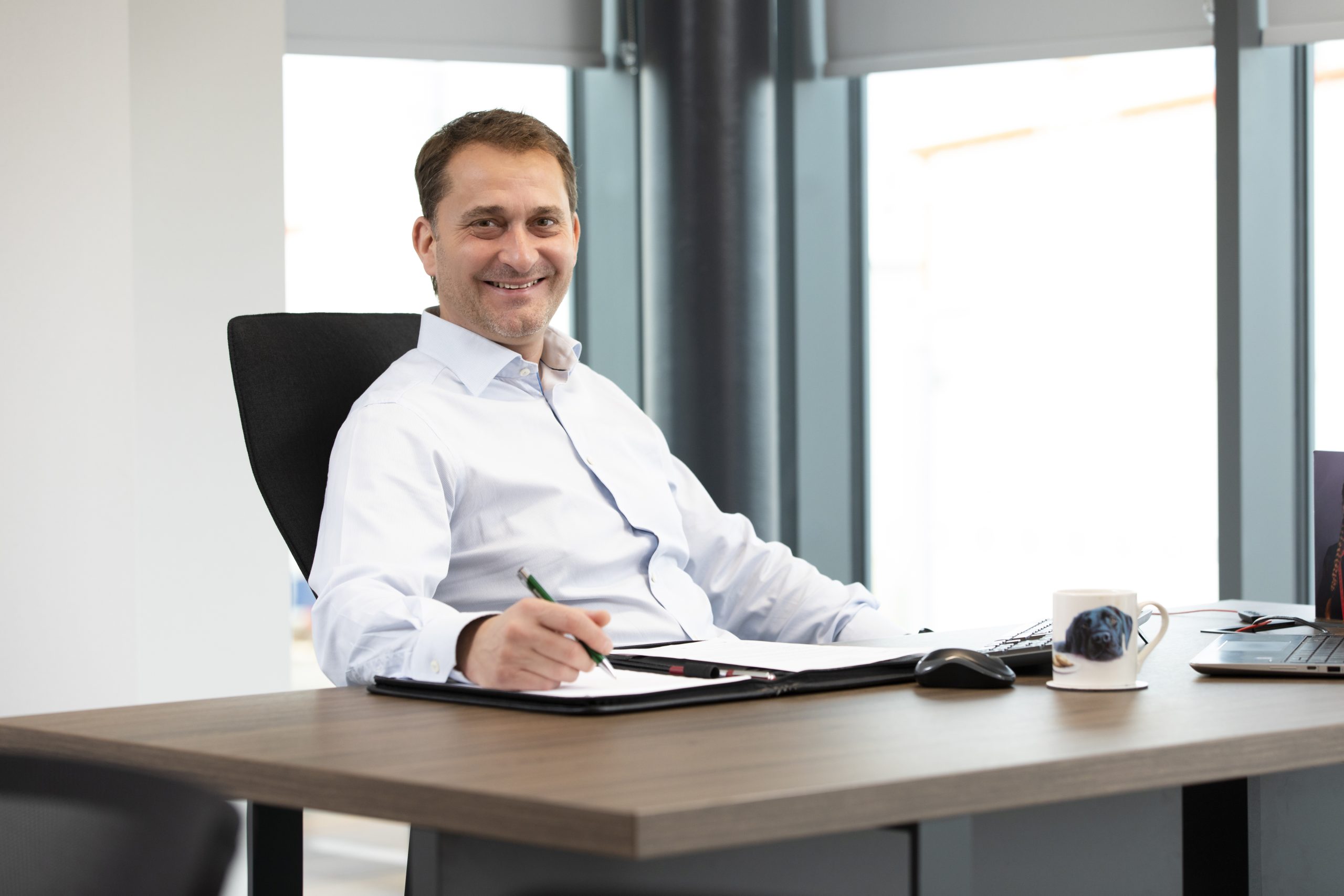
Gary Dawson, Chairman of AV Dawson Group, discusses the changing face of Teesside’s economy, the challenges facing family businesses and why long-term investment will be critical to the region’s success.
Teesside has always been a place that reinvents itself. From its industrial heritage to the emerging opportunities in renewable energy, carbon capture and new technologies, the region has continually adapted to changing economic circumstances.
As a third-generation family business, AV Dawson has experienced much of that transformation first-hand. We’ve been operating in Middlesbrough since 1938 and today employ around 200 people directly, alongside up to 150 subcontractors and agency personnel. From our 120-acre site on the River Tees, our port, logistics, transport and shipping businesses support industries across the region and beyond.
I’ve been involved in the business since 1992 and became Managing Director in 2000. The pace of change during that time has been extraordinary. In many ways, the last 20 years have brought more change than previous generations experienced in their entire careers.
Yet, despite the challenges, I remain confident about Teesside’s future.
Building on our industrial strengths
One of Teesside’s greatest assets is its industrial heritage. Although the decline of traditional industries has created significant economic challenges, it has also left us with something incredibly valuable: industrial land, established transport infrastructure and access to the River Tees.
Those assets position the region well for the next generation of industry.
We’re already seeing opportunities emerge around carbon capture, hydrogen, sustainable aviation fuel and offshore renewables. Projects such as Net Zero Teesside are generating work during their construction phases, while new industrial developments have the potential to create longer-term opportunities.
For businesses like ours, these investments matter enormously. Manufacturers cannot operate without the infrastructure and logistics networks needed to bring in raw materials and move finished products to market.
However, the transition isn’t straightforward.
Traditional industries such as steel, chemicals and automotive manufacturing provided consistent volumes of work. Many emerging industries are more project-driven, creating peaks and troughs in demand. That makes it harder to plan staffing, equipment and investment with certainty.
The opportunities are there, but they aren’t always materialising quickly enough to replace the industrial activity we’ve lost.
The challenge of investing for the long term
At AV Dawson, we’ve invested millions in our infrastructure, much of it over the past two decades.
As a family business, we take a generational approach to investment. Building new port infrastructure or rail facilities isn’t something that delivers a return overnight. Some investments can take 30 years to pay back.
That’s increasingly difficult when the wider business environment operates on much shorter timescales.
Rising employment costs, pressure on margins and uncertainty around future demand all influence investment decisions. Changes to business property relief and inheritance tax arrangements have also created concerns for family-owned businesses looking to pass assets between generations.
I believe more recognition is needed for established SMEs that are committed to their communities and continually reinvest in regional infrastructure.
Historically, capital grants helped businesses like ours undertake major infrastructure projects, with public funding encouraging substantial private investment.
That support is much harder to access today.
We want to continue investing, but the commercial conditions have to make sense. A proposed £20 million quayside development, for example, requires confidence that sufficient demand will exist over the coming decades.
The appetite to invest hasn’t disappeared. What businesses need is greater certainty.

Tees Valley Business Confidence Barometer
Discover what businesses are saying about confidence, growth and the challenges ahead for the Tees Valley.
White Paper available from 17 November 2026.
Making the transition to net zero commercially viable
Environmental sustainability is another area where ambition and commercial reality don’t always align.
We’re committed to reducing our carbon footprint and are exploring alternative fuels, hydrogen and electric vehicles. We expect to introduce electric trucks into our fleet where routes and operating conditions make them viable.
However, transitioning heavy industry and logistics to cleaner technologies presents significant challenges.
Electric vehicles and equipment require substantial investment, while electricity costs and grid capacity remain major barriers. In some cases, the necessary infrastructure simply isn’t available.
There is also a disconnect between customer expectations and willingness to pay. Our own customer research found strong support for reducing emissions, but little appetite to absorb the additional costs.
Businesses want to do the right thing, yet the financial burden cannot fall entirely on them.
If Teesside is to become a leading centre for green industry, we need practical support that enables businesses throughout the supply chain to make that transition.
A region with the foundations for success
Despite these pressures, there are compelling reasons to be optimistic.
Teesside has an excellent network of professional advisers, strong industrial expertise and, importantly, hardworking people who understand the value of getting things done.
We’re also seeing investment in newer sectors, including digital technology, alongside efforts to regenerate Middlesbrough town centre.
For businesses considering establishing themselves here, my advice is simple: come and talk to the people already operating in the region. There’s a genuine willingness to share experience, make introductions and support one another.
Looking ahead, I expect the next 12 months to remain challenging for traditional industries, although opportunities in renewables, carbon capture and major construction projects should continue to develop.
The more significant transformation may come over the following two years and beyond.
At AV Dawson, we’re continuing to invest in our people, strengthen our business development capabilities and position ourselves for future opportunities.
I’m optimistic about Teesside because I understand its strengths and its resilience. But optimism alone isn’t enough.
If we want the region to realise its potential, we must create an environment where businesses of every size have the confidence, support and commercial certainty to invest for the long term.
Tees Valley Business Confidence Barometer
This interview is part of a series featuring business and education leaders from across the Tees Valley, exploring the challenges, opportunities and trends highlighted in the 2026 Tees Valley Business Confidence Barometer.
Drawing on insights from businesses of all sizes and sectors across Darlington, Hartlepool, Middlesbrough, Redcar and Cleveland, and Stockton-on-Tees, the Barometer provides a valuable snapshot of business confidence, growth ambitions and the pressures facing the region.
Please note that this briefing is designed to be informative, not advisory and represents our understanding of English law and practice as at the date indicated. We would always recommend that you should seek specific guidance on any particular legal issue.
This page may contain links that direct you to third party websites. We have no control over and are not responsible for the content, use by you or availability of those third party websites, for any products or services you buy through those sites or for the treatment of any personal information you provide to the third party.

Follow us on LinkedIn
Keep up to date with all the latest updates and insights from our expert team